Biological Sciences

Chromatin Modification
Chromatin modification refers to the chemical changes that occur to the DNA and associated proteins in the nucleus of a cell. These modifications, such as methylation and acetylation, can alter the structure of chromatin and regulate gene expression. By affecting how tightly the DNA is packaged, chromatin modifications play a crucial role in controlling which genes are turned on or off in a cell.
Written by Perlego with AI-assistance
Related key terms
1 of 5
10 Key excerpts on "Chromatin Modification"
 eBook - ePub
- Pedro Castelo-Branco, Carmen Jeronimo(Authors)
- 2020(Publication Date)
- Academic Press(Publisher)
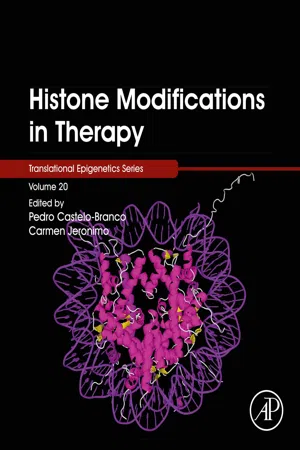
4Chromatin is the DNA–protein complex found in the eukaryotic cell nucleus, and its primary function is packaging DNA molecules into a more compact, denser shape. The basic repeating unit of chromatin is the nucleosome, which is composed of 146 base pairs of DNA wrapped around an octamer containing two of each core histone H2A, H2B, H3, and H4.5 , 6 DNA is negatively charged due to the phosphate groups in its phosphate-sugar backbone. However, the amino acids lysine and arginine are preponderant in each of the core histones, and their positive charges can effectively neutralize the negatively charged DNA backbone, making the interaction between histones and DNA very tight.5 Nucleosomes are then connected by a linker DNA of varying length, which is further folded into arrays with the aid of the linker histone H1 and nonhistone proteins to form a 30-nm chromatin fiber.6 – 8 This ordered structure enables the necessary compaction to fit the large eukaryotic genomes inside the cell nuclei,9 prevents DNA damage, and regulates DNA replication, cell division, and gene expression.10 , 11Gene expression requires the two strands of DNA to separate temporarily, allowing the access of enzymes involved in transcription to the DNA template. Therefore, although compact, the structure of chromatin must be highly dynamic, switching between an “open” and a “closed” state that regulates the access to the underlying DNA in interphase. Where the chromatin is loosely organized, it is more accessible for transcription and is referred to as euchromatin. However, chromatin can also be highly compacted and inaccessible for transcription in a “closed” or inactive state, the so-called heterochromatin. Therefore genes are coordinately activated or repressed to ensure cellular homeostasis where the chromatin switches between euchromatin and heterochromatin.6 eBook - PDF
- Deborah K. Hansen, Barbara D. Abbott(Authors)
- 2008(Publication Date)
- CRC Press(Publisher)
Phosphory-lation is another modification that may, well, have important consequences for chromatin compaction via charge alterations (30). Simplistically, histone modi-fications serve to either establish global chromatin environments or orchestrate DNA-based biological tasks (transcription, DNA repair, replication, kinetochore, and centromere formation) (29,30). Most modifications are distributed in distinct localized patterns within the upstream promoter region: the core promoter, the 5 end of the open reading frame, and the 3 end of the open reading frame (29). The location of the modification is tightly regulated and is crucial for its effect on transcription. It is important to note that modifications on histones are dynamic and rapidly changing. Acetylation, methylation, phosphorylation, and deimination can appear and disappear on chromatin within minutes of a stimulus arriving at the cell surface (30). Global Chromatin Environments To establish the global chromatin environment, modifications help partition the genome into distinct domains such as euchromatin, where DNA is kept “accessi-ble” for transcription, and heterochromatin, where chromatin is “inaccessible” for transcription (30). Each of these chromatin environments in the genome (eu-and heterochromatin) is associated with a distinct set of modifications. In mammals, demarcation between these different environments is set up by boundary elements, which recruit enzymes to modify the chromatin (30). Experiments in fission yeast have shown that the heterochromatin boundaries are maintained by the presence of methylation at H3K4 and H3K9 in adjacent euchromatic regions (30). There is also evidence from fission yeast that the nucleation of heterochromatin (rather than its spreading) involves the production of small interfering RNA (siRNAs) from Epigenetic Mechanisms 99 transcripts emanating from centromeric repeats (30). eBook - PDF
- Sang-Woon Choi, Simonetta Friso, Sang-Woon Choi, Simonetta Friso(Authors)
- 2009(Publication Date)
- CRC Press(Publisher)
94 4.4.1 Maintenance of Chromatin Modifications ................................ 95 4.4.2 Cooperation between CpG methylation and chromatin changes .............................................................. 95 References .......................................................................................................... 96 The chromatin packaging of eukaryotic DNA is neither uniform nor random. In the last few decades it has become increasingly clear that the precise regulation of chromatin structures is essential for the proper con-trol of DNA accessibility, controlling transcription, replication, recom-bination and repair. This chapter will provide an introduction to basic elements of chromatin structure, and then introduce the range of covalent modifications and noncovalent structural alterations that play into regula-tion of DNA accessibility in chromatin. As we will see, chromatin modi-fications have great potential as epigenetic control mechanisms, in that they can control DNA accessibility in a way that is not directly dependent on underlying DNA sequence and (at least for certain modifications) that they can persist for long periods of time. Chromatin Modifications do not appear to be epigenetic marks that can be inherited from one generation of organisms to the next. Rather, they are “somatic cell epigenetic marks” that are used to control patterns of DNA accessibility through somatic cell divisions or over long periods of time in nondividing differentiated cells. That is not to say that Chromatin Modifications are not important for heritable epigenetic effects, such as genomic imprinting. Indeed, the functional effects of CpG methylation marks are largely caused by the differential recruitment of chromatin modifying enzymes. eBook - PDF
- Trygve Tollefsbol(Author)
- 2008(Publication Date)
- CRC Press(Publisher)
For example, histone acetylation may provide binding sites for nucleosome remodeling complexes that contain bromodomains during activation of some genes. Alternatively, chromosome remodelers may be necessary to create a more relaxed chromatin conformation to allow access of HATs at other loci. Detailed studies of gene regulation at individual loci will likely provide numerous variations in the order of events leading to transcriptional activation or repression. However, a unifying theme has emerged in which the concerted actions of multiple chromatin-affecting proteins lead to precise control over DNA-templated processes that are critical for proper cell function. 21.9 EPIGENETICS AND CANCER Historically, cancer has been viewed as a disease owing to the accumulation of genetic mutations in oncogenes and tumor suppressors. Activating mutations in oncogenes and inactivating mutations in tumor suppressor genes have been extensively described. More recently, the role of epigenetics in the initiation and progression of cancer has come to share the spotlight with studies of genetic mutations [65 – 69]. Epigenetics is the study of the inheritance of phenotypes that occur without an alteration in DNA sequence. The original use of the term ‘‘ epigenetics ’’ is credited to the biologist C.H. Waddington who used it in 1942 to describe how genotypes give rise to phenotypes, especially in determination of cell fate during development. Although unknown at that time, the molecular mechanisms of epigen-etic inheritance as it relates to chromatin include the inter-related processes of DNA methylation and histone modi fi cations. Through small chemical moieties that covalently attach to DNA or histones, the epigenetic processes can increase the capacity of the genome to store and transmit biological information beyond the DNA sequence.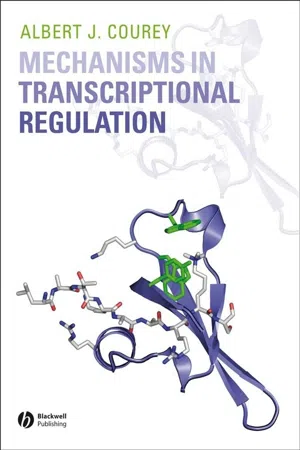 eBook - PDF
- Albert J. Courey(Author)
- 2009(Publication Date)
- Wiley-Blackwell(Publisher)
The means by which these modifica-tions regulate chromatin function in gen-eral and transcription in particular is the subject of intensive research. In general, there are two possibilities, which are not mutually exclusive of one another: 1 These modifications could directly alter chromatin folding. As noted above, the CHAPTER 5 TRANSCRIPTIONAL CONTROL THROUGH Chromatin Modification 107 ? How do covalent histone modifications directly modulate chromatin structure? One possibility, suggested by X-ray crystallography, is that positively charged lysine side chains in histone tails are attracted to negatively charged surfaces in other nucleosomes leading to chromatin condensation. Acetyla-tion, which neutralizes the lysine side chains, might therefore be expected to lead to chromatin decondensation. While this is a nice theory, experi-mental proof is lacking. histone N-terminal tails are essential for the higher order folding of chro-matin. Thus, covalent modification of these tails could modulate higher order chromatin structure. Although it has been difficult to prove that this occurs inside living cells, experiments on chromatin assem-bled in vitro provide support for this idea. In particular, acetylation of histone N-terminal tails can lead to decondensation of chromatin. 2 Modified residues in histones could alter the ability of histones to recruit non-histone proteins to chromatin, which could, in turn, alter the ability of the transcriptional machinery to recognize the template. As will be discussed extensively in this and the following chapter, a grow-ing body of evidence supports this idea. For example, many factors that regulate gene expression contain bromodomains , which bind to acetyl-lysine residues, or chromodomains , which bind to methyl-lysine residues. The modification state of histones has been proposed to constitute a com-binatorial code that sets the transcriptional state of each gene. eBook - ePub
- Anita Göndör(Author)
- 2016(Publication Date)
- Academic Press(Publisher)
Furthermore, systematic mapping of chromatin proteins and PTMs genome wide in several species and cell types have documented that chromosomes have domain organization, displaying qualitative and quantitative differences in chromatin composition and transcriptional regulation within the different domains [ 77, 78 ]. This organization of chromosomes likely reflects the existence of extensive “cross talk” between histone modifications to reinforce and spread or weaken the transcriptionally permissive or repressive states [79], as discussed further and in several other chapters of this book. Moreover, histone modifications often collaborate with DNA modifications in the regulation of genomic functions. These Chromatin Modifications form multiple layers of self-reinforcing chromatin states that define cell type–specific gene expression patterns and need to be removed during reprogramming events to increase developmental potential [79]. In the following paragraphs we will discuss the discovery of DNA methylation and its various cross talk with histone modifications with consequences on nuclear functions. 1.7. Discovery of DNA Methylation: Functions and Cross Talk With Histone Modifications 1.7.1. Discovery of DNA Methylation In 1948 it was discovered that the cytosine residue (C) of the DNA itself could be methylated at the 5th carbon position (5-methylcytosine; mC) when followed by a guanine residue (G) [80] (Fig. 1.1). The machinery that methylates the mammalian genome at cytosine includes three different enzymes (Chapter 3). The first enzyme discovered to be involved in DNA methylation in vivo is the de novo maintenance DNA methyltransferase (DNMT) 1, DNMT1 [81], which functions in the maintenance of DNA methylation states during cell divisions [ 82 – 85 ]. The major role of DNMT1 is thus to copy the methylation state of the parental DNA strand to the newly synthesized DNA strand during S phase eBook - PDF
- Saura C. Sahu(Author)
- 2012(Publication Date)
- Wiley(Publisher)
4 Chromatin at the Intersection of Disease and Therapy Delphine Qu´ enet, Marcin Walkiewicz, and Yamini Dalal Laboratory of Receptor Biology & Gene Expression, National Cancer Institute, Bethesda, MD, USA In eukaryotes, DNA (deoxyribonucleic acid) sequence is the carrier of genetic information. However, its expression is dependent on epigenetic mechanisms, which include DNA methylation and post-translational modifications (PTMs) of DNA packaging proteins called histones (Klose and Bird, 2006; Strahl and Allis, 2000). Human cancers are often characterized by changes in DNA methylation and PTMs (Feinberg and Vogelstein, 1983; Kulis and Esteller, 2010). Consequently, mapping such epigenetic changes is an important challenge in order to establish a library of cancer identities and by extension, of other complex diseases which present epigenetic modifications (Feinberg, 2007). Over recent years, researchers have shown interest in development of therapy aimed at restoring the initial epigenetic map (the epigenome), using drugs targeting epigenetic modifier enzymes. After a brief overview of basic epigenetic principles, such as DNA methylation and PTMs of histones, we will analyze how chromatin is an important intersection between disease and therapy. By providing recent data on cancer, diabetes, and neurological disorders, we will discuss how drugs may have unexpected beneficial or harmful effects on the epigenome. 4.1 Epigenetic marks on chromatin: a complex pathway with high flexibility DNA does not exist in a naked form inside eukaryotic cells, but is sequestered by specific histone proteins into an organized macromolecule called chromatin. The nucleosome is the smallest unit of chromatin and consists of 147 bp of DNA wrapped around two copies of histone proteins H2A, H2B, H3, and H4. Chromatin dynamics and compaction are regulated by DNA methylation, PTMs of histones and interactions with chromatin binding proteins. eBook - PDF
Genomics
Fundamentals and Applications
- Supratim Choudhuri, David B. Carlson, Supratim Choudhuri, David B. Carlson(Authors)
- 2008(Publication Date)
- CRC Press(Publisher)
2. MOLECULAR BASIS OF EPIGENETIC REGULATION Factors that chemically modify DNA without altering the sequence may alter chromatin conformation, modulate the accessibility and binding of the transcription machinery, and influence genetic regulatory cross-talk. Since all these events have downstream effects on transcription, they may trigger an epigenetic effect. Three important factors provide the molecular basis of epigenetic regulation of genome expression: (i) DNA methylation, (ii) histone modification, and (iii) noncoding RNA (ncRNA)-mediated regulation. Besides these factors, there are other mechanisms that also affect gene expression epigenetically, such as chromosome pairing-mediated changes in promoter–enhancer interaction (discussed in relation to transvection). 2.1. DNA Methylation In prokaryotes, DNA methylation occurs at both cytosine and adenine bases and is a part of the host restriction system. In multicellular eukaryotes, DNA methylation is confined to cytosine bases. Methylation involves covalent modification of cytosine at C-5 position, the methyl group donor being S -adenosylmethionine (SAM), and the enzyme involved is DNA methyltransferase (Dnmt). Cytosine methylation almost exclusively occurs on Epigenetic Regulation of Gene and Genome Expression 103 CG dinucleotide, which is denoted as CpG. The C of CpG is methylated in both strands of DNA. During replication, the parent strand is methylated, but the newly synthesized daughter strand is not methylated, thus creating a temporarily hemimethylated segment of DNA. The hemimethylated segment is recognized by maintenance methyltransferase, which methylates the hemimethylated sites and restores the parental methylation pattern. There are two types of methyltransferases: one responsible for de novo methylation that establishes the methylation pattern, and the other responsible for maintenance methylation once the methylation pattern is established. eBook - ePub
- Yujun George Zheng(Author)
- 2015(Publication Date)
- Academic Press(Publisher)
In order to fit a large amount of genetic material in the small volume of the cell nucleus, eukaryotic DNA is packaged as repeating units of mononucleosomes. Each mononucleosome consists of about 147 bp of DNA wrapped tightly around a protein spool comprised of the four core histones H2A, H2B, H3, and H4. Reversible posttranslational modifications (PTMs) of histones play critical roles in regulating gene function and their dysregulation underlies several acute human diseases. Therefore, there is an urgent need to elucidate the mechanistic roles for histone PTMs and to identify the biochemical relationships (crosstalk) between various PTMs. This chapter highlights chemical and genetic tools that have yielded access to homogeneously site-specifically modified histones for mechanistic investigations. Results from the biochemical and biophysical characterization of mononucleosomes and nucleosomal arrays reconstituted with precisely modified histones are discussed, and the extension of current technologies to probe the crosstalk between histone PTMs at a system-wide level is presented.Keywords
Chromatin; histones; posttranslational modifications; synthesis; peptides; chemical ligation; amber suppression; thiol-ene reaction; ubiquitylation; methylationChapter Outline8.1 Eukaryotic Chromatin and Histones 1498.2 The Challenging Diversity of Histone Posttranslational Modifications 1508.3 A Chemical Biology Approach to Investigate Histone Modifications 1528.4 Strategies of Native Chemical and Expressed Protein Ligation 1528.5 Thialysine Analogs of Methylated and Acetylated Histones 1558.6 Genetic Incorporation of Modified Amino Acids in Histones 1578.7 Biochemical and Biophysical Studies of Histone Ubiquitylation 1588.8 Biochemical and Biophysical Studies of Histone Methylation 1608.9 Outlook 162Acknowledgments 163References 1638.1 Eukaryotic Chromatin and Histones
Chromatin is the massive nucleoprotein complex in which our genomic DNA is stored in the nuclei of our cells [1] . Histones are the major protein component of chromatin and they serve as a scaffold around which DNA is tightly wound to facilitate its storage in the small nuclear space [2 ,3] . Our understanding of histone function has undergone rapid growth in the last two decades, and histones have been found to play indispensable roles in regulating both chromatin structure and function [4 ,5] . Indeed, a vast amount of literature has shown that histones play major roles in almost every DNA-templated process including transcription [6 –8] , replication [9 –11] , and repair [12 –14] . The two histone-centric mechanistic pathways that dictate cell fate are the exchange of core histones with histone variants [15 –17] , and posttranslational modifications (PTMs) of histone side-chains [18 ,19] eBook - PDF
Epigenomics
From Chromatin Biology to Therapeutics
- Krishnarao Appasani(Author)
- 2012(Publication Date)
- Cambridge University Press(Publisher)
Nature Cell Biology, 11, 1010–1016. Zofall, M., Persinger, J., Kassabov, S. R., and Bartholomew, B. (2006). Chromatin remodeling by ISW2 and SWI/SNF requires DNA translocation inside the nucleosome. Nature Structural and Molecular Biology, 13, 339–346. Nucleosome positioning in promoters 59 5 Chemical reporters of protein methylation and acetylation Markus Grammel, Yu-Ying Yang, and Howard C. Hang* 5.1 Introduction Posttranslational modifications (PTMs) are of crucial importance in protein regu- lation and their impact on virtually every aspect of biology has fostered the development of numerous experimental methods for their analysis. In particular, the application of sophisticated chemical approaches for the detection of PTMs has been of great value. Here we summarize our efforts to establish a chemical- reporter-based system for two PTMs, namely protein acetylation and methyla- tion. These two covalent protein modifications are fundamental regulators of various epigenetic phenomena (Kouzarides, 2007) and have taken center stage in the current interpretation of what is commonly referred to as the “histone code” (Strahl and Allis, 2000). Proteins can be posttranslationally acetylated at their N-termini as well as at serine, threonine, and lysine residues; however, lysine acetylation is the most prevalent type of acetylation (Allfrey et al., 1964). Lysine acetylation of histones, particularly at N-terminal tails, is a key mechanism of transcriptional regulation. In addition to the acetylation of histone tails hundreds of acetylation substrates have been identified in eukaryotic and prokaryotic cells (Choudhary et al., 2009; Wang et al., 2010; Zhao et al., 2010).
Index pages curate the most relevant extracts from our library of academic textbooks. They’ve been created using an in-house natural language model (NLM), each adding context and meaning to key research topics.

