Geography

Physiological Research
Physiological research in the context of geography involves studying the impact of physical and environmental factors on the human body. This research explores how geographic features, climate, and other environmental conditions influence human health and well-being. By examining physiological responses to geographical factors, researchers can better understand the complex interactions between the environment and human biology.
Written by Perlego with AI-assistance
Related key terms
1 of 5


7 Key excerpts on "Physiological Research"
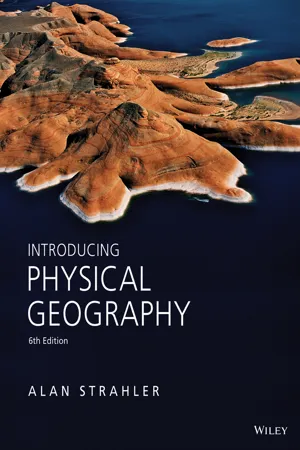 eBook - PDF
- Alan H. Strahler(Author)
- 2013(Publication Date)
- Wiley(Publisher)
In this text, we develop an understand- ing of the physical processes of floods, earthquakes, landslides, and other disaster-causing natural events as a background for appreciating hazards to humans and their activities. Many of the remaining fields of human geography have linkages with physical geography. For example, climatic and biogeographic factors may determine the spread of disease-carrying mosquitoes (medical geography). Mountain barriers may isolate populations and increase the cost of transporting goods from one place to another (cultural geography, transportation geography). Unique landforms and landscapes may be destinations for tourism (geography of recreation, tour- ism, and sport). Nearly all human activities take place in a physical environment that varies in space and time, so the physical processes that we examine in this text provide a background useful for further learning in any of geography’s fields. Five major fields of physical geography are: climatology, geomorphology, coastal and marine geography, geog- raphy of soils, and biogeography. 8 Physical Geography and the Tools Geographers Use Digital Vision/Getty Images, Inc. CLIMATOLOGY Climatology studies the transfers of energy and mat- ter between the surface and atmosphere that control weather and climate. GEOMORPHOLOGY Geomorphology is the study of landform-making processes. James Randklev/Getty Images, Inc. I.4 Fields of physical geography CP Photo Art/Getty Images, Inc. The principal subfields of physical geography covered in this book are climatology, biogeography, geography of soils, geomorphology, and coastal and marine geography. Introducing Geography 9 Fletcher & Baylis/Photo Researchers, Inc. GEOGRAPHY OF SOILS Soils are influenced by their parent material, climate, biota, and time. BIOGEOGRAPHY Biogeography examines the distribu- tion patterns of plants and animals and relates them to environment, migration, evolution, and extinction.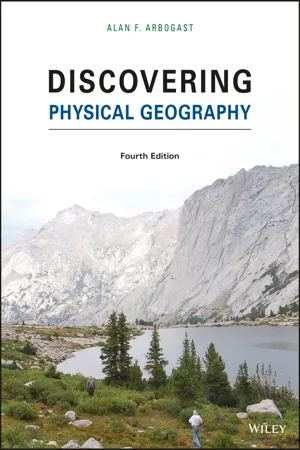 eBook - PDF
- Alan F. Arbogast(Author)
- 2017(Publication Date)
- Wiley(Publisher)
At a secondary level, you will be asked to examine how aspects of physical geography affect human lives and, in turn, how people impact them. This opening chapter outlines the topics discussed in this book and places them in the context of the overall discipline of geography. Then we discuss the various components and features of the book and how they will assist with your learning. Kyu Oh/Getty Images This view of Mt. Hood in Oregon reflects many geographical processes discussed in this text, including the character of the atmosphere, how water is stored and flows within the hydrosphere, the role of climate and its impact on vegetation, and the way landscapes evolve over time. 2 CHAPTER 1 Introduction to Physical Geography The Scope of Geography When most people are asked to describe the nature of geog- raphy, a common response is that the discipline focuses pri- marily on the locations of countries, capital cities, rivers, and oceans. They also assume that most of the work geographers do involves maps in some way. Although such an under- standing of the discipline is accurate to some degree, the field actually encompasses far more than the average person real- izes. In fact, geography is a discipline that is highly relevant to everyday life in myriad ways, ranging from analysis of traffic patterns to importation of economic goods, migration of ethnic groups, cost of gasoline, and earthquake hazards, to name a very few. In addition to maps, geographers use a fascinating array of techniques and technologies to conduct their work, such as computer models, field reconnaissance, personal inter- views, satellite imagery, global positioning systems, and even shovels. Geography, a word derived from the Greek words for “Earth description,” is an ancient discipline that examines the spatial attributes of the Earth’s surface and how they differ from one place to another.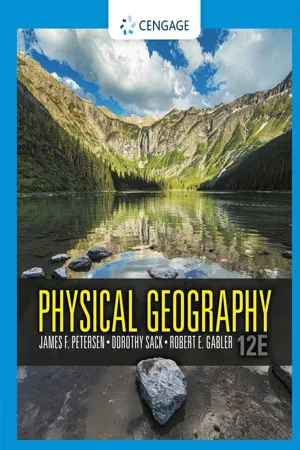 eBook - PDF
- James Petersen, Dorothy Sack, Robert Gabler, , James Petersen, James Petersen, Dorothy Sack, Robert Gabler(Authors)
- 2021(Publication Date)
- Cengage Learning EMEA(Publisher)
Physical geographers, however, can- not exclude the human element because people affect, and are affected by, natural processes and features. Geographers are excel- lent observers of the world around them and generally take a holistic approach to problem solving, meaning that they are open to all factors that might be involved in the solution, including human influences. Being concerned with nearly all aspects of Earth, physical geographers are trained to view a natural environ- ment and consider how it functions in its entirety (● Fig. 1.2). Yet, as in other fields of study, most physical geographers develop special expertise in one or two subfields. For example, because physical geography includes the study of weather and climate, some physical geographers are meteorologists or climatologists. Meteorology considers the processes that affect daily weather, and ● FIGURE 1.1 Geography has many subdivisions that are related to other disciplines with which they share some of their interests. Geographers, however, apply their own distinct perspectives and approaches to these areas of study. What advantage might a geographer have when working with other physical scientists seeking a solution to a problem? PHYSICAL SCIENCE SOCIAL SCIENCE or HUMANITIES Geomorphology Climatology Biogeography Political Geography Economic Geography Cultural Geography Historical Geography Soils Geography Social Geography Mathematical Geography Environment Geography People P hy s i c a l G e o g r a p h y H u m a n G e o g r a p h y M e t e o r o lo g y B io log y P e d o l o g y A s t r o n o m y S o c i o l o g y H is to ry A n t h r o p o lo g y P o liti c a l S c i e n c e G e o lo g y E c o n o m ic s Copyright 2022 Cengage Learning. All Rights Reserved. May not be copied, scanned, or duplicated, in whole or in part. Due to electronic rights, some third party content may be suppressed from the eBook and/or eChapter(s). eBook - PDF
Physiological Diversity
Ecological Implications
- John Spicer, Kevin Gaston(Authors)
- 2009(Publication Date)
- Wiley-Blackwell(Publisher)
We conclude with a consideration of how physiology may influence or constrain the geographical range of a species. Throughout, many, although by no means all, of the examples which will be drawn on concern physiologi- cal traits related to environmental temperature. This reflects the relative pre- dominance of such studies in the literature, but also the probable importance attributed to this environmental factor in determining the distributions of species (e.g. Merriam 1894; Allee 1923; Hutchins 1947; Allee et al. 1949; Crowson 1981; Jeffree and Jeffree 1994; Somero 1997). 4.2 The roots of population differences 4.2.1 Things are not always as they appear While most populations probably show some difference in the expression of POPULATION DIFFERENCES 101 physiological traits, this does not necessarily constitute physiological differen- tiation. It could be that some populations are physiologically different in situ, but when individuals are brought back to the laboratory, and kept under similar conditions, any differences disappear. Individuals from these popula- tions would be described as displaying local physiological acclimatization. At the other extreme, some populations show persistent physiological differences even on being maintained in the laboratory for many generations under conditions different from those under which they originally occurred, and would be described as exhibiting local genetic adaptation. Local physiological acclimatization consists of phenotypic adjustment of a physiological response (albeit within prescribed genetic limits), while local genetic adaptation involves selection of mutations. Even if there are differences in physiological traits between populations as a result of local genetic adaptation, this does not automatically mean that these are of tremendous ecological significance. eBook - PDF
Human Variation
From the Laboratory to the Field
- C.G. Nicholas Mascie-Taylor, Akira Yasukouchi, Stanley Ulijaszek(Authors)
- 2010(Publication Date)
- CRC Press(Publisher)
269 16 Impact of Natural Environmental Stressors on Physiological and Morphological Processes Methodological Approaches in the Field and Laboratory Ralph M. Garruto * 1 and Charles A. Weitz 2 1 Department of Anthropology, Binghamton University, State University of New York, Binghamton, New York 2 Department of Anthropology, Temple University, Philadelphia, Pennsylvania 16.1 INTRODUCTION In the 1960s and 1970s, Professor Paul T. Baker from The Pennsylvania State University (Figure 16.1), one of several human population biologists of his generation, wondered why more satisfactory answers had not been produced at a time when there was such * Address all correspondence to [email protected]. CONTENTS 16.1 Introduction .................................................................................................. 269 16.2 Problems in the Study of Altitude Hypoxia .................................................. 272 16.2.1 Early Problems in Studies of Blood Physiological Changes in the Andes .......................................................................................... 273 16.2.2 Later Problems in Studies of Blood Physiological Changes in Qinghai ............................................................................................. 279 16.3 Concluding Remarks: Use of Natural Experiments ..................................... 285 Acknowledgements ................................................................................................ 286 Dedication .............................................................................................................. 287 References .............................................................................................................. 287 270 Human Variation: From the Laboratory to the Field a strong professional interest in the question of how the physical environment affects human populations. He, of course, realised the level of complexity of the question he had asked. eBook - PDF
Thinking Geographically
Space, Theory and Contemporary Human Geography
- Phil Hubbard, Brendan Bartley, Duncan Fuller, Rob Kitchin(Authors)
- 2002(Publication Date)
- The Athlone Press(Publisher)
As Plummer (1983, pp. 77-8) explains, 'many sociologists or geographers begin with a view of the person as an active, creative world-builder, but before they have finished their theoretical endeavours, they have enchained, dehumanized, rendered passive and lost that same person' (see also Holloway and Hubbard, 2001, pp. 8-12). Two important (and related) traditions that emerged as a result of this critique were behavioural and humanistic geography. 2.3.1 The behavioural critique Like those who attempted to restyle geography as a spatial science, behavioural geographers largely took their inspiration from the sciences, particularly 34 Theorizing Human Geographies psychology. In broad terms, psychology is the 'science of the mind'. Many people's image of psychology is that of a laboratory-based discipline, of scien-tists in white coats monitoring the behaviour of rats in mazes; for others, it might be of the psychoanalyst asking the patients to lie back on the couch and to tell them about their childhood. Either way, it might seem a little surprising that some geographers looked to psychology to provide them with clues as to how people related to their surroundings. However, the engagement between geog-raphy and psychology remains a very important one, albeit one that has become somewhat ghettoized since its heyday in the 1970s. Attempting to identify when this interest in psychology first became apparent is by no means straightforward (Goodey and Gold, 1985), although certain figures have been cited as particu-larly influential in expanding the horizons of geography beyond the realms of locational analysis by exploring psychological ideas. eBook - PDF
- Susan J Smith, Rachel Pain, Sallie A Marston, John Paul Jones III, Susan J Smith, Rachel Pain, Sallie A Marston, John Paul Jones III(Authors)
- 2009(Publication Date)
- SAGE Publications Ltd(Publisher)
Geographical research on the body provides a critical perspective to medical places, con-sidering as it does the body in wards, clinics and community settings; the body in relation to diagnosis and medical power; ‘othered’ bodies and historical geographies of the ill body and mind (Parr, 1998). While health geographers have been slow to embrace the body, feminist geographers have been leaders in unpicking how body perceptions, experience and place interact in potent ways. Writing by geographers working at the permeable edges of health and social geography, and in the fields of disability and mental health geography, is increasingly addressing this GEOGRAPHIES OF WELLBEING 315 gap (Dyck, 1995; Parr, 1998; Litva et al., 2001; Hall, 2000). It might also have been expected that emerging geographies of health would be accompanied by a decreased con-cern with dead and diseased bodies and greater interest in healthy bodies. Such work too is largely conducted outside health geog-raphy and, with exceptions (MacKian, 2000; Duncan and Brown, 2000), the very specific consequences for health and wellbeing of body adornment, inscription and manage-ment have not been discussed. Within the broader expansion of research interest in embodiment in the social sciences, the leading questions have become not only how but ‘ where does the body as a corporeal presence serve as a surface for the assignment of personal meaning and an organising prin-ciple for social interaction’? (Gubrium and Holstein, 1999, p. 520). Hence, the body is both a geography unto itself, and is assigned meaning through the geographies in which it dwells. The nursing home, for instance, is a common institutional basis for everyday life for many older people. Here, the body becomes a surface of signs, monitored for evidence of varied concerns for stakeholders – from the resident’s own maintenance of identity to family members who retain a sense of respon-sibility after the placement of their loved one.
Index pages curate the most relevant extracts from our library of academic textbooks. They’ve been created using an in-house natural language model (NLM), each adding context and meaning to key research topics.
