History

Pope Alexander VI
Pope Alexander VI, born Rodrigo Borgia, was a controversial figure known for his ambitious and corrupt reign as the head of the Catholic Church from 1492 to 1503. He was infamous for his nepotism, political maneuvering, and involvement in scandals, including the notorious Borgia family's influence on papal affairs. His pontificate was marked by both significant achievements and widespread criticism.
Written by Perlego with AI-assistance
Related key terms
1 of 5
6 Key excerpts on "Pope Alexander VI"
 eBook - ePub
- Brenda Ralph Lewis(Author)
- 2019(Publication Date)
- Amber Books Ltd(Publisher)
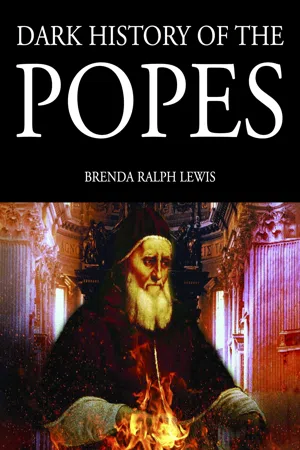
This portrait (pictured) of Pope Alexander VI, formerly Rodrigo Borgia, was painted by Juan de Juanes (1500–1579), often called the ‘Spanish Raphael’.VTHE BORGIAS
Power in the city-states of Renaissance Italy was frequently a family affair. And the families in question were truly formidable. The Visconti and Sforza of Milan, the Medici of Florence, the d’Este of Ferrara, the Boccanegra of Genoa or the Barberini, Orsini and della Rovere families shared some or, more often, all of the symptoms characteristic of their breed.Alexander was probably the most controversial pope ever to have reigned, and remains infamous today.T hey were intensely greedy for wealth and status, and could not resist enriching their relatives with high-ranking titles and the lavish lifestyles that went with them. Their power could frequently be secured by violence, murder and bribery and ruthlessness comparable only to the methods of the Italian families involved in organized crime centuries later.The greatest power of all resided, of course, in the papacy and the immense influence the popes exerted over both the religious and the secular life of Catholic Europe. Several rich and famous families, including the Medici, the Barberini, the Orsini and the della Rovere, provided the Church with popes from their own ranks, but the most notorious of them all were the Borgias. The first of the two Borgia popes was the aged Calixtus III, formerly Alonso de Borja, who was elected in 1455.From the start, Calixtus III excelled at nepotism. He set out to pack the Vatican bureaucracy with his relatives and place them in lucrative Church posts. Two of his nephews – Rodrigo was one of them – became cardinals in 1456. Such positions were normally occupied by mature or elderly men, but these two were had not yet reached 30, which both alarmed and astounded the College of Cardinals. They had agreed to the appointments under a false premise, expecting the elderly Calixtus to die soon, before the two young cardinals could be confirmed in their new positions. Instead, Calixtus stubbornly survived long enough for Rodrigo to be made Vice-Chancellor of the Church in 1457, which made him second in importance only to the pope himself. It also provided Rodrigo with the opportunity to acquire considerable wealth. eBook - PDF
Popes, Cardinals and War
The Military Church in Renaissance and Early Modern Europe
- D.S. Chambers(Author)
- 2006(Publication Date)
- I.B. Tauris(Publisher)
Alexander VI (pope from 1492 to 1503), the Catalan Rodrigo Borgia, could hardly be described by any such anodyne phrases, but Sigismondo simply characterises the man who, as Vice-Chancellor of the Church since 1457, had been his own head of department, as very changeable (‘virum versatissimum’). 3 This seems a rather mild assessment of that plump-cheeked, smooth-tongued voluptuary. The shrewd Mantuan chronicler Schivenoglia had observed Rodrigo at the Diet of Mantua back in 1459, when he was only twenty-five, and described him then as having ‘a look of being capable of any evil’ (‘uno aspeto de fare ogni malo’). 4 In spite of the three popes’ alleged peace-loving qualities, the military dimensions of the papacy, already long established and fostered in the mid-fifteenth century, grew still more conspicuous in this period of over thirty years, aided by the services of their cardinals and other senior prelates. This was the POPES, CARDINALS AND WAR 76 background against which, or in the midst of which, the future Julius II matured. In papal history the period under review in this chapter (1471–1503), roughly the early middle age of the Renaissance, has long had a certain unity imposed on it, with emphasis generally upon the papacy’s Italian politicisation, increasingly princely style, financial corruption, family favouritism and luxury. Contemporaries themselves promoted the idea of the degenerate Renaissance papacy: among them the head of the Augustinian Order, Egidio of Viterbo (1469–1532), who became a cardinal in 1517; he dated the decadence from Sixtus IV’s time, but prophesied a great regeneration was imminent. 5 To some contemporaries it might have seemed that warmongering was not the worst of the papacy’s faults, and that, in an imperfect world, pacific inclinations had to be overruled in order to preserve the rights and dignity of the Holy See in Italy and to protect Italy and Christendom from the continuing threat of Ottoman expansion. eBook - PDF
- Thomas James Dandelet(Author)
- 2008(Publication Date)
- Yale University Press(Publisher)
This gave them a good degree of autonomy—not to mention wealth and military power—which they used to make their imprint on the city of Rome. Although it was a dynastic imprint above all else, it was a distinctly Spanish dynastic imprint, and it set a precedent for inscribing Spain and Spaniards into the myth of Rome, a precedent that would have long-lasting implications. ALEXANDER VI AND THE ROME OF THE BORGIAS A wealthy, well-educated, and sophisticated Renaissance patron, Car-dinal Rodrigo Borgia had already built a fine palace in Rome before he was elected pope. Although relatively little is known about his house-hold during his long period as cardinal, it is clear that his wealth from the revenue of his Spanish churches made him increasingly prominent in the court of Rome in the s and s. Self-conscious and proud of its role as the center of classical antiquity, Christian and pagan, by the s papal Rome rivaled Florence as the urban center of cultural and intellec-tual production. Rome, in short, had embraced the Renaissance ideal of renewal to the extent that by it had become ‘‘the undisputed queen of literary and intellectual life in Europe.’’ 11 This was Cardinal Rodrigo Borgia’s Rome, and, not surprisingly, as soon as he became pope he began working to have his family woven into the historical and artistic fabric of Europe’s greatest city. A patron of artists and men of letters, he thus contributed to a tradition of writing and painting Spain into the history of Rome both past and present that would increase over the centuries with the Spanish monarchs. This was a well-established Roman tradition by the time of Alexander VI, and most of the oldest Roman noble families, such as the Colonnas and Orsinis, claimed an ancient Roman lineage. For such families, to celebrate and memorialize Roman antiquity was to celebrate themselves. eBook - ePub
The Borgia Family
Rumor and Representation
- Jennifer Mara DeSilva(Author)
- 2019(Publication Date)
- Routledge(Publisher)
1532), his reputation in personal matters was rather different. Although rumors and speculation abound as to whether he murdered his brother and committed rape, there is some discussion as to what extent this reputation was justified. 70 Nevertheless, the infamous Banquet of the Chestnuts is likely a case of the sins of the son being visited on the father. It served Alexander VI’s successors, especially Julius II, to amplify the rumors into a reputation for simony, nepotism, corruption, and immorality, but much of this reputation was, in the years immediately following his death, traceable back to the chapter devoted to him in Raffaelle Maffei’s Commentariorum rerum urbanarum libri XXXVIII (1506). 71 By embodying many of the abuses of the Roman Catholic Church and receiving such a scornful public remembrance, Alexander became an emblem of many ills that precipitated the Protestant Reformation. Vasari’s false condemnation of the portrayal of Giulia Farnese is a reflection of Alexander’s growing reputation. In a similar fashion, the suggestion even to this day that Bartolomeo Veneto’s image of a courtesan is a portrait of Lucrezia demonstrates how readily and widely that reputation has been accepted in popular culture. However, from this chapter’s analysis of the frescoes in the Appartamento Borgia, a different insight into Rodrigo Borgia emerges. His uncle, Pope Callixtus III, who elevated him to the cardinalate, was famous for his parsimony. 72 His titular (but unrelated) successors, Alexander VII (1655–1667) and Alexander VIII (1689–1691), would be found to have directly siphoned off substantial sums from the church for personal familial gain rather than for the benefit of the Church. 73 Once elected pope, Alexander VI spent heavily on church and related projects, rather than himself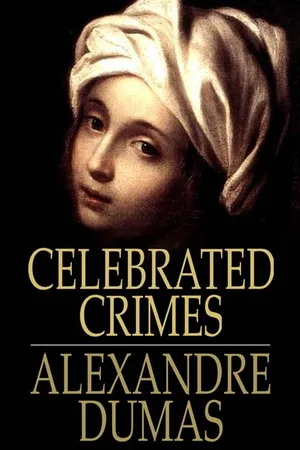 eBook - PDF
Celebrated Crimes
Complete
- (Author)
- 2012(Publication Date)
- The Floating Press(Publisher)
Finally, in the centre of this immense circle, composed of great Powers, of secondary States, and of little tyrannies, Rome was set on high, the most exalted, yet the weakest of all, without influence, without lands, without an army, without gold. It was the concern of the new pope to secure all this: let us see, therefore, what manner of man was this Alexander VI, for undertaking and accomplishing such a project. 35 Chapter III RODERIGO LENZUOLO was barn at Valencia, in Spain, in 1430 or 1431, and on his mother's side was descended, as some writers declare, of a family of royal blood, which had cast its eyes on the tiara only after cherishing hopes of the crowns of Aragon and Valencia. Roderigo from his infancy had shown signs of a marvellous quickness of mind, and as he grew older he exhibited an intelligence extremely apt far the study of sciences, especially law and jurisprudence: the result was that his first distinctions were gained in the law, a profession wherein he soon made a great reputation by his ability in the discussion of the most thorny cases. All the same, he was not slow to leave this career, and abandoned it quite suddenly far the military profession, which his father had followed; but after various actions which served to display his presence of mind and courage, he was as much disgusted with this profession as with the other; and since it happened that at the very time he began to feel this disgust his father died, leaving a considerable fortune, he resolved to do no more work, but to live according to his own fancies and caprices. About this time he became the lover of a widow who had two daughters. The widow dying, Roderigo took the girls under his protection, put one into a convent, and as the other was one of the loveliest women imaginable, made her his mistress. This was the notorious Rosa Vanozza, by whom he had five children—Francesco, Caesar, Lucrezia, and Goffredo; the name of the fifth is unknown. eBook - ePub
- William Miller(Author)
- 2017(Publication Date)
- Jovian Press(Publisher)
IX. THE PAPACY OF ALEXANDER VI.
..................THE FIRST ACTS OF THE new Pope marked him as, at least, a strong ruler. He punished crime among his subjects with rigour, paid his officials punctually, and restored peace and plenty to the city. His own table cost but little, for he was a strict economist in matters of personal expenditure. But from the first moment he displayed the spirit of nepotism, which, in his case, caused such grave evils. For, in the desire to raise his children to posts eminence, he stuck at nothing. His first care was for Cæsar, who rushed from his studies at Pisa to Rome as soon as he heard the news of his father’s election. On the very day of his coronation, Alexander created him Archbishop of Valencia, a post which he had occupied himself, and a little later made him a Cardinal. Similar appointments followed, and soon no less than thirty relatives of the new Pope were holding high offices. The days of Calixtus III. had returned; the Borgia family had once more invaded Rome. For Lucrezia, by reason of her sex, there was no ecclesiastical preferment, for her age (she was twelve at her father’s accession) would have been no bar to such a career, seeing that Cæsar had been dedicated to the Church at six. But her father married the young lady, who had already been twice engaged, to the relative of a powerful Cardinal, the same who had received the four mules laden with gold. The wedding was celebrated in the Belvedere of the Vatican according to the precedent of Innocent VIII., in the presence of the happy father, but we must leave the description of the proceedings in “the decent obscurity of a foreign language.” As the King of Naples said, the Pope’s sole aim was the aggrandisement of his children.It is pleasant to turn from these petty acts of nepotism to the great deed of world-wide import, which Alexander was called upon to execute. In the same year which witnessed elevation to the Papacy, Columbus had discovered America, and during his pontificate Vasco da Gama doubled the Cape of Good Hope. The two great exploring Powers of that age, Spain and Portugal, appealed to his decision for the delimitation of their “spheres of influence” in the New World
Index pages curate the most relevant extracts from our library of academic textbooks. They’ve been created using an in-house natural language model (NLM), each adding context and meaning to key research topics.

