History

Portuguese East Indies
The Portuguese East Indies refers to the territories in Southeast Asia that were colonized by Portugal in the 16th and 17th centuries. These territories included parts of present-day Indonesia, such as the Maluku Islands and Timor. The Portuguese established trading posts and exerted influence in the region, particularly in the spice trade.
Written by Perlego with AI-assistance
Related key terms
1 of 5
8 Key excerpts on "Portuguese East Indies"
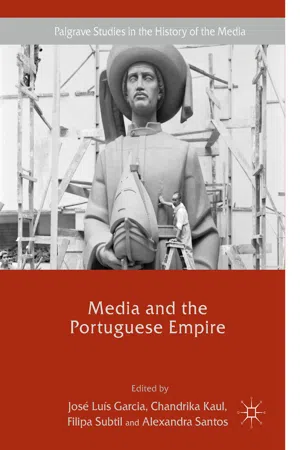 eBook - PDF
- José Luís Garcia, Chandrika Kaul, Filipa Subtil, Alexandra Santos, José Luís Garcia, Chandrika Kaul, Filipa Subtil, Alexandra Santos(Authors)
- 2017(Publication Date)
- Palgrave Macmillan(Publisher)
Tomé and Príncipe, and included the island of Timor, next to the Molucca, and a series of enclaves on the Indian coast, as well as fortresses and significant portions of coastal territory in East and West Africa and their respective hinterlands, covering lands which today are part of Angola, Mozambique and Guinea-Bissau. While it should not be forgot- ten that the word ‘empire’ has its own history, which is important for his- toriography, and its own conceptual definition, the primary purpose of this introduction is to describe the contexts of the modern Portuguese impe- rial dynamic. It therefore examines the circumstances, events, episodes and processes which marked both the so-called Discoveries and the Portuguese expansion into the seas of Asia and into Brazil and Africa, 3 until its collapse in 1974 in the wake of the ‘carnation revolution’. Recent English-language summary works enable us to avoid analysing this topic in greater depth and providing exhaustive bibliographical references, which would be an impossi- ble task given the huge volume of historiography produced on this topic. 4 The effort made in this book to conduct historical observation on the basis of THE PORTUGUESE EMPIRE: AN INTRODUCTION 3 connections, communications and the relationship between information and power, in line with social scientific approaches to historiography, relies on a theoretical foundation which is open to new concepts and issues but retains critical capability and analytical rigour regarding the Portuguese imperial past. A PORTUGUESE EMPIRE IN THE SEAS OF ASIA While other European countries—France, Great Britain, Holland, Germany, Belgium, Spain—had empires, it is important to note that the Portuguese empire provided continuity with an earlier ‘seaborne empire’, the origins of which go back to the Renaissance. eBook - PDF
Portuguese and Luso-Asian Legacies in Southeast Asia, 1511-2011, vol. 2
Culture and Identity in the Luso-Asian World: Tenacities & Plasticities
- Laura Jarnagin(Author)
- 2012(Publication Date)
- ISEAS Publishing(Publisher)
THE PORTUGUESE AND INDONESIAN PRESENCE IN EAST TIMOR: A COMPARATIVE ANALYSIS Today, East Timor is an independent multilingual nation with many limitations and facing many challenges, which in practice makes its independence still very tenuous. Low levels of development are still present, a recurring theme that is the consequence of four-and-a-half centuries of Portuguese exploitation, with practically no developmental returns, cobbled together with another twenty-four years of Indonesian military occupation, which had substantial structural impacts on the territory. Despite being part of the Portuguese empire for such a long period of time, this association contributed almost nothing to the development of the territory. On the other hand, while physical development was minimal, the Portuguese language and the Catholic religion were key to the development of a unique culture, a hybrid of indigenous cultures imbued with Chinese and Malay influences, present in the territory since the thirteenth century as a result of the sandalwood trade, which today is all but extinct. As an overseas province, East Timor was kept isolated without any significant investment in development being undertaken, either due to the geographical remoteness of the island, or because of the limited prospects for 98 Vicente Paulino economic and political returns for Portugal. An example of such developmental alienation is seen by the establishment of the first official school in Timor as having taken place only in 1915 (four centuries after the initial occupation of the territory). In terms of a politico-administrative context, the Portuguese adopted more of an assimilation policy than other “colonizing” conquistadores (conquerors) and were concerned to a point to bring the Western (Christian) faith to the Timorese. eBook - ePub
The World Encompassed
The First European Maritime Empires c.800-1650
- G. V. Scammell(Author)
- 2018(Publication Date)
- Routledge(Publisher)
Nor was this the limit of Portuguese endeavour. Japan itself was found, Viking-style, purely by accident when a party of would-be China traders was blown there by a typhoon (1543). To their delight they encountered people less haughtily contemptuous of foreigners than the Chinese and with so avid a desire for the products of Europe and China as to make their country ‘one of the best and most suitable … for gaining profit’. Earlier the Portuguese had reached Siam and Burma, besides establishing posts in eastern India. Some uncertain authority also came to be exercised over Ceylon, rich in cinnamon, elephants – used in war and ceremony in India – and precious stones. Straddling the shipping routes from the Arabian Sea to the Bay of Bengal and southern Asia, and politically weak, it appeared to bold strategists the ideal base for privateering, and the possible seat of a great eastern realm.These fanciful dreams were not realized, and by the mid-1500s Portugal’s Asian empire had reached its fullest extent. Individuals were indeed to penetrate further still, merchants or seamen to Manila, New Guinea and the Seychelles in the later sixteenth century; missionaries to Vietnam and Tibet in the early 1600s. At the same time local hostility, European competition, and the ever-growing power of Islam brought a search for new bases and new allies. Nevertheless the essential character of the empire remained unchanged. Whatever the grandiose titles concocted at home, or the bellicose language of imperial correspondence, the Portuguese were notoriously not, as were the Spaniards in America, rulers by conquest of subject millions. Their territorial possessions were few; colonization – in face of a hostile climate, organized and populous Asian societies, and their own demographic weakness – was insignificant. Instead, Portugal’s eastern empire was a string of fortresses and factories – the very worst to defend – sustained by, or potentially controlling, maritime trade routes. In this, though the product of a remarkably non-mercantile society, it resembled those of the Hanse and Venice. Similarly, as in their empires, long-distance trades were complemented, and often overshadowed, by local ‘country’ traffics. And, as with Genoa, the fragile authority of the parent community and the limited opportunities it offered, encouraged individuals to trade where the flag of the mother country could never hope to follow, and ensured that Portuguese commerce long survived the demise of Portuguese rule. But Portugal enjoyed nothing of the economic hegemony of the German or Italian cities. Her commercial monopolies were less effective, and her empire – isolated survivals apart-far shorter lived. Simply a seapower of modest strength, she controlled no inland bases, and stimulated no such spate of urban foundations as the more intensively commercial Hanse. And reflecting its peculiarly monarchical and aristocratic origins, Portugal’s empire was largely geared to plunder, and to the conduct of a trade even more exclusively devoted to luxuries than that of Venice (cf. pp. 101ff). eBook - ePub
- Paul Kratoska(Author)
- 2022(Publication Date)
- Routledge(Publisher)
Portuguese participation in the pepper and spice trade caused a rise in prices and led to increased production of these commodities. Both pepper and spice production spread out into new areas. The influx of foreign merchants had the effect of alerting the coastal potentates and making them aware of the great value of the local products. A scramble for pepper and spices had begun. Many of the coastal kingdoms began to extend their territories with a view to reach out to the areas of production and the ports acting as outlets for these products. Acheh threw up a little empire along the east and west coasts of Sumatra. Ternate and Tidore and later Macassar extended their respective areas of control. The same process operated in north Java.The Portuguese attack on Malacca in 1511 coincided with the spread of Islam along the coasts of Indonesia. One may not agree with Schrieke that the Portuguese presence sparked off a race between Christianity and Islam in Indonesia, but undoubtedly there was a quickening of zeal for Islam during this period in the coastal regions. But the opposition between Christianity and Islam should not be overstressed because there was no unity among Muslims and no desire to combine against Christian powers. The sultanates were as bitterly opposed to one another as they were to the Portuguese in Malacca. Religion may not have been as important a factor as it appears on the surface. The Portuguese, however, conditioned the political atmosphere in a different way. They were the major importers of firearms in this area. Individual Portuguese entered the services of southeast Asian kingdoms and helped in spreading the knowledge of firearms. In this sense the Portuguese were partly responsible for aggravating the intense political rivalry within the Indonesian archipelago.The seventeenth century
For many historians of Indonesia the seventeenth century opens with the Anglo-Dutch assault on the Portuguese and Spanish positions in the East accompanied by Anglo-Dutch rivalry to dominate the spice trade. These episodes acquire importance not only from the point of view of European expansion in Asia. Even from an Indonesian point of view the dominant European power in the region often provide us with a convenient focus. Historians have vainly looked for a focus in Indonesia. In the period of European interference one can look at the interaction of Indonesian states with the major European power as a convenient central theme. One can begin by asking the question: where do Indonesian states stand in relation to the Dutch East India Company? It is possible to write a meaningful account of Indonesian trade and politics in the seventeenth century in terms of this question. Yet it seems imperative at this point to plead for an alternative viewpoint. European activities should be seen within the dynamics of Indonesian trade. Furthermore the interrelation of Indonesian states should be given the weightage it deserves. It is essential to grasp that the evolution of trade and politics in Indonesia has a rhythm of its own. There is a constant tendency to reach a structural balance in the archipelago between the East and the West. What D. G. E. Hall calls the ‘ding-dong battle between Sumatra and east Java’ reflects the perennial see-saw, the everlasting fluidity of a shifting balance which paradoxically holds the archipelago together. When Srivijaya gave some sort of unity and cohesion to western Indonesia it was attacked by east Java which had friendly ties with the Cholas. Then the focus shifted to Java which became the core of the Majapahit empire. The sultanate of Malacca (1400–1511) once again recaptured for western Indonesia the position it had once enjoyed under Srivijaya. The Portuguese conquest in 1511 eventually destroyed the unity of the Malay empire. For a time the unicentred pattern of Indonesian trade was replaced by a multicentred arrangement. This situation continued until the Dutch made Batavia the nucleus of a Java-based commercial network which sought to encompass the entire archipelago. Historians have tried to examine the extent of European influence on Indonesian trade. It is fruitful to explore to what extent the outsiders were forced to come to terms with the situation in the archipelago. The compulsions of the trading environment in Indonesia obviously set limits to the course of action to be adopted by the Europeans.
- A.R. Disney(Author)
- 2023(Publication Date)
- Routledge(Publisher)
II The Portuguese Empire in India c. 1550–1650 Some Suggestions for a Less Seaborne, More Landbound Approach to its Socio-Economic History Some forty-five years ago J. C. Van Leur commented to the effect that historians seemed too often to be viewing Asian history from the very limited perspective of an East Indiaman’s deck. 1 Insofar as this criticism referred to explicit assumptions of European superiority it is probably for the most part no longer applicable; but in respect of Eurocentric preoccupations it remains, at least in certain areas, substantially valid. This is demonstrably so with many studies in the economic history of the Portuguese empire in Asia which, while they have in some cases achieved great advances in our knowledge and understanding since Van Leur, have nevertheless been largely confined to the essentially European-orientated themes of maritime trade and communications. 2 The reasons for this concentration are fairly clear. It has long been a practically unquestioned historiographical assumption that the Estado da India was, in its economic aspect, almost exclusively a maritime trading empire, and had very little territorial importance or interest. The notable Indian historian K. M. Panikkar, while he cogently exposed some of the European prejudices that had characterized earlier writing on Europe in Asia, appears to have been particularly anxious to stress the Portuguese empire’s alleged territorial insignificance — thereby indirectly reinforcing the traditional emphasis on its trade and shipping. 3 Western economic historians in this field have overwhelmingly maintained these preoccupations. This is doubtless partly because the European documentary sources for the history of Portuguese seaborne commerce in Asian waters are comparatively rich, and have offered opportunities for fruitful research eBook - PDF
- Steven Drakeley(Author)
- 2005(Publication Date)
- Greenwood(Publisher)
The Portuguese, having tried and failed to establish themselves as the region's dominant power, effectively became merely another powerful participant in regional affairs, operating largely by the long-established local rules. Thus the Portuguese tried to coerce shipping into the ports they controlled as local states had always done. Also, like local states, they negotiated alliances, such as with Hindu-Buddhist Banten in 1522 (against Muslim Demak) and in the same year with Muslim Ternate (against Muslim Tidore, which was allied to the newly arrived Spanish). The Portuguese also seized cargoes as regional pirates had always done when opportu- nities arose, and, as local states in alliance with pirates often did, they generally targeted shipping that bypassed their ports. Like local and other visiting merchants, they also traded freely, usually behind the back of the Portuguese Crown. A third important effect attributed to the Portuguese is their intro- duction of Christianity into the region, and with it the Christian- Muslim friction central at the time to the politics of the Mediterranean and southern Europe. The first part of this proposition is correct, although spreading Christianity was not the Portuguese's primary objective except for a zealous few. Nevertheless, by the end of the sixteenth century, there were probably around a hundred thousand indigenous Christians in eastern Indonesia, 3 a considerable number given the total population of Indonesia at this time, estimated to be less than ten million. 4 The second part of the proposition is also true but should not be exaggerated. Whatever religious animosity 26 The History of Indonesia there was between Christians and Muslims that arrived with the Portuguese was insufficient to prevent occasional political alliances between the Portuguese and Muslim kingdoms of the region, even against other Muslim kingdoms, when it seemed mutually benefi- cial. eBook - ePub
Timor Leste
Politics, History, and Culture
- Andrea Katalin Molnar(Author)
- 2009(Publication Date)
- Routledge(Publisher)
There is a multitude of quality historical sources which discuss this period of impact on the historical development of the people of Timor Island; however, in the following overview I am mainly concentrating on the accounts of those that focus on the historical experiences of Timor Leste in particular (see for example, McWilliam 2002; Fox 2000; Matos 1974; Felgas 1956; Castro 1943; Gunn 2001; Duarte 1944; Leitao 1948 and 1952; Martinho 1943, 1945, and 1947; Metelo 1922; Schlicher 1996; Sherlock 1983; Therik 1995; Vasconcelos 1937; Pereira 1940; Oliviera 1949; 1950, 1952; Morais 1934, 1944; Webb 1980; Kohar 1998; Hiorth 1985; Tanter et al. 2001a among others). This period has several significances for the socio-political development of Timor Leste, as I shall discuss below. The people of Timor Island were caught in the tug-of-war of political-economic struggle between the Dutch and the Portuguese—a struggle that precedes the colonial presence of either power on Timor, and had lasting political and territorial consequences into the present. In territorial terms, Timor Island became divided into western and eastern parts during this colonial period of history. Therefore, the roots of the current division of Timor Island between the nations of Indonesia and Timor Leste lie in this period.While the interests of the Portuguese in Timor were mainly focused on the sandalwood trade, by the early sixteenth century their presence on the island was mainly represented by early Catholic missionaries (Gunn 2001; Felgas 1956; Matos 1974; Morais 1934; Vasconcelos 1937). By 1515 a few Dominican priests had introduced Roman Catholicism to the island. However, the 1556 arrival of the Dominican friar, António Taveira, officially marked the commencement of a more widespread missionizing effort. The Church’seffort concentrated on the north and south coastal chiefdoms during the late sixteenth century. It should be emphasized, however, that these were only a handful of priests setting up isolated Catholic missions and it took them almost 100 years (by 1640) to set up 10 missions and 22 churches on Timor. Therefore, initially it was not a Portuguese colonial administration, nor trading posts nor military garrisons that were present on Timor Island. These Portuguese penetrations happened gradually and in reaction to Dutch and Portuguese relations in the neighboring islands and then in west Timor. Thus it is not appropriate to talk about Portuguese colonialism beginning in the sixteenth century. Therefore, it may be useful to briefly review the process by which the Portuguese gained and enhanced their foothold on Timor Island and when and if one may talk about colonialism (cf. Fox 2000).
- Michael Leach(Author)
- 2016(Publication Date)
- Routledge(Publisher)
Though the Portuguese remained more influential in the east, effective control – even in the coastal reinos – remained contested. Notably, in 1777 from the new capital in Dili, the site of a Dominican mission since the 1650s, the Portuguese estimated the allegiance of some 49 reinos in Belu and 17 in Servião. As Durand (2006) noted, these reinos partly correspond to present day subdistricts, though they would be reduced in size in the early part of the twentieth century. Fifty years after the move to Dili, the loss of Atapupo on the north coast to the Dutch in 1818 (Jannisa 1997: 88) saw the territories under Portuguese influence divided, and Oecusse isolated from the territory further east. Negotiations eventually replaced military tactics by 1848 (Durand 2006: 51–2) though calamity would follow for the Portuguese Indies, with the sale of its remaining holdings in Flores to the Dutch under Governor Lopes da Lima in 1851. In a negotiation unauthorized by Lisbon, da Lima renounced the Portuguese claim to Flores, Alor, Pantar and Solor in exchange for 200,000 florins and the recognition of Portuguese sovereignty over Maubara, Oecusse and the island of Atauro (Durand 2006: 52). Though da Lima was recalled to Lisbon in disgrace, the agreement was later ratified in 1859, creating the first border between Dutch and Portuguese Timor. Though the territory of East Timor was taking shape, disputes remained over enclaves on either side of the main border, and also over the eastern border of Oecusse, which the Dutch negotiating team was unable to visit owing to the hostility of local reinos (Hill 2002: 6). The 1850s also saw significant changes in the Portuguese colonial presence, with a military commander and small garrisons in each of the then-eleven districts: a more extended but tentative position, which still relied on alliances with local reinos to quell rebellions elsewhere (Hohe 2002: 573)
Index pages curate the most relevant extracts from our library of academic textbooks. They’ve been created using an in-house natural language model (NLM), each adding context and meaning to key research topics.

