History

Prison Reform
Prison reform refers to efforts to improve the conditions and effectiveness of the prison system. Throughout history, various movements and initiatives have aimed to address issues such as overcrowding, rehabilitation, and the treatment of prisoners. These reforms have often been driven by concerns about human rights, social justice, and the potential for rehabilitation and reintegration of offenders into society.
Written by Perlego with AI-assistance
Related key terms
1 of 5
8 Key excerpts on "Prison Reform"
 eBook - PDF
The Criminal Justice System
An Introduction, Fifth Edition
- Ronald J. Waldron, Chester L. Quarles, David H. McElreath, Michelle E. Waldron, David Ethan Milstein(Authors)
- 2017(Publication Date)
- Routledge(Publisher)
CHAPTER SEVENTEEN BACKGROUND AND HISTORY OF INSTITUTIONAL CORRECTIONS FOUNDATION FOR INSTITUTIONAL CORRECTIONS ENGLAND EARLY Prison Reform AND REFORM-ERS DEVELOPMENT OF THE AMERICAN PRISON SYSTEM THE PENITENTIARY IN AMERICA THE REFORM ERA EARLY STEPS IN FEDERAL CONFINEMENT EARLY 1900s THE INDUSTRIAL ERA 20th-CENTURY CORRECTIONAL LEADERS RIOTS, LITIGATION, AND REFORM Purpose: To trace the historical devel-opment of corrections, including the early practices and theories. The field of corrections in the United States is composed of numerous components that include probation, community corrections, jails, prisons, and parole. Corrections is directly linked to judi-cial sentencing and, though it remains under the scrutiny of American society, it is the least-known component of the criminal justice system. Throughout most of history, punishment has been both direct and harsh. During medieval times, branding, mutilation, flogging, banish-ment, and death were common punishments and frequently administered publicly to serve as a warning to others. Though every society has found ways to punish those who have violated established rules and laws, the concept of offender confinement evolved slowly, primarily due to the costs related to incarceration and, in many cases, the desire to continue the use of public punishment as a warning to the public as to the consequences fac-ing them if they do not adhere to established laws. As a major component of punishment and corrections in the United States today, offender confinement in itself is diverse, consisting of pri-vate, local, state, and federal facilities, ranging in size and institutional security level with in-mates typically segregated by gender, nature of the offense, and offender age. The goal of corrections is quite simple: to pro-vide services that enhance public safety and se-curity through the supervision and management of those assigned to custody upon their convic-tion. eBook - PDF
The Persistent Prison?
Rethinking Decarceration and Penal Reform
- Maeve McMahon(Author)
- 2019(Publication Date)
- University of Toronto Press(Publisher)
The Prison, Criminology, and Rehabilitation The Prison, Criminology, and the Ascendancy of Rehabilitation As Foucault's (1977) work suggests, and as Garland (1985b) has elab-orated, the exercise of penal power through the prison, and the genesis of criminological ideas, have historically been interwoven. The emer-gence of a distinctively critical criminology in the late 1960s represent-ed a concerted attempt to break with this correctionalist stance. Critical criminologists sought to move away from technicist concerns with crim-inals, the causes of crime, and the effectiveness of penal programs; what they considered to be at issue were deeper, more political questions about the significance of deviance, its definition, and its control, in the reproduction of an oppressive social order. This sociopolitical focus of critical criminologists brought them far beyond the walls of the prison and into the wider penal realm. Yet, in some respects, critical criminologists' analytical movement away from the prison reflected a tendency that was also becoming evi-dent in mainstream criminology itself. One way of recapitulating the history of criminological ideas, therefore, is to examine criminology's initial preoccupation with, and gradual movement away from, the insti-tution of imprisonment. The rapid spread of imprisonment as a major social institution dur-ing the nineteenth century provided a basis for criminology as a field of inquiry. Originally, what was considered to be at issue in the formation of knowledge was not the nature of imprisonment itself, but rather that of those who were incarcerated. By virtue of their confinement within the prison, prisoners were spatially, socially, legally, and administra-tively segregated from society at large. They became amenable to social-2 The Prison, Criminology, and Rehabilitation 11 scientific inquiry. eBook - PDF
Doing Time
An Introduction to the Sociology of Imprisonment
- R. Matthews(Author)
- 1999(Publication Date)
- Palgrave Macmillan(Publisher)
Although decisions to adopt or abandon a par- ticular mode of punishment may be couched in terms of humanism, these decisions, Rusche and Kirchheimer argue, are underpinned by material interests (Weiss, 1987). Therefore, they suggest that one should be careful in simply attributing penal change to the activities of reformers, as historians like David Rothman (1971) tend to do. Instead, there is a need to look behind the rhetoric of reformers and ask why it should be that in any particular period certain arguments should find an attentive audience. At the same time, the manner and speed with which Prison Reform takes place, Rusche and Kirchheimer argue, is not only a function of the weight of the arguments for change The Emergence of the Modern Prison 9 but is also dependent upon wider social conflicts and struggles between classes (Ignatieff, 1981). Rusche and Kirchheimer maintain that prisons are part of a disciplinary network for regulating the poor and for imposing discipline. For these reasons, they argue that condi- tions in prisons are governed by the principle of ‘less eligibility’, such that conditions in prisons must be no better than those experienced by the poorest sections of the working classes, otherwise members of the lowest social strata will not be deterred from committing crimes (Melossi and Pavarini, 1981). But although Rusche and Kirchheimer (1968) recognise the role of the prisons in encouraging time and work discipline in industrial capi- talism, their explanation of the emergence of the modern prison is tied more specifically to the system of productive relations. Their basic axiom that: ‘Every system of production tends to discover punish- ments which correspond to its productive relationships’ (emphasis added) clearly expresses their view that it was the changing form of production and associated changes in the organisation of labour which were the main determinants of the prison. eBook - ePub
The Reform of Prisoners
1830-1900
- Willam James Forsythe(Author)
- 2020(Publication Date)
- Routledge(Publisher)
49 In addition, although by 1825 elements of reformatory discipline were plainly evident in most English counties, reformists were themselves aware that prisons were not in fact administered wholly according to their vision and that they were under attack from opponents. They imagined that, given a perfect prison, their success would be undeniable and would overwhelm competing arguments. In their search for the inherent defects obstructing this success they alighted upon classification.Spiritual Reformism Perfected — The Separate System
By 1830 under the 1823 General Gaol Act50 the classificatory system had become very widespread in local prisons. As explained earlier, contamination would be reduced by, for example, segregating groups of misdemeanants and felons51 and placing them in different parts of the prison, each group having its own exercise space, day rooms, sleeping accommodation and labour areas. Yet, towards the end of the 1820s, it became clear to a number of parliamentary select committees that during the previous quarter-century there had apparently occurred a huge increase in crime.52 Some witnesses who argued the deterrent or retributory primary function before these parliamentary committees took advantage of this to urge a return to unmistakeable severity in prisons with substantial use of the treadmill: ‘I think there is now a greater dread of it and that it produces more order and regularity into the gaol’.53 eBook - ePub
- Francis Cullen, Karen Gilbert(Authors)
- 2012(Publication Date)
- Routledge(Publisher)
38 The prison, of course, presented an ideal locale in which to pioneer this new reformative society.The most urgent task confronting reformers was to restructure the internal routine of the penitentiary so that it would affirm the principles that had made for an orderly society in colonial times. It was clear that offenders would have to experience the discipline absent in their defective upbringing. Respect for authority would be mandated, and obedience to unbending rules demanded. Idleness, an inevitable occasion for vice and mischief, would be replaced by hard and steady labor aimed at instilling good habits that inmates could carry with them upon release. The value of religion would similarly be emphasized, with all offenders being amply educated in Christian doctrines. And above all, inmates would be totally separated from contacts that might result in their further contamination and commitment to criminal ways. The prison must not degenerate into a school for knavery and licentiousness.Two competing reform movements emerged, each trumpeting a distinct program for how the core principles of an orderly society of captives could best be satisfied. As might be expected, the Quakers and other liberal elements in Pennsylvania combined to form one of the groups at the forefront of this quest to establish a truly rehabilitative institution. Learning from their dismal failure at the Walnut Street Jail, these reformers were adamant that freedom from debasing criminal interactions could only be attained through a system of total solitary confinement that was never to be compromised. They proposed that each inmate be housed in a separate cell, day and night, for the entire term of incarceration. No communication with either fellow captives or outside visitors would be permitted. Even contact with guards and prison authorities was to be kept to a bare minimum. Inmates would be compelled to work alone in their cells at such tasks as spinning or shoemaking. The Bible was to be the only reading material that would be made available, and it was anticipated that its teachings would facilitate the process of penitence as offenders reflected upon their errant ways in the loneliness of their cells. eBook - PDF
- Todd Clear, Michael Reisig, Carolyn Petrosino, George Cole(Authors)
- 2016(Publication Date)
- Cengage Learning EMEA(Publisher)
Part One examines the social context of the corrections system. Chapter 1 asks the question “What is corrections?” and examines the purposes of corrections within the criminal justice system. The systems framework of analysis is introduced because it provides a means of understanding the interconnections of corrections with other criminal justice units. To further the understanding of corrections, a brief history of American corrections from the Revolutionary War to the present shows the development of ways that society has dealt with problems of social control. Chapter 2 looks at punishment, with an examination of the history of penology from the Middle Ages to the American Revolution. Next, the theoretical basis for the objectives of punishment is discussed, followed by the forms of the criminal sanction as implemented through the sentencing process. The issue of unjust punishment completes the chapter. 1 P A R T CORRECTIONS IN THE COMMUNITY THE CORRECTIONAL CONTEXT Chapter 1 What Is Corrections? Chapter 2 The Punishment of Offenders Romain Perrocheau/AFP Creative/Getty Images Copyright 2017 Cengage Learning. All Rights Reserved. May not be copied, scanned, or duplicated, in whole or in part. Due to electronic rights, some third party content may be suppressed from the eBook and/or eChapter(s). Editorial review has deemed that any suppressed content does not materially affect the overall learning experience. Cengage Learning reserves the right to remove additional content at any time if subsequent rights restrictions require it. statistic applying to the United States. In other words, nothing else in contemporary U.S. history has grown the way corrections has grown. The expansion of imprisonment illus-trates these changes. In 1973, when the current increase in the number of people in Something remarkable is happening in American corrections. For over 40 years— longer than most readers of this book have been alive—the corrections system has been growing. eBook - PDF
- M. Drolet(Author)
- 2003(Publication Date)
- Palgrave Macmillan(Publisher)
These barbarous conditions were condemned by English Prison Reformers such as Jonas Hanway and John Howard. They believed prisons should not only punish, but also reform. It was a fundamental shift in opinion on prisons. Various plans for prisons were designed with these ideas in mind, such as those based on the work of the seventeenth-century Benedictine monk, Jean Mabillon. His Réflexions sur les prisons des ordres religieux advocated princi- ples of redemptive imprisonment based on the ideal of a Carthusian clois- ter in which a special penitential rule of strict solitude was observed. It served as a model for what John Howard called ‘the more rational plan for softening the mind in order to its amendment’. 8 There were plans proposed by leading architects including William Blackburn, Étienne-Louis Boullée 116 Democracy and Social Reform and Claude-Nicolas Ledoux, and there was Jeremy and Samuel Bentham’s famous scheme for the Panopticon, a prison designed to accomplish, as they put it, ‘the joint purposes of punishment, reformation, and pecuniary economy’. 9 These projects were rooted in a new and optimistic understanding of indi- viduals and society. They all presumed human conduct could be reformed through intricate and sophisticated systems of classification, specialisation and rationalisation. Human actions could be scrutinised and regulated in order to teach prisoners obedience to social norms. But in France the advance of these proposals was halted abruptly by the Terror and not given new impetus until the creation in 1819 of the Royal Society of Prisons. 10 The Royal Society offered a forum for philanthropists, magistrates and administrators. Leading contributors to discussions on Prison Reform and the death penalty included the Prison Reformers Louis Villermé, E. Danjou, J.-F.T. Ginouvier, A.-H. Taillandier, and L.-P. Baltard. 11 Prominent Doctrinaires like Guizot and Rémusat wrote on the abolition of the death penalty.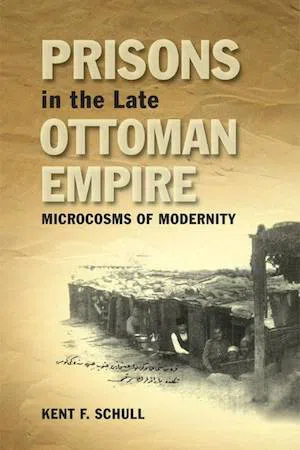
- Kent F. Schull(Author)
- 2014(Publication Date)
- Edinburgh University Press(Publisher)
Bureaucrats addressed issues related to administrative reform and centralisation, the rationalisation of Islamic criminal law and punishment, the role of labour in the rehabilitation of prisoners, economic development and industrialisation, gender and child-hood, the implementation of modern concepts of time and space, issues Prisons in the Late Ottoman Empire 44 of national identity based on ethnicity and religion, social engineering, and the increased role of the state in caring for its population. In other words, prisons are microcosms of imperial transformation and exemplify a distinctive Ottoman modernity created by the spread of capitalist market relations and the application of modern methods of governance to a spe-cifc Ottoman context. It also argues that Prison Reform and the transformation of Ottoman penal practice did not occur overnight or in a systematically progressive way, but the groundwork was laid in the 1850s for extensive Ottoman criminal justice reformation that included the empire’s sprawling and dilapidated network of prisons, jails, fortresses, and other governmental structures used for incarceration. Each Ottoman administration (Tanzimat, Hamidian, and CUP) built on the previous regime’s efforts, emphasising certain aspects so that by the time the CUP came to power, it was able to take full advantage of past reforms and implement them more fully according to its Positivist world view. This chapter’s discussion of Prison Reform is broken into two main parts. The frst discusses prison re form during the Tanzimat and Hamidian eras (c. 1850–1908). The second section focuses on Prison Reform during the Second Constitutional Period until the empire’s dissolution (c. 1908–22).
Index pages curate the most relevant extracts from our library of academic textbooks. They’ve been created using an in-house natural language model (NLM), each adding context and meaning to key research topics.

