Literature

I Know Why The Caged Bird Sings
"I Know Why The Caged Bird Sings" is an autobiographical novel by Maya Angelou that explores her early years and the challenges she faced growing up as a black girl in the segregated South. The book delves into themes of racism, identity, and resilience, and is celebrated for its powerful storytelling and lyrical prose.
Written by Perlego with AI-assistance
Related key terms
1 of 5

9 Key excerpts on "I Know Why The Caged Bird Sings"
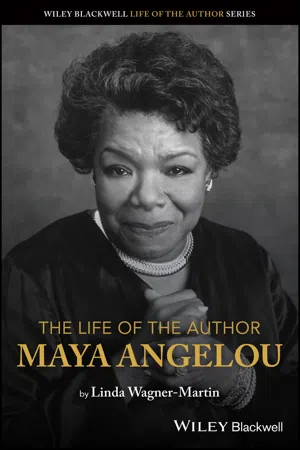 eBook - ePub
- Linda Wagner-Martin(Author)
- 2021(Publication Date)
- Wiley-Blackwell(Publisher)
never go out of print. For the rest of her lifetime and beyond, both hardback and paper editions of her first autobiography remain for sale. Now available as e-books and audio books, Angelou’s first book appears in numerous catalogues as well as online. It is no exaggeration that thousands of libraries have a copy of this book. It is a classic.Angelou was amazed that her carefully written memoir was on bookstore shelves, and sometimes prominently displayed in bookstore windows. It seemed as if every newspaper and magazine that Angelou came across carried a review of her autobiography. And then the essays started – eventually these would run to over 100 scholarly works, all focused on I Know Why The Caged Bird Sings. For Angelou, who had never read academic literary criticism, it was amazing that professional critics had found so much to say about her story, her life, her writing. In the apt words of Joanne Braxton, one of Angelou’s best critics, “Angelou inscribes her resistance to racism, sexism, and poverty within the language, the imagery, the very meaning of her text: her truth-telling vision confronts stereotypes old and new, reversing perspective and discomforting the reader seeking safety in the conventional platitudes of the status quo. Simultaneously, I Know Why the Caged Bird Sings’s profoundly moral stance challenges its audience to confront the contradictions of life and to create positive change, beginning with oneself and with one’s community.”Braxton was one of the earliest critics to praise Angelou’s double narrative voices – the adult who sees events retrospectively and the “girlchild,” the “Maya voice,” or young Marguerite – and the fact that such a seemingly effortless double vision allows Angelou to comment on both history and memory. “To borrow from the blues idiom of Ralph Ellison, the mature autobiographer consciously fingers the jagged edges of her remembered experience, squeezing out a tough lyric of black and blue triumph. Maya Angelou … emerges miraculously through a baptismal cataract of violence, abuse, and neglect.”Much critique of both Angelou’s prose and poetry speaks to its basis in speech, in African American speech. Angelou frequently called herself a “recorder.” She also said:“I write for the Black voice and any ear which can hear it. I search for sound, tempos, and rhythm to ride through the vocal cord over the tongue, and out of the logic of Black people. I love the shades and slashes of light. Its rumblings and passages of magical lyricism… eBook - PDF
Icons of African American Literature
The Black Literary World
- Yolanda Williams Page(Author)
- 2011(Publication Date)
- Greenwood(Publisher)
Maya suddenly finds herself on the fast track to adulthood when she realizes that she is pregnant at age 16. After her high school graduation, she tells her parents that she is eight months pregnant. Soon after, Maya gives birth to a son. At the conclusion of I Know Why The Caged Bird Sings, An- gelou is coming to terms with her new role as a young mother. In the closing scene, aided by the guiding wisdom of her own mother, Angelou learns her first motherly lesson as she shares her bed with her three-week-old son. I Know Why The Caged Bird Sings finds Angelou moving from place to place with no concrete sense of home. Her search for home and belonging is mirrored by her search for self. Angelou sets out to exemplify the feelings of loneliness and confinement that she feels as a child. Her desire to wake from her “black ugly dream” echoes the experience of all blacks in the South during the Great Depression era. Just as Angelou is trapped, the entire black commu- nity is trapped by the pains of racism and poverty ( Caged Bird 2). Although I Know Why The Caged Bird Sings is essentially a story about a girl coming into her own and learning what it means to be a black woman in the United States, the book exceeds expectations and transcends racial and gender lines. I Know Why The Caged Bird Sings broadens and redefines the American experience. In 1970, Angelou was nominated for the National Book Award for this work. In 1974, Angelou published her second autobiography, Gather Together in My Name. The book follows the three years after the birth of Angelou’s son, Guy. The title is taken from the book of Matthew in the Bible, where God states that “where two or three are gathered together in my name, there am I in the midst of them” (18:19–20 King James Version). In the book, Angelou chronicles her experiences through a series of colorful events, jobs, and rela- tionships. eBook - PDF
- Yolanda Williams Page(Author)
- 2007(Publication Date)
- Greenwood(Publisher)
Most critics regard Angelou as one of the great voices in contemporary American literature and her work an im- portant contribution to the American literary landscape. By far, critics study her work as a feminist and political text. Although, I Know Why The Caged Bird Sings is still the most critically studied and praised in the series. Some critics argue that the episodic nature of subsequent texts in the series lends itself to open dialogue (an evolution of self), while others have argued that the loose narrative development impedes understanding. Sondra O’Neale in ‘‘Reconstruction of the Composite Self: New Images of Black Women in Maya Angelou’s Continuing Autobi- ography,’’ suggests the seeming mendacity of the events recorded help create openness and continuity across the series with the reappearance of characters and themes (34). This 16 ENCYCLOPEDIA OF AFRICAN AMERICAN WOMEN WRITERS openness empowers Angelou to fashion a new self. Pierre Walker likewise argues that the form of the text is the vehicle through which Angelou politicizes the text, both the form and content cohere, and the seeming episodic nature of the text includes valuable juxtapositions. He argues that ‘‘to ignore form in discussing Angelou’s book, therefore, would mean ignoring a critical dimension of its important political work’’ (92). Whatever conclusion one draws about Maya Angelou, the woman, it is clear that her life not only represents the journey of a woman but has major implications as well for the civilization in which she lived. She personifies the peculiar experience of a people. Moreover, because of the background of the civilization in which she lives, her heroic journey is a celebration of the human spirit. Her risky truth-telling, wrapped in poetic song, is a unique gift to the world, and her personal experience preserved in her novels will continue to tell the story why the caged bird sings. BIBLIOGRAPHY Works by Maya Angelou Fiction All God’s Children Need Traveling Shoes.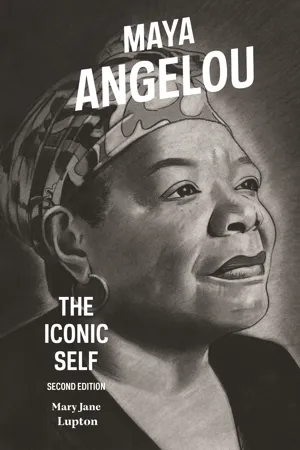 eBook - ePub
Maya Angelou
The Iconic Self
- Mary Jane Lupton(Author)
- 2016(Publication Date)
- Greenwood(Publisher)
Chapter 3I Know Why The Caged Bird Sings (1970)In 1970 a child with skinny legs and muddy skin was introduced into African American autobiography. Born Marguerite Johnson, she later became known as Maya Angelou, an actress and dancer who performed in George Gershwin’s musical, Porgy and Bess, and in Jean Genet’s satirical French play, The Blacks. In 1968 she wrote a successful series on African heritage for educational television. Angelou, well known by then as an entertainer and narrator, was urged by James Baldwin and by the cartoonist Jules Feiffer and his wife Judy to try her hand at writing an autobiography. After several refusals she agreed; the result was a unique series of autobiographical narratives.I Know Why The Caged Bird Sings is the first of Maya Angelou’s six autobiographies. It covers her life from the age of three, when her parents send her and her brother Bailey to live with their paternal grandmother, Annie Henderson, in Stamps, Arkansas, until the age of sixteen, when she becomes a mother. Annie Henderson is the main influence on her childhood.When Maya and Bailey are eight and nine, respectively, they travel to St. Louis, where their mother, Vivian Baxter, and their maternal grandmother are leading a far more sophisticated life than anything Maya had known in Arkansas. There are more parties and fewer church gatherings. In the loose atmosphere of St. Louis, Maya is raped by her mother’s boyfriend, Mr. Freeman, who warns her to be silent (mute) or he will kill her brother Bailey. After the trial Freeman dies after being violently beaten, presumably by Maya’s uncles. Maya is indeed mute. She cannot and will not speak. The silent Maya is returned to Momma Henderson, remaining speechless for five years until she recovers her voice through the patient help of her grandmother’s friend, Mrs. Bertha Flowers.As Maya emerges from the traumas of childhood, she gains strength from reading literature and graduates with honors from the eighth grade. Soon after graduation, she and Bailey move to San Francisco, where their mother, Vivian, was living with her new husband, Daddy Clidell. There, Maya simultaneously attends George Washington High School and on a part-time basis a Marxist labor school. At the latter she takes courses in dance and theater that will prove invaluable in her career. eBook - ePub
Stories of Resilience in Childhood
Narratives of Maya Angelou, Maxine Hong Kingston, Richard Rodriguez, John Edgar Wideman and Tobias Wolff
- Daniel D. Challener(Author)
- 2019(Publication Date)
- Routledge(Publisher)
I Know Why The Caged Bird Sings) testifies to a human triumph, an author’s ability to create something significant out of symbols.Yet beyond the human triumph that autobiography demonstrates, Maya Angelou’s particular work—through its descriptive language, metaphors, similes, and sentence structure—testifies to an extraordinary human triumph. Her language, the voice she creates to tell her life story, reveals a virtuosity that makes her autobiography proof of human potential. In many different ways her voice—her word choice, her use of metaphors and similes, her sentence structure, and, most important, her vignettes—at every turn demonstrate an extraordinary triumph of human creativity in the face of disaster. Indeed, it is not just her story but the voice that tells her story that shows that the prevailing metaphor in I Know Why The Caged Bird Sings is life, the triumph of life over the many forces of death.A good place to advance this argument is the opening scene of I Know Why The Caged Bird Sings. In this scene, already discussed in the beginning of this chapter, six year old Maya fails to remember the lines she is supposed to recite in front of the congregation of the Colored Methodist Episcopal Church. Deeply embarrassed, she runs out of the church. As she runs, she cannot control her bladder and urine runs down her legs.It would be hard to underestimate the significance of this scene. It is not only the first scene in I Know Why The Caged Bird Sings but it is also one of a small handful of scenes that is achronologic. Throughout her autobiography, Angelou follows a fairly strict chronologic order in recounting her childhood. Yet here, she begins with a description of an experience when she was six and then recommences her story with her first memories at age three. I read the opening scene as a kind of emblematic preface that articulates the prevailing sense of displacement and homelessness apparent throughout much of the first half of Angelou’s autobiography. Yet unlike the completely depressing opening scene of Anne Moody’s Coming of Age in Mississippi or Richard Wright’s Black Boy eBook - ePub
Invisible Trauma
Women, Difference and the Criminal Justice System
- Anna Motz, Maxine Dennis, Anne Aiyegbusi(Authors)
- 2020(Publication Date)
- Routledge(Publisher)
Chapter 12Conclusion
Why the caged bird sings
Anna Motz, Maxine Dennis and Anne AiyegbusiMaya Angelou uses the metaphor of the caged bird in her writings to represent the plight of the enslaved, oppressed and abused. In her 1983 poem entitled ‘Caged Bird’ Angelou contrasts the African American caged bird with the white free bird. Of the caged bird, she writes:But a bird that stalks down his narrow cage can seldom see through his bars of rage his wings are clipped and his feet are tied so he opens up his throat to sing. The caged bird sings with a fearful trill of things unknown but longed for still and his tune is heard on the distant hill for the caged bird sings of freedom.Like the caged bird, the plight of women detained within the criminal justice system is harrowing, and yet they long for ‘things unknown’. Typically, their traumas have been ‘forgotten’, secret or hidden and therefore invisible, their existence only surfacing through the women’s violent acts or conspicuous presentations and behaviours. The over-riding theme within each chapter of this book is the way that even when incarcerated, the women’s history of trauma and of suffering, whether its roots are trans-generational, social, political or domestic, remains invisible. The women’s experience is of being hyper-visible while their cries and communications go unheard as the focus remains on their puzzling un-womanliness. They are caught up in systems designed for men, and face multiple losses when they are imprisoned, feeding into the cycle of deprivation that has brought them into prison in the first place. Black, Asian and Minority Ethnic (BAME) women are overrepresented in the criminal justice system (CJS), yet overlooked. The unintended consequences of custodial sentences are destructive and far-ranging, as the previous chapters have shown, in terms of the impact on children, the creation of a sense of hopelessness in the women themselves, and the lost opportunities to engage and support the women in the community.
- Linda Wagner-Martin(Author)
- 2018(Publication Date)
- Routledge(Publisher)
I Know Why The Caged Bird Sings, written by another African-American author with no name recognition, was well publicized by Random House. It was translated into many languages; it became a poignant curiosity—the story of an abused black daughter, so frightened by the act of sexual molestation (and by her abuser’s being killed right after she has testified against him in court), that she did not speak for seven years—except to her beloved brother, who translated her life to the world. It was a gripping story, especially since the child gone mute was this author. Add in some of Angelou’s recognition as a singer and a dancer—a stage celebrity of sorts—and readers looked eagerly for her story.There were almost no women’s autobiographies of interest to contemporary readers—without much planning, Angelou filled a gap that readers hungered to have filled. The story was uplifting; it gave those readers an optimistic satisfaction—that the grandmother of the family, dedicated, devoted to God and His ways, protective of her grandchildren, could succeed in saving them from white persecution. I Know Why The Caged Bird Sings became a staple of college and secondary school courses: it was taught and taught and taught. Nearly fifty years after its first publication, without ever having been out of print, I Know Why The Caged Bird Sings is still taught.1For Toni Morrison’s The Bluest Eye, however, only a limited readership existed. Ironically, the plot was similar: Pecola Breedlove was another abused child, but this time the predator was her biological father. There was no larger-than-life grandmother imbued with a firm belief system; there was no Southern culture filled with racist predators. Instead, Morrison drew from her own childhood, and so the narrative was set in northern Ohio. Ohio? What did a reader know about the upper Midwest? What kinds of patterns did that location suggest? In this and in other matters, readers had no immediate point of entry into the story. Because they had no means of judging the authenticity of Pecola Breedlove’s narrative, they remained outside it. The Bluest Eye eBook - ePub
- Eva Lennox Birch(Author)
- 2016(Publication Date)
- Routledge(Publisher)
Native Son Angelou wants to fly, but recognises that a caged bird could batter itself to death on the bars in impotent rage:But a bird that stalks down his narrow cage can seldom see through his bars of rage his wings are clipped and his feet are tiedso he opens his throat to sing.8This poem crystallises the essential difference between Angelou’s personal search for self-definition and that of many black male writers, whose anger had hardened into a single-minded determination to shake white men into recognition of their own institutionalised inhumanity. The rage against the illogicality of white racism is no less apparent in Angelou’s writing than it is in black male writing, but its effectiveness is amplified for the reader because it is inscribed in the remembered experience of a joyous survivor.Although now a university teacher herself, circumstances had not enabled Angelou to pursue the education which Booker T. Washington had advocated as essential to success. Yet, like him, she too has been welcomed into the corridors of white power in Washington. She did more than just survive. Her poem of address to the nation when she stood in front of President Clinton during his inauguration was heard and seen by millions of people. She has certainly come a long way from the childhood in Arkansas she reconstructs in Caged Bird, when she was inexplicably rejected by her parents and sent to live with her grandmother in the rural South. The traumas associated with being young, female and black are exacerbated by her rape by her mother’s boyfriend on a visit North. Caged Bird ends with her search for sexual identity in an experimental sexual encounter, and the birth of a son to the 16-year-old Angelou. The second volume, Gather Together in my Name,9describes Angelou as a young mother, bent upon survival for herself and her child. Marriage provides this for a while as shown in volume 3, Singin’ and Swingin’ and Gettin’ Merry Like Christmas.10In this she also charts her developing career in show business and her maturing awareness of both black sexism and white racism. The widening of her horizons resulting from European travel as a singer and dancer sharpened her political awareness, and also caused her to suffer the agonies of guilt experienced by all women who have to combine career with mothering. She is assaulted by the constant conflict of choices as she struggles to be both a good mother and an economic provider. Volume 4, Heart of a Woman,11reflects her growth in maturity in that it is less concerned with her own development, focusing as it does on her active involvement in black politics. It describes her association with the Civil Rights Movement, her marriage to an African freedom-fighter and her life with him in Africa. Her last volume, All God’s Children Need Travelling Shoes,12
- Harold Bloom(Author)
- 2022(Publication Date)
- Chelsea House(Publisher)
Super-achievers like Maya Angelou usually write autobiographies, sometimes more than one. (W. E. B. DuBois, for example, wrote his first one in his late twenties, another on his fortieth birthday, another on his fiftieth, and so on.) All autobiographies ultimately have a theme and make a statement. In Maya Angelou's latest book, the theme is twofold: creativity and engagement. We learn by her example the value of both an artistic and an activist lifestyle. The real story of Maya Angelou is the story of a plain, black, six foot tall girl, a child of the American South, who has lived triumphantly and is telling us how she "got ovah."Entry Author: Ikerionwu, Maria K. Mootry.Source: Phylon, March 1983, pp. 86–87. Passage contains an image
The Song of a Caged Bird: Maya Angelou's Quest After Self-Acceptance
1973In (the) primal scene of childhood which opens Maya Angelou's I Know Why The Caged Bird Sings, the black girl child testifies to her imprisonment in her bodily prison. She is a black ugly reality, not a whitened dream. And the attendant self-consciousness and diminished self-image throb through her bodily prison until the bladder can do nothing but explode in a parody of release (freedom).In good autobiography the opening, whether a statement of fact such as the circumstance of birth or ancestry or the recreation of a primal incident such as Maya Angelou's, defines the strategy of the narrative. The strategy itself is a function of the autobiographer's self-image at the moment of writing, for the nature of that self-image determines the nature of the pattern of self-actualization he discovers while attempting to shape his past experiences. Such a pattern must culminate in some sense of an ending, and it is this sense of an ending that informs certain earlier moments with significance and determines the choice of what experience he recreates, what he discards. In fact the earlier moments are fully understood only after that sense of an ending has imposed itself upon the material of the autobiographer's life. Ultimately, then, the opening moment assumes the end, the end the opening moment. Its centrality derives from its distillation of the environment of the self which generated the pattern of the writer's quest after self-actualization.
Index pages curate the most relevant extracts from our library of academic textbooks. They’ve been created using an in-house natural language model (NLM), each adding context and meaning to key research topics.

