Politics & International Relations

International Monetary Fund
The International Monetary Fund (IMF) is an international organization that aims to promote global monetary cooperation, secure financial stability, facilitate international trade, promote high employment and sustainable economic growth, and reduce poverty around the world. It provides financial assistance to member countries facing balance of payments problems and offers policy advice and technical assistance to support economic stability and growth.
Written by Perlego with AI-assistance
Related key terms
1 of 5

10 Key excerpts on "International Monetary Fund"
- International Monetary Fund(Author)
- 1998(Publication Date)
- INTERNATIONAL MONETARY FUND(Publisher)
I Overview of the IMF as an International Monetary Institution
 Passage contains an image
Role of the IMF
The IMF is a cooperative intergovernmental monetary and financial institution with near universal membership. Its policies and activities are guided by its charter, known as the Articles of Agreement (the Articles), and are conducted under a decision-making structure that has evolved over the years (see Box 1 ). The IMF is unique among intergovernmental organizations in its combination of regulatory, consultative, and Financial functions, which derive from the purposes for which it was established (see Box 2 ): to promote international monetary cooperation; to facilitate the balanced growth of international trade; to promote exchange rate stability; to assist in the establishment of a multilateral system of payments and in the elimination of foreign exchange restrictions that hamper the growth of world trade; to make its resources available to its members to correct balance of payments imbalances without resorting to trade and payments restrictions; and to provide a forum for consultation and collaboration on international monetary problems. Thus, the IMF is concerned not only with the problems of individual countries but also with the working of the international monetary system as a whole. Its activities focus on promoting policies and strategies through which its members can work together to ensure a stable world financial system and sustainable economic growth.The Articles effectively place the IMF at the center of the international monetary system. The IMF provides a forum for international monetary cooperation, and thus for an orderly evolution of the system, and it subjects a wide area of international monetary affairs to covenants of law, moral suasion, and understandings. The IMF must also stand ready to deal with crisis situations, not only those affecting individual members but also those representing threats to the international monetary system. No longer available |Learn more
- (Author)
- 2014(Publication Date)
- Orange Apple(Publisher)
____________________ WORLD TECHNOLOGIES ____________________ Chapter- 6 International Monetary Fund The official logo The International Monetary Fund ( IMF ) is the intergovernmental organization that oversees the global financial system by following the macroeconomic policies of its member countries, in particular those with an impact on exchange rate and the balance of payments. It is an organization formed with a stated objective of stabilizing international exchange rates and facilitating development through the enforcement of liberalising economic policies on other countries as a condition for loans, restructuring or aid. It also offers loans with varying levels of conditionality, mainly to poorer countries. Its headquarters are in Washington, D.C., United States. The IMF's relatively high influence in world affairs and development has drawn heavy criticism from some sources. ____________________ WORLD TECHNOLOGIES ____________________ Organization and purpose IMF Headquarters 1 in Washington, D.C. The International Monetary Fund was conceived in July 1944 originally with 45 members and came into existence in December 1945 when 29 countries signed the agreement, with a goal to stabilize exchange rates and assist the reconstruction of the world's international payment system. Countries contributed to a pool which could be borrowed from, on a temporary basis, by countries with payment imbalances (Condon, 2007). The IMF was important when it was first created because it helped the world stabilize the economic system. The IMF works to improve the economies of its member countries. The IMF describes itself as an organization of 187 countries (as of July 2010), working to foster global monetary cooperation, secure financial stability, facilitate international trade, promote high employment and sustainable economic growth, and reduce poverty. eBook - PDF
- Martin Honeywell(Author)
- 1983(Publication Date)
- LAB (Latin America Bureau)(Publisher)
vi. In accordance with the above to shorten the duration and lessen the degree of disequilibrium in the international balances of payments of members.' The full text of the Articles of Agreement was published by HMSO, Treaty Series No 21 (Cmnd 6885) 1946. The IMF: Time for Reform, N. Butler. Various proposals were made during the latter part of the Second World War, the most far-reaching of which came from J.M. Keynes, probably the most influential economist of the period. These proposals were then debated at a conference which took place at Bretton Woods in the United States in 1944. The IMF and World 17 Bank were formally established a year later. The IMF's primary responsibility was to deal with monetary matters and particularly with countries suffering from short-term balance of payments problems. The World Bank was established to provide long-term developmental assistance to both developed and developing countries. The IMF was brought into existence on the basis of a set of Articles of Agreement which laid down the conditions all countries had to accept in international monetary relationships. The most important of these related to the problems of exchange rates and convertibility mentioned above. The original agreements required all countries to endeavour to maintain stable exchange rates. Changes could only be made after prior consultation with the IMF. Secondly, they required all countries to establish fully convertible currencies to maximise the possibility for unfettered multilateral trade. Further, as a condition of membership, all countries were required to contribute a quota to the Fund of which about 25 per cent had to be in gold, and the rest in its own currency. These resources provide the basis for the 'stand-by' programmes which the IMF negotiates with countries in balance of payment difficulties. Thus, to understand the role of the IMF, we have to understand the way in which it deals with: a. eBook - PDF
Governing Risk
The IMF and Global Financial Crises
- M. Moschella(Author)
- 2010(Publication Date)
- Palgrave Macmillan(Publisher)
The IMF has been at the forefront of the debate on international financial liberalization and stability, particularly because of its distinc- tive organizational mandate and features. For one thing, the IMF has the responsibility to oversee the international monetary and financial system. The Fund accomplishes this task by monitoring member coun- tries’ economic policies through its Article IV surveillance reports and by monitoring developments in the global financial system through the analyses conducted in its flagship publications – the World Economic Introduction 5 Outlook (WEO) and the Global Financial Stability Report (GFSR). 3 For another, the Fund possesses its own in-house research capacity. As an institution primarily staffed with PhD economists, the IMF is well-placed for elaborating and disseminating theoretical and empirical studies on topics relevant to its activities, including financial liberalization. 4 The history of the Fund also shows how the organization has been closely associated with the debate on the merits of international finan- cial integration and on the mechanisms that govern it. At the time of the Fund creation, the prevalent question among policy makers and economists was whether to allow the free movement of capital flows. 5 Drawing on the disastrous experience of the 1929 Great Depression, the conclusion that emerged from the Bretton Woods negotiations was that the costs associated with the free movement of capital flows signifi- cantly outweighed the benefits. Specifically, the view that ‘speculative’ capital flows posed a serious threat to the stability of the international financial system, as was most famously put by the UK negotiator John Maynard Keynes, and shared by his US counterpart Harry Dexter White (Boughton, 2002; 2006), substantially shaped the features of the post- World War II international financial regime.
- Adam McBeth(Author)
- 2009(Publication Date)
- Routledge(Publisher)
5 International financial institutions: the World Bank and the International Monetary Fund A. INTRODUCTION: THE ROLES OF THE WORLD BANK AND THE International Monetary Fund 1. Overview Like the World Trade Organization (WTO), both the World Bank and the International Monetary Fund (IMF) are international organisations constituted by member States. All three institutions have an economic focus, which in turn has a substantial effect on the realisation of human rights. However, the similar- ities with the WTO end there. In contrast to the role of the WTO as a forum for the formulation, interpretation and enforcement of international trade law, the World Bank and the IMF are independently active in the global economic sphere. Within the bounds of their respective organisational mandates, the World Bank and the IMF are direct actors in development and economic policy, rather than mere keepers of the law. An analysis of their respective roles and responsibilities with regard to human rights will therefore be quite different to the consideration of the WTO in the previous chapter. The World Bank and the IMF are often collectively referred to as the ‘inter- national financial institutions’ or ‘IFIs’. They are distinct and independent bodies with different historical purposes and different modern roles. In some cases, however, their operations converge in that both institutions provide finance to governments for economic development or restructuring, both act as inter- national lenders of last resort, and both sometimes impose conditions relating to the governance of borrowing or otherwise assisted States, with consequent social implications. In addition to these and other operational similarities, the two IFIs are very similar in terms of their structure and operation from the perspective of international law. eBook - PDF
The Currency of Power
The IMF and Monetary Reform in Central Asia
- A. Broome(Author)
- 2010(Publication Date)
- Palgrave Macmillan(Publisher)
Because the IMF’s own financial resources have dwindled relative to global trade and capital flows, the involvement of both private and official ‘supple- mentary financiers’ has become essential to the success of the IMF’s lending programs (Gould, 2003). The notion that the IMF is neither wholly autonomous nor dependent on its leading member states but is a semi-autonomous agent reinforces the need to ‘bridge the rationalist- constructivist divide’ in the field of International Political Economy in order to develop a comprehensive understanding of the influence and the behavior of international organizations as actors in their own right. Doing so is not a straightforward matter of asking ‘who is in the driving seat?’ steering the IMF’s behavior, but also involves probing the domestic political conditions in which the IMF is able to ‘get the car to start’ in the first place. 30 The Currency of Power The focus here is not simply on the IMF-member state relationship conceived as a strategic game over policy conditionality, with actor A (the IMF) trying to establish the material incentives that will cause actor B (the member state) to comply by offering policy concessions. This book explores how the IMF has attempted to gradually cultivate new intellectual frameworks among key state actors in postcommunist economies, which might generate the ideational conditions for achiev- ing and sustaining IMF-friendly institutional change. This process centers on the politics of ideas, and involves a series of repeated strategic games over policy efficacy, with the IMF attempting to diffuse new policy norms to national officials through the provision of material incentives coupled with intellectual persuasion. Changing the prevailing economic ideas in a country is a crucial part of the IMF’s role. eBook - PDF
Monetary Policy in Transition
Inflation Nexus Money Supply in Postcommunist Russia
- M. Nikolic(Author)
- 2006(Publication Date)
- Palgrave Macmillan(Publisher)
During this time the results of the involvement in various stabilization programmes have been mixed. The World Bank has responded to financial crises with recommendations to strengthen policy regimes and financial support. Although it is not intended to act as a lender of last resort and is not pri- marily designed to fight crises, its participation has been required because of the structural origins of the crises and the enormous impact they have had on income distribution and poverty. With macroeconomic stability as its chief aim the IMF has played a leading role in the creation and execution of these programmes. Despite differences related to country-specific characteristic, most of the IMF programmes have three common and complementary elements: (1) securing sustainable external financing, (2) the adoption of demand- restraining measures, especially in the early stages of a programme, and (3) the implementation of structural reforms. The availability of external financing determines the magnitude and pace of the adjustment process. At the outset of a programme a country that experiences balance of payment difficulties can usually borrow only limited funds. IMF guidelines require countries not to have an ex ante external financing gap, to be up to date with their debt service commit- ments, and to eliminate any external debt arrears that have accumulated prior to programme approval (Mussa and Savastano, 1999). The Role Played by International Financial InstitutiollS 99 Demand-restraining measures, which are typically understood as measures to tighten monetary and fiscal policies, are the best known but controversial elements of typical IMF programmes. The intention of the architects of such programmes is to bring aggregate demand into line with expected output and the availability of external financing, and thus to establish a sustainable current account. eBook - PDF
Renegotiating the World Order
Institutional Change in International Relations
- Phillip Y. Lipscy(Author)
- 2017(Publication Date)
- Cambridge University Press(Publisher)
14 It is more difficult for regional institutions to provide such cover due to narrower, uneven membership and local political sensitiv- ities. This is well-illustrated by the decision of East Asian states to tie the plurality of Chiang Mai Initiative lending to IMF conditionality – as I will discuss in Chapter 4, the prospect of China or Japan being implicated for imposing harsh conditions on regional neighbors such as Korea has been considered politically unacceptable. Analogously, Greek public percep- tions toward Germany plummeted during the Euro Crisis, as Germany’s dominant position in the Eurozone made it an obvious target for frustra- tion over austerity measures. 15 Universal membership can help to diffuse such political sensitivities. The political cover afforded by the IMF also enables countries to launder funds, 16 sidestepping domestic opposition to international 12 Williamson 1983; Haggard 1985; Haggard and Kaufman 1992; Drazen 2002; Stone 2002; Gould 2003; Vreeland 2003; Dreher and Vaubel 2004; Stone 2004; Stone 2008. 13 Kahler 1993; Thacker 1999; Oatley and Yackee 2004; Dreher and Jensen 2007; Stone 2008; Copelovitch 2010. 14 This is the international analogue of the more common domestic variant, which holds that the IMF can provide political cover to push through unpopular domestic political reforms – for example, Remmer 1986; Vreeland 2003; Mukherjee and Singer 2010. 15 For example, “European Unity on the Rocks,” Pew Research Center, May 29, 2012. 16 Abbott and Snidal 1998. 68 The International Monetary Fund and the World Bank bailouts. Like rescues of domestic financial institutions, foreign bailouts are often criticized for using public funds to reward profligate behavior abroad. For example, the rescue package for Mexico in 1995 was opposed by 80 percent of the US public and came under heavy scrutiny from congressional Republicans. eBook - PDF
International Financial Integration
Competing Ideas and Policies in the Post-Bretton Woods Era
- A. Endres(Author)
- 2010(Publication Date)
- Palgrave Macmillan(Publisher)
As for government fiscal policies, these were not always so bad when a crisis is at an incipient stage. Eventually, however, government accounts fall into a parlous state as well, since, assuming currency convertibility is permitted, expansion of domestic credit at fixed nominal exchange rates was equivalent to increases in the contingent liabilities of the government. At the onset of the crises…[there may not have] been significant fiscal deficits; but it makes little difference whether governments finance new airports, capitals, and information corridors by issuing debt themselves or by implicitly guaranteeing (as a fixed exchange rate does) the exchange rate and inducing foreign capital inflow (p.39). In practice, the IMF had to read economic signals carefully to obtain sufficient intelligence to apply its core competencies in each country case; its activities recognized the trade-off between responding exclus- ively to a balance of payments-driven crisis and addressing a broader collapse in a nation’s financial system. Jacques Polak was a highly experi- enced IMF economist. He was aware that the IMF was often criticized for applying its traditional monetary approach as if it were a universal recipe. In fact, there was no doubt in his mind that each country case had to be evaluated before some balance of the two ‘traditional’ remedies (as Krueger called them) were applied (Polak 1991, p.65). And the pre- existing conditions had to be diagnosed properly, often without sufficient data. This inevitably led to some contestability of ideas and policies within the IMF itself, to the benefit of IMF policymaking. Thus, according to Polak, the differences of view prevalent within the staff with respect to major policy issues greatly reduce the risk that the Fund will impose standard recipes across countries and enhance the possibility of an outcome that reflects the requirements of the particular case (p.65).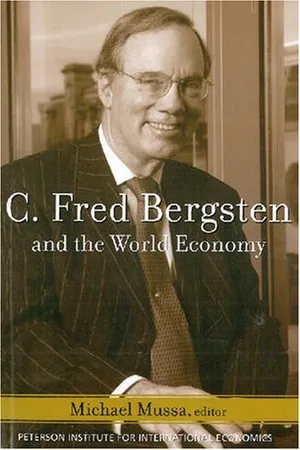 No longer available |Learn more
- Michael Mussa(Author)
- 2006(Publication Date)
In the first (Truman 2006a) he contends that the IMF is under stress, that it risks de-clining into irrelevance, and that it must be reformed to restore its central role. He outlines a small set of key reforms, including those that would ad-dress the distribution of voting power in the Fund and representation on the IMF Executive Board, reaffirm the central role of the Fund in the reso-lution of external financial crisis, and upgrade its capacity to provide analysis and policy advice on members’ internal and external financial sec-tors. The second study (Truman 2006b) brought together a set of papers on IMF reform presented at an Institute conference held in September 2005. Throughout his career, Fred Bergsten has been both a strong supporter and a constructive critic of the IMF; 12 he also has been a champion of global governance reform—including replacing the G-7 with a steering committee for the global economy that would be more effective and more THE INTERNATIONAL MONETARY SYSTEM IN THE WORK OF THE INSTITUTE 139 12. See, for example, C. Fred Bergsten, The International Monetary Fund and the National Interests of the United States, Testimony before the Joint Economic Committee, February 24, 1998 (Washington: US Congress); C. Fred Bergsten, Alternative Exchange Rate Systems and Reform of the International Financial Architecture, Testimony before the Committee on Banking and Financial Services, May 21, 1999 (Washington: US House of Representatives); consistent with changes in economic weight, particularly for the larger emerging economies.
Index pages curate the most relevant extracts from our library of academic textbooks. They’ve been created using an in-house natural language model (NLM), each adding context and meaning to key research topics.

