History

Hayreddin Barbarossa
Hayreddin Barbarossa was a famous Ottoman admiral and pirate who dominated the Mediterranean Sea during the 16th century. He was known for his naval skills and his successful campaigns against the Spanish and Italian fleets. He also played a significant role in expanding the Ottoman Empire's influence in North Africa.
Written by Perlego with AI-assistance
Related key terms
1 of 5
5 Key excerpts on "Hayreddin Barbarossa"
 eBook - ePub
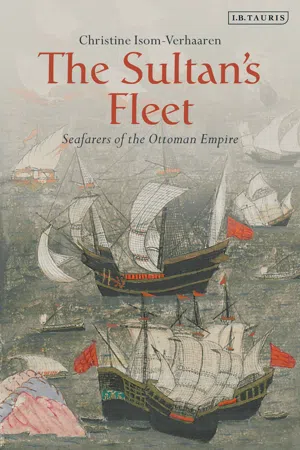
The Sultan's Fleet
Seafarers of the Ottoman Empire
- Christine Isom-Verhaaren(Author)
- 2021(Publication Date)
- I.B. Tauris(Publisher)
5 Ottoman Seafarers Hayreddin Barbarossa: The Gazi Pasha You are my useful and trusted servant. I rely on your piety and sound judgment in all matters. In the past you attacked those areas in the course of holy war. You know everything about the infidels and their lands. Because I rely on you completely, I placed you in command over all aspects of the imperial fleet. Order from Süleyman to Hayreddin Pasha, Hüküm 1, sent summer of 1543 while Hayreddin commanded the Ottoman fleet off the coast of France. 1 In the summer of 1543, a great Ottoman fleet of over 100 galleys sailed into the French harbor of Toulon, with its banners flying, greeted joyously by the French, whose king, Francis I, had requested its assistance against his rival Charles V, king of Spain and Holy Roman Emperor. This fleet was commanded by the Ottoman admiral Hayreddin Pasha, known to the French and their Habsburg enemies as Barbarossa (Redbeard). Hayreddin, like his fellow seafarer Piri Reis, had gained experience as a corsair in North Africa, where he and his brother Oruç carved out their own mini state at Algiers before Oruç’s death in battle fighting the Spanish in 1518. Hayreddin and Oruç, like Kemal Reis and Piri, traced their origins to the heartlands of the Ottoman Empire, coming from Lesbos, where their father had served as a sipahi (cavalryman) on the island. In 1520 Hayreddin had placed Algiers under Ottoman rule and in 1533 he had been summoned by Süleyman to serve as his admiral, returning to the center of Ottoman power. By 1543, Hayreddin’s fame was already immense since in 1538 he had led the Ottoman naval forces to victory at the battle of Prevesa against the combined fleets of Venice and Spain under his chief naval rival, Andrea Doria. Süleyman’s admiral, Hayreddin Pasha, was able to display Ottoman naval superiority against Süleyman’s imperial rival, Charles V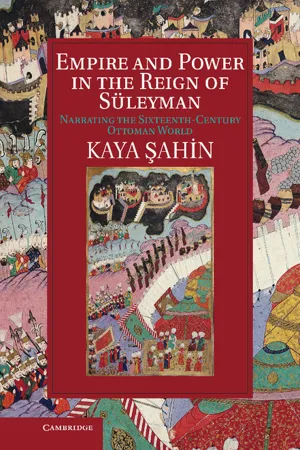 eBook - PDF
Empire and Power in the Reign of Süleyman
Narrating the Sixteenth-Century Ottoman World
- Kaya Şahin(Author)
- 2013(Publication Date)
- Cambridge University Press(Publisher)
Andrea Doria, the famous Genoese admiral, had joined the service of Charles V in 1528 after work- ing for the Papacy and then France. During S¨ uleyman’s German cam- paign, Doria captured Coroni, Patras, and Lepanto, thus creating a new front for the Ottoman–Habsburg rivalry. The Ottoman response was to invite Hayreddin Barbarossa (?1466–1546) to the capital. A merchant turned corsair and self-made ruler on the Maghribi coast in the first decades of the sixteenth century, Hayreddin had emerged as an impor- tant figure in Western Mediterranean politics, helping the Morisco rebels in Spain, competing and collaborating with the local Arab dynasties, and interacting with other corsairs, magnates, and merchants in the complex world of the “Ibero-African frontier.” 36 An initial contact with Selim in 1519 had not resulted in long-term collaboration, and Hayreddin’s inter- ests coincided with Ottoman imperial policy only in the early 1530s. Attacks by Doria and the Hospitallers had exposed the weakness of the Ottoman naval forces in the Eastern Mediterranean, whereas the increasing encroachments of the Habsurgs motivated Hayreddin to seek Ottoman protection. 37 After an audience with the sultan, Hayreddin traveled to Aleppo where, in April 1534, ˙ Ibrahim appointed him the governor-general of the Mediterranean islands, the provincial governor of Gallipoli, and the admiral of the Ottoman fleet. 38 Hayreddin sailed from Istanbul in May 1534 and captured Tunis from Mulay Hasan, of the Hafsid dynasty, in August 1534. Ottoman imperialism now had a new beachhead at the 36 For a concise account of Hayreddin’s life and career, see Aldo Galotta, “K ¯ h ¯ ayral-D¯ ın (K ¯ h ¯ ı ˚ d . ı ˚ r) Pa sha, Barbarossa,” EI 2. I borrow the term “Ibero-African frontier” from Andrew Hess, whose The Forgotten Frontier: A History of the Sixteenth-Century Ibero- African Frontier (Chicago: University of Chicago Press, 1978) remains the best account of the area.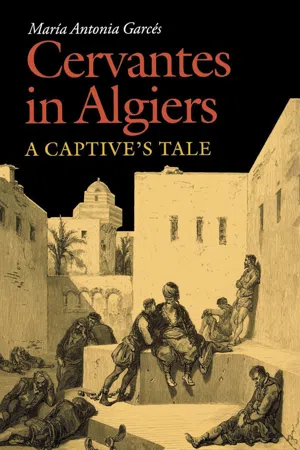 eBook - PDF
Cervantes in Algiers
A Captive's Tale
- Maria Antonia Garces, Maria Garces(Authors)
- 2005(Publication Date)
- Vanderbilt University Press(Publisher)
A skillful politician and military commander, Khair ad-D ì n imparted to the Algerian Turkish Re-gency its characteristic form and legitimate existence through his connec-tions with the Ottoman Empire. In 1529 , Süleym à n marched on Vienna with an army of four hundred thousand men. His defeat in this campaign induced him to invite Barbarossa to Constantinople to discuss the construction of a great Turkish fleet. The colossal armada, commanded by the kapudan pasha [grand admiral] Bar-barossa, captured Tunis from the Spaniards in 1534 . 21 Leaving Algiers for Constantinople, Barbarossa became the most powerful and richest man of the Ottoman court. In the following years, the Turkish Armada commanded by Barbarossa devastated the Italian coasts and the fortress of Castilnovo (near Kotor, in Yugoslavia), abducting a great number of captives. 22 Charles V then attempted to win the corsair to his side. In the course of the secret negotiations conducted by Andrea Doria, the great admiral of the impe-rial navy, and Fernando Gonzaga, the viceroy of Sicily, for the release of Spanish captives, the emperor offered to recognize Barbarossa as king of Algiers and Tunis if he broke his alliance with the Turks. 23 The mythical Barbarossa elicited a biography by contemporary Span-ish chronicler Francisco López de Gómara—Hernán Cortés’s biographer— who is well known in Spanish American historiography for his Historia gene-ral de las Indias y conquista de México ( 1541 ). Gómara closes his perplexing treatise on the Barbarossa brothers with this eloquent statement: “Haradin Barbarroja es el mayor corsario y mejor capitán de mar que jamás ha habido y que más y mejores cosas ha hecho sobre el agua” [Khair ad-D ì n Barbarossa is the greatest corsair and the best sea-captain that there ever was and has accomplished the best and most awesome things on water] ( Barbarroja , 439 ). His accomplishments went beyond the water, however, for Barbarossa No longer available |Learn more
How History's Greatest Pirates Pillaged, Plundered, and Got Away With It
The Stories, Techniques, and Tactics of the Most Feared Sea Rovers from 1500-1800
- Benerson Little(Author)
- 2010(Publication Date)
- Fair Winds Press(Publisher)
Yet Barbarossa will always be known foremost as a corsair, as a swift, deadly, plundering warrior of the sea. For almost three centuries after his death, Turkish and Barbary corsairs practiced his tactics successfully along Christian coasts as far as the North Sea. Although his corsair galliots and galleys are long gone, and also the fear that stirred in many at the sight of them, the wake they left behind is not. eBook - PDF
Confounding Powers
Anarchy and International Society from the Assassins to Al Qaeda
- William J. Brenner(Author)
- 2016(Publication Date)
- Cambridge University Press(Publisher)
4 (November 1979): 444; and Brummett, Ottoman The rise of the Barbarossa brothers 159 naval influence in the western Mediterranean would require skilled sea- men. Many of the corsairs of European descent carried with them knowl- edge of advanced naval technologies. 46 The Ottomans also needed a capable high command for their naval forces, replicating the role played by Andrea Doria. 47 Khayr al-Din and the corsairs provided that leader- ship, while benefiting from the material sustenance that could not be obtained in the Maghreb. This support helped expand the power of the North African polities well beyond what would have otherwise been sustainable. Once sea-raiders seeking opportunity in lawless domains, the corsairs benefited from legitimation by association with the Ottoman Empire. 48 In 1545 Khayr al-Din retired in Istanbul and died a year later, one of the few voluntary retirements of the leaders of the Barbary powers. 49 This period would also represent a high water mark in the collaboration between the nascent polities of North Africa and the Ottoman Empire. The Barbary powers and Ottoman decline The mid-sixteenth century would see a heightening of the Ottoman– Habsburg struggle over North Africa. 50 This would result in the Ottoman capture of Tripoli in 1551, where the Knights of Malta had established a base, and of Tunis from the Spanish in 1574. 51 Under the corsair captain Turgut (Dragut to the Europeans) Tripoli developed into a rival center of power and sea-raiding. 52 With Tunis extracted from Hafsid rule, three major centers of power under Ottoman suzerainty emerged. The Ottoman colonies would be ruled during most of the sixteenth century by officials appointed by Istanbul. The beylerbey, a military governor, was the primary office from about 1519 to 1587, Seapower, 96. On Ottoman naval material abundance and requirements, see Stanford J. Shaw, “Selim III and the Ottoman Navy,” Turcica 1 (1996): 212.
Index pages curate the most relevant extracts from our library of academic textbooks. They’ve been created using an in-house natural language model (NLM), each adding context and meaning to key research topics.

