History

Ottoman Empire
The Ottoman Empire was a powerful and long-lasting empire that existed from the 14th to the early 20th century, centered around modern-day Turkey. It was known for its expansionist policies, diverse cultural influences, and significant impact on the development of trade, art, and architecture in the regions it controlled. The empire eventually declined and was dissolved after World War I.
Written by Perlego with AI-assistance
Related key terms
1 of 5
11 Key excerpts on "Ottoman Empire"
 eBook - PDF
International Society and the Middle East
English School Theory at the Regional Level
- B. Buzan, A. Gonzalez-Pelaez, B. Buzan, A. Gonzalez-Pelaez(Authors)
- 2009(Publication Date)
- Palgrave Macmillan(Publisher)
3 The Ottoman Empire and its Precedents from the Perspective of English School Theory Amira K. Bennison Introduction The Ottoman Empire was the major political configuration in the Mid- dle East, North Africa and Eastern Europe from the sixteenth century until its demise after the First World War. Only Morocco, Iran and parts of the Arabian peninsula remained outside its boundaries. It was thus not merely a Middle Eastern entity but a major power player within Europe and the Mediterranean whether officially recognised as such or not in the popular Westphalian model. However, to be ‘in’ Europe was not necessarily to be ‘of’ Europe and, as an Islamic empire, the Ottoman state’s identity was rooted within a matrix of concepts including that of universal Muslim society (the umma), unified Muslim religio-political authority in the form of the caliphate, and the primor- dial global distinction between the lands of Islam (dar al-islam) and the lands of war or unbelief (dar al-harb, dar al-kufr ). It was also influ- enced by Turco-Mongol attitudes to politics and society including Ghuzz and Chinghiz Khanid universalism. Nonetheless, the application and understanding of these concepts varied greatly and Ottoman political praxis recognised a multiplicity of independent political entities, Mus- lim and non-Muslim, which engaged in war, made treaties of various kinds and allowed cross-border trade. Arguably, the Empire, its depen- dencies and neighbouring Muslim states formed a sub-global interstate society within a larger interstate system that included European as well as Muslim states in which the Ottoman Empire was a central pivot. Along- side this, the Ottoman era witnessed the continuation of an interhuman and transstate Muslim society which was constrained by the emergence of the Shi‘i Safavid state in Iran but not destroyed and which fits to some extent the English school concept of world society if one accepts 45 eBook - PDF
Family Power
Kinship, War and Political Orders in Eurasia, 500–2018
- Peter Haldén(Author)
- 2020(Publication Date)
- Cambridge University Press(Publisher)
The founder of the empire, Osman, deftly made alliances and outmanoeuvred his com- petitors. The Ottomans expanded into the Balkans, territories that were to become a springboard for the project of gradually dominating and then absorbing the Anatolian principalities. The fledgling empire was almost destroyed in the early fifteenth century by Timur Lenk. At the battle of Ankara in 1405 he reduced the Ottomans to vassals (Imber, 2009:16–17). Timur Lenk, however, did not establish a durable empire in Anatolia and in the coming decades the major threat to the House of Osman was internal as civil war raged between the brothers of the sultan. Eventually Sultan Mehmet I (r.1413–21) managed to defeat his brothers and to re-consolidate the possessions and re-centre networks of the dynasty (Imber, 2009:19). In 1453 the Ottomans captured Constantinople and extinguished the Byzantine Empire. This period saw a circulation of aristocracies as the Turkmen warrior aristocracies were suppressed and the Balkan (Christian) and Byzantine were promoted. Territorial expansion characterized the fifteenth and sixteenth centuries. The Ottomans conquered the Balkans, including Hungary, but failed to take Vienna in 1526. The Balkans south of the Danube were organized into the Sanjak of Rumelia and ruled directly but north of the river (excepting Hungary) the Ottomans established vassal rela- tions with the Christian principalities Moldavia and Wallachia (Stavrianos, 2000). The empire also expanded southwards. In 1510 the Ottomans conquered Syria, what is today Iraq, Egypt and Libya. Doing so caused changed cultural and political orientation of the empire. The conquest brought large numbers of Arabs into the empire, and the empire’s identity changed from a syncretistic Turkish and Christian empire into an Islamic one (Barkey, 2005). The conquest of the Middle East brought large numbers of intellectuals and administra- tors educated in the classic Islamic tradition, the ulama, to the empire. eBook - PDF
- Halil Inalcik, Cemal Kafadar(Authors)
- 2010(Publication Date)
- Gorgias Press(Publisher)
It then discusses the Ottoman conceptions of absolutism and justice, the two significant elements that differentiated the Ottoman imperial tradition from its predecessors. The paper concludes with an analysis of the cultural symbol which reproduced the Ottoman concept of empire. ' See H. Inalcik Osmanli-Rus Rekabeiinin Men$ei ve Don-Volga Kanali Te$ebbiisii (1569) Belleten XII, p. 349, and H. Inalcik The Ottoman Empire: The Classical Age p. 57. 2 See H. Inalcik Osmanh Padi$ahi Ankara Oniversitesi Siyasal Bilgiler Fakiiltesi Dergisi Xlll/2, pp. 68-79. 94 l a t m a M ü g e G Ö £ E K I . T H E F O R M A T I O N O F T H E O T T O M A N C O N C E P T O F E M P I R E : T H E H E R I T A G E The Ottoman dynasty structured its concept of empire and acquired its drive for expansion from the three traditions of universal sovereignty it came into contact with throughout its history. The Central Asian tradition influenced the nature of Ottoman rule, particularly its state structure and administration. The subsequent development of an Indo-Iranian Islamic imperial traditon around the possible universal soverignty of Islam informed the concept of the Ottoman ruler, particularly the supreme nature of his rule. The interaction in Asia Minor with the Byzantine Empire first as an adversary and then as the successor advised the Ottoman dynasty of the Eastern Roman imperial tradition and its European claims; the frequent Ottoman campaigns to the West reflected the Eastern Roman aspect of this universal sovereignty. T H E CENTRAL ASIAN TRADITION The Central Asian association with the title emperor dates back to Qngiz Han and Oguz Han. The ancient Turkic epic Oguzname depicts Oguz Han as the first world emperor who conquered the world with his six sons; the Ottomans trace their lineage to the three older sons who inherited the claims to a world empire. 3 £ingiz had regarded himself as the emperor of the world, one who had been sent to that position by the heavens.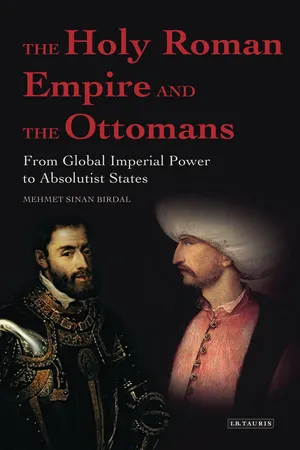 eBook - PDF
The Holy Roman Empire and the Ottomans
From Global Imperial Power to Absolutist States
- Mehmet Sinan Birdal(Author)
- 2011(Publication Date)
- I.B. Tauris(Publisher)
112 In contrast, in the Holy Roman Empire, territorialization contributed to the establishment of various universities committed to different confessions and dynasties. In the sixteenth century, the Ottoman Empire could neither claim descent from the Mongol imperial dynasties as had the Jengizid Özbeks and the Timurid Mughals, nor from the Prophet Muhammed as had the Safavids. Lacking genealogical legitimacy, the Ottomans had to base their legitimacy claims on their military capacity which presumably maintained universal justice consisting of the Islamic shari‘a and the Sultanic kanun . 113 Thus, the Ottoman Empire was marked by the political symbiosis of the military and religious-scholar establishments embodied in the concept of gaza . As long as the Ottoman Empire continued to expand, the imperial ideology seemed to be confirmed by daily facts. 114 Problems emerged when facts 140 T HE H OLY R OMAN E MPIRE A ND T HE O TTOMANS and validity seemed to drift apart with Ottoman defeats by the Christians. As Habermas would suggest, the cost of maintaining a reified world-view which was protected against the facts, was the limitation of innovation and criticism. The notion of the Golden Age in Ottoman ideology reflects this reified world-view. Historian Hakan Karateke argues that the Ottomans resorted both to ‘normative’ and ‘factual’ legitimacy. The former was couched in the classical Islamic political terminology mainly by a close circle of elites who had a certain level of intellectual background. The latter was based on the fact that the Ottoman dynasty was the ruling dynasty of a state that was expanding through conquest. Conquests were indicators of divine confirmation of Ottoman rule. 115 The Ottomans were aware that they were not ruling the whole world, but their official ideology preached that they were politically superior to others.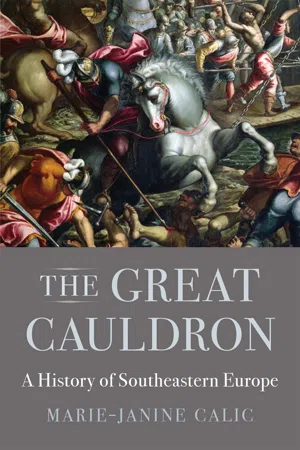 eBook - PDF
The Great Cauldron
A History of Southeastern Europe
- Marie-Janine Calic, Elizabeth Janik(Authors)
- 2019(Publication Date)
- Harvard University Press(Publisher)
More people from the lower classes, too, recorded their thoughts on world events. 124 In The Essence of History, the polymath Mustafa Ali placed the Ottoman Empire and its rapid expansion in global historical perspective. Underlying his account was a reflection on the conditions of the present, which he sought to ex-plain through the past. Did it not seem as if growing military pressure, the great cauldron 108 economic problems, and inner instability threatened to destroy the divinely sanctioned world order? The historical search for meaning fit the spirit of the era; according to the Muslim calculation of time, the thousandth year was 1590 / 91, and there were fears that the world might end with the new millennium—which Mustafa Ali, however, refuted. 125 Within the framework of his world history, Mustafa Ali—who came from Gallipoli himself—created a kind of European ethnology. The Ot-tomans had long shown no particular interest in individual countries; they did not even have a name for most of them. 126 Mustafa Ali described the people of Rumelia for the first time, and he also reported on the language and ethnography of Albanians, Croats, Hungarians, Vlachs, and other groups. He believed that the Ottoman Empire’s cultural diversity repre-sented an advantage over other imperial entities such as Iran or Arabia. The child levy enabled those with physical, moral, and intellectual talents to become members of the elite; the strength and beauty of the Balkan people joined with the intellectual energy and piety of the core Ottoman territo-ries. He sometimes resorted to superficial stereotypes, as when he described the Serbs as competent and pious, or the Croats and Bosnians as courteous, intelligent, and virtuous. 127 Mustafa Ali also wrote Public Instructions for the Distances of Countries, in which Istanbul—not Rome or Jerusalem, as in the West—appeared to be the center of the universe. eBook - PDF
Studies in Ottoman and Turkish History
Life with the Ottomans
- Stanford J. Shaw(Author)
- 2011(Publication Date)
- Gorgias Press(Publisher)
In fact, the first and foremost cause was a combination of nineteenth century European nationalism and imperialism, the ambition of each European state, particularly each newly-created one, to magnify its importance and in imagination at least, its power and prestige, by ruling other peoples, either directly or indirectly. In this context, of all the participants the responsibility of the Ottoman Empire in general and of its Turkish subjects in particular was minimal at best. The Ottoman Empire was attacked, not really because of its weakness, but rather in spite of its increasing strength and perhaps, in fear of it. Of course some nations had already achieved imperial success during the nineteenth century and before, but they continued to seek more, at least partly in Ottoman territory. So it was that France occupied Ottoman Tunisia and Algeria and Britain occupied Ottoman Egypt during the latter years of the nineteenth century. It was these occupations, undertaken in direct violation of previous European guarantees of Ottoman integrity, that provided the example for other, less powerful, nationalities. If Britain and France could continue to enlarge their imperial possessions at Ottoman expense, then the states that secured, or hoped to secure, unity and independence during the late nineteenth and early twentieth centuries felt they had to expand as well if they were to reach their full potential. As soon as each national movement secured independence, then, sometimes even before, instead of being satisfied, it sought to enhance its strength by slaughtering or pushing out all those who failed to share its national identification, ethnic origins and religious persuasions, and at the same time to expand its territory into lands which were, or may have been, at some time in the past, ruled by its ancestors in real or imagined empires, with the current state of the population seemingly of no importance or interest. eBook - PDF
The World Imagined
Collective Beliefs and Political Order in the Sinocentric, Islamic and Southeast Asian International Societies
- Hendrik Spruyt(Author)
- 2020(Publication Date)
- Cambridge University Press(Publisher)
By styling itself as similar to France, Britain, and other European states, the revamped Ottoman Empire sought to maintain or even expand its holdings, parti- cularly in Africa. Since the empire had conformed to European views of modernity, the empire should be entitled to engage in European prac- tices; old imperialism was recast as modern colonialism. To do so, they utilized the same international legal terminology that their European counterparts deployed in the negotiations in the 1884–85 Berlin Conference, which came to epitomize the Scramble for Africa. Like the Germans they used the concept of “hinterland” to claim interior 109 Ates ¸ 2013, 23, fn. 83. 110 Ates ¸ 2013, 24. 111 Ates ¸ 2013, 3, 5. 242 The Islamic Cultural–Historical Community territories based on coastal occupation. Similarly, they argued that improving communications and infrastructure entitled them to sovereign control over territories deep into North Africa, using the doctrine of “effective occupation.” 112 To conclude, the later Ottoman rulers engaged in multiple political reforms and restructured the traditional framework in which they had conducted interstate affairs. This amounted to nothing short of a con- ceptual revolution. They acquiesced to formal territorial borders, recog- nized other states as sovereign, started to develop Western practices of diplomatic protocol, and regarded foreign rulers as equals. They had transformed to the Westphalian state model. 7.4.2 Setbacks and Exclusion One aspect of Western modernity, however, proved more problematic for the composite Islamic empires. The Western states sought to create integrated national communities by public education, the creation of a national army, and a nationalist historiography. Peasants, as Eugen Weber famously remarked, had to be made into Frenchmen. 113 Given their level of economic and military successes, these states proved attrac- tive models to emulate.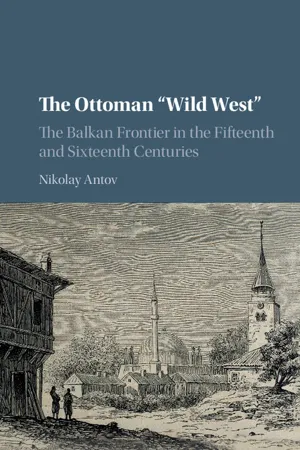 eBook - PDF
The Ottoman 'Wild West'
The Balkan Frontier in the Fifteenth and Sixteenth Centuries
- Nikolay Antov(Author)
- 2017(Publication Date)
- Cambridge University Press(Publisher)
54 50 Lapidus, “Tribes and State Formation in Islamic History,” 38–44; Yıldırım, “Turkomans,” 129–149. 51 Lindner, Nomads and Ottomans, 29–34. 52 Cemal Kafadar has argued that in comparison to all the contemporary Turcoman principalities that emerged as “heirs to the political culture of Seljukid Anatolia … the Ottomans were much more experimental in reshaping it to need, much more creative in their bricolage of different traditions, be they Turkic, Islamic, or Byzantine,” Between Two Worlds, 121. 53 Lindner, Nomads and Ottomans, 35. 54 Baki Tezcan, The Second Ottoman Empire: Political and Social Transformation in the Early Modern World (New York: Cambridge University Press, 2010), 81–93. The Broad Historical Context 28 28 It has been noted that the Ottoman polity exhibited some signs of institutional complexity early in its history 55 – in the 1320s and 1330s the Ottomans were already minting coins and utilizing the services of scribal cadres versed in the tradition of sedentary states. 56 Orhan had members of the non-tribal yaya infantry corps fighting on his side at the Battle of Pelekanon in 1329. eBook - PDF
- Various(Author)
- 2021(Publication Date)
- Routledge(Publisher)
The possibilities for Ottoman officials to advance their careers in the provinces as well as in Istanbul, for example, combined with the entrenched household-patronage networks referred to already, go much of the way to explaining the relative independence from, but continued support for, and obedience to, the central government in the Ottoman period after the seventeenth century.84 In the second case, a Sultan like Mahmud 11 had to manoeuvre with extrep1e caution in the context of the increasing marginalisation of the Ottoman state on the one hand, and its colonisation by western commercial interests on the other (with the fundamental threat that this posed to the old elite), in order to promote a real shift in the internal political-economic balance of power. In contrast, the Byzantine rulers after 1081 (when Alexius I seized the throne) found that only a system 86 STATE AND PEASANT IN OTTOMAN HISTORY of aristocratic clan alliances could maintain the political and ideological apparatus of their state. The centralised state continued to exist, on a decreasing scale, until its extinction in 1453, as did a dependent bureaucracy of non-magnates and a less dependent landed elite. Indeed, it was the great residual power of the imperial ideology, which itself demanded such a state and was inextricably interwoven with the political theology of the Orthodox Church, which made any other trajectory inconceivable. Crucially, the ideological axis was the God-appointed emperor. And long after it ceased to represent the interests of the landed elite, it continued to represent their perceptions of how the world functioned. The contradictory nature of this ideological edifice was not understood, in the context of shifting relations of distribution within the elite, as long as ideological attention was fixed on the emperor, rather than on the polity as a whole. eBook - PDF
- Pál Ács, Pál Fodor, Pál Ács, Pál Fodor(Authors)
- 2020(Publication Date)
- De Gruyter(Publisher)
Idem, ‘Son Roma İmparatorluğu’, in Idem, Osmanlı’yı Yeniden Keşfetmek . İstanbul, 2006, 181–189. In her recent overview of Ottomanist historiography, Suraiya Faroqhi also points to the usefulness of the “conveniently vague term Rumi”; see Suraiya Faroqhi, ‘Empires before and after the Post-colonial Turn: The Ottomans’, Osmanlı Araştırmaları 36 (2010) 73. 47 Michel Balivet, ‘Aux origines de l’islamisation des Balkans ottomans’, Revue du Monde Musulman et de la Méditerranée 66:4 (1992) 18. 32 T HE F ORMATION OF O TTOMAN T URKISH I DENTITY ing. Ottoman society (except, perhaps, for its nomadic segment) was anything but all-Turkish (not even in villages). By the beginning of the sixteenth century, as a result of four-hundred years of Greco-Turkish conflict and cohabitation, Christians largely disappeared in Asia Minor (while they consti-tuted a majority in the Balkans), but due to the high number of mixed mar-riages, slavery, conversions, Islamisation, and the institution of the janissaries, a sort of ethnic mixture was created, which naturally had concomitant cultural consequences. 48 One may discern syncretism in almost all sectors of life: in religious life (for ordinary people, this was rather a system of folk beliefs consisting of Muslim-Christian elements), in the family, in everyday life (for instance, the general habit of drinking wine in the ruling elite and in Rumelia), in gastronomy (Greeks and Turks still offering the same food under different names), in various fields of economy (agriculture, trade, finance, guilds, fishing), in navigation, music, and folklore, etc. 49 Undoubtedly, the greatest blending took place at the uppermost levels of power, due to the peculiar supplies of the Ottoman elite of slave origin, the well-known child levy. eBook - PDF
Wrongful Enrichment
A Study in Comparative Law and Culture
- Nahel Asfour(Author)
- 2017(Publication Date)
- Hart Publishing(Publisher)
1 See generally K Karpat, The Politicization of Islam: Reconstructing Identity, State, Faith, and Community in the Late Ottoman State (Oxford, Oxford University Press, 2001). 2 S Deringil, The Well-Protected Domains: Ideology and Legitimation of Power in the Ottoman Empire 1876–1909 (London, Tauris, 2011) 55. 3 ibid 48–49; C Findley, The Turks in World History (Oxford, Oxford University Press, 2005) 115. 7 Ottoman Culture POLITICISED POETICS F OR THE OTTOMAN administration, the late nineteenth century was no time for idleness. The administration knew very well it had to take action. The regime and all its institutions were at stake. The genie of modernity was out of the bottle pledging a rosy future. The list of politically secured rights was growing longer. Education and knowl-edge were morphing into social and economic power. Lower classes were challenging old hierarchies. Foreign countries were extending their influ-ence on the Empire. The spell of Western ideals was increasingly cast on Ottomans promising them better life conditions. Many regions within the Empire were disclosing their aspiration for self-determination. 1 The risk of social turbulence and political upheaval was materialising. The threat to both the stability and integrity of the Ottoman Empire was very real and the administration had to act. The need was to trace those threads that would tighten the Ottoman weave and prevent it from rupturing. A leading strategy was to boost the monarch’s legitimacy and promote a sense of unity among Ottomans. The caliphate institution was extensively deployed to that end. The appeal of the sultan’s religious role as leader of Islam was alluring. 2 It was part of a systemised ‘propaganda’ embarked on by the administration to present the Ottoman emperor as the ‘shadow of God’ and the Empire as the guardian of Muslims. 3 Ironically, it was Islam defending the waning Empire and its threatened monarchy and not the other way around.
Index pages curate the most relevant extracts from our library of academic textbooks. They’ve been created using an in-house natural language model (NLM), each adding context and meaning to key research topics.

