History

Rump Parliament
The Rump Parliament was the remaining group of English Parliament members after Pride's Purge in 1648, which saw the expulsion of those who did not support the army's actions. It was responsible for the trial and execution of King Charles I and the establishment of the Commonwealth of England. The Rump Parliament was eventually dissolved by Oliver Cromwell in 1653.
Written by Perlego with AI-assistance
Related key terms
1 of 5
3 Key excerpts on "Rump Parliament"
- Philip Edwards(Author)
- 2017(Publication Date)
- Red Globe Press(Publisher)
11 The English Republic England's new status as a republic was partly cloaked by use of the old familiar Tudor word `Commonwealth', with its asso-ciations of policies for the common good. But nothing could disguise the hatred felt by the majority of the political nation for what had been done to the king. The Republic was the creation of a minority within a minority and its chances of suc-ceeding were only very slim. What needs to be understood are the reasons why the republican experiment lasted as long as it did, rather than why it eventually collapsed. The main answer to that lies in the charisma of Oliver Cromwell and the power of the army. The Rump Parliament, 1649±53 If the Civil Wars were originally a struggle between Parliament and the king, the chaos ended with a defeat for both of them. Parliament had been purged in August 1647 and in December 1648 and would be purged again later) by the army. Never-theless the Rump Parliament that ruled England from the death of the king to April 1653 gave the superficial impression of parliamentary supremacy, so that for the first time Parliament could claim to be governing. Treason was defined in July 1649 as involving offences against `the Commons in Parliament' rather than as previously against the king. The executive was vested in a 40-man Council of State, which was to be elected annually by Parliament and which was initially composed of 31 MPs and nine army officers. The legislature was the Rump House of Commons, comprising those who had survived Pride's Purge plus those 50 or so moderates who decided to accept the `Engagement' of loyalty to the Republic of February 1649 and were readmitted ± making a small House of about 200 Members. But attendance was always poor, with only about 60 active Members. And, of course, so many constituencies remained unrepresented. Parlia-mentary supremacy was really a sham. 372 eBook - ePub
Philip Skippon and the British Civil Wars
The "Christian Centurion"
- Ismini Pells(Author)
- 2020(Publication Date)
- Routledge(Publisher)
111The navy played a crucial role in helping secure the Commonwealth against foreign threats and in May 1649, Skippon had been appointed to the Navy Committee.112 Under the leadership of Sir Henry Vane, this committee reformed the navy, weeding out suspect officers, appointing new, often experienced ones in their place. Salaries were increased and a programme of shipbuilding was initiated. By the outbreak of war against the Netherlands in 1652, the navy had proved its worth. The land campaigns against Ireland and Scotland had been well supported, royalist-held islands in the British Isles had submitted to parliament and Rupert’s navy had been scattered.113 Portuguese support for Rupert was ended following negotiations that began in December 1652, for which Skippon was appointed one of the Council’s commissioners.114Skippon remains infuriatingly silent on the war against the Netherlands. Steven Pincus argued convincingly that initially, the Rump was keen for an alliance and sent an embassy to the Netherlands in January 1651.115 The Dutch response essentially amounted to a trade confederation but said nothing about dealing with “declared enemies”.116 An alliance was particularly resisted by the states under the Prince of Orange’s influence.117 In one fell swoop, the Dutch went (in English eyes) from fellow-Calvinists and republicans to “perfidious ally of the king of Scots”.118 On 9 October 1651, the Rump passed the Navigation Act, based on similar legislation prohibiting trade with Barbados, Virginia, Bermuda and Antigua, which still supported the royalist cause.119 When the Dutch Admiral Van Tromp failed to strike his topsail in the customary manner to the English general-at-sea Robert Blake when their ships met in the Downs on 19 May 1652, open hostilities erupted.120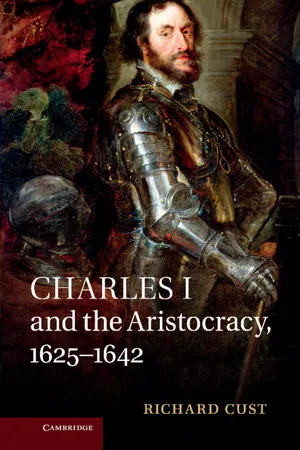 eBook - PDF
- Richard Cust(Author)
- 2013(Publication Date)
- Cambridge University Press(Publisher)
109–11. 10 Russell, Fall of the British Monarchies, pp. 210, 330–1. 11 Ibid., 331. The Long Parliament 217 a strong obligation to meet the king’s needs and preserve his author- ity; but in the parliamentary setting they were conscious of an equally powerful obligation to serve the ‘country’ and devote themselves to the concerns and grievances of the people. This led to an important shift of perspective as they reverted to the terms of the Twelve Peers petition, which at least 23 of them had eventually signed. The petition offered a clearly defined agenda for reform. First, it recommended investigating the people’s grievances, which were listed in detail as ranging from ‘inno- vations in religion’ and illegal levies, such as ship money, to the problems caused by ‘the long intermission of parliaments’ and the folly of the war against the Scots. Second, it advocated that the ‘authors and counsel- lors’ of these policies be subjected to trial and punishment. And third it urged ‘that the present war may be composed . . . without bloodshed’. 12 This petition essentially provided the programme for proceedings in the House of Lords throughout the early months of the Long Parliament and its importance was formally recognised on 18 March 1641 when it was adopted as ‘an act’ of the house, and the text and list of original signa- tories was recorded in the Lords’ Journal, ‘for the honour of the Lords’ petitioners’. 13 At the same time as directing the Lords towards reform, the move to Westminster enormously enhanced the political influence and status of the pro-Scots ‘puritan party’ whom Charles had long identified as the leaders of the opposition within both the Lords and the Commons. By December 1640 they were sufficiently prominent in both houses for con- temporary commentators to start referring to them as the ‘ruling party’ or the ‘Junto’. 14 This pre-eminence was due to a variety of factors.
Index pages curate the most relevant extracts from our library of academic textbooks. They’ve been created using an in-house natural language model (NLM), each adding context and meaning to key research topics.

