What is the Gender Pay Gap?

PhD, English Literature (Lancaster University)
Date Published: 11.11.2024,
Last Updated: 19.11.2024
Share this article
Definition and scale of the problem
The gender pay gap describes the difference in average earnings between men and women. It is the result of numerous social, political, and cultural factors that place women at a disadvantage. The gap varies across the world and differs depending on industry or sector, race and ethnicity, disability, age, and access to education. Today, the global pay gap is estimated to be around 20%, though this figure varies widely across countries (“The Gender Pay Gap,” ILO, 2024).
In terms of reporting the gender pay gap, as Fatma Abdel-Raouf and Patricia M. Buhler explain in The Gender Pay Gap,
It is usually expressed as a percentage or in a dollar amount. It can be examined from two points of view: as the ratio of female-to-male earnings or as the gap of how much less women are earning compared to men. For example, in 2018, the female-to-male earnings ratio was 81.6%, which implies a gap of 18.4%. (2020)
Fatma Abdel-Raouf and Patricia M. Buhler
It is usually expressed as a percentage or in a dollar amount. It can be examined from two points of view: as the ratio of female-to-male earnings or as the gap of how much less women are earning compared to men. For example, in 2018, the female-to-male earnings ratio was 81.6%, which implies a gap of 18.4%. (2020)
The gender pay gap can be recorded by numerous different measures, depending on the definition of income:
Accordingly, we see different numbers for the gender pay gap. [...] No matter what type of income is used in calculating the gap, there is a gender pay gap. The magnitude of the gap differs slightly based on the definition of income being used but the fact remains; the gender pay gap exists no matter what source of income is used in calculating the gap. (Abdel-Raouf and Buhler, 2020)
Closing the gender pay gap is vital for numerous reasons and can even help improve economies. For example, one study in Scotland highlighted that
Occupational segregation, one of the main causes of the gender pay gap, is a drag on economic growth. Equalising women's levels of employment to men's would add more than £17bn to Scotland's economy. (“Closing the Pay Gap,” Close the Gap, 2016)
Many governments have expressed their commitment to closing the gender pay gap, and numerous attempts have been made to address this inequality through legislation and international pledges, including the United Nations Sustainable Development Goals and Article 14 of the European Convention on Human Rights. Despite this, the gender pay gap remains an international issue.
In this study guide, we will examine the adjusted vs unadjusted wage gap, the main causes of the gender pay gap, factors impacting wage disparity, current gender pay gap statistics, and efforts made to close the gap.
The adjusted vs unadjusted wage gap
Before we look at the causes of gender pay disparity, is important to differentiate between the adjusted (or controlled) and unadjusted (or uncontrolled) wage gap. The adjusted pay gap refers to the differences between men's and women’s wages when we control for job roles, experience levels, and education. The unadjusted pay gap refers to the difference between men's and women’s wages when not controlling for any of these factors and takes a broader look at the problem. (For more on these calculations, see “Fundamentals of Gender Pay Gap Calculations,” Pay Analytics, 2023 and Abdel-Raouf and Buhler, 2020.)
Causes of the pay gap
To begin to grasp how this pay gap has occurred, we will explore a brief history of gender and waged work, before exploring the main causes of the gender pay gap today.
A very brief history of women in the workplace
In Living Wages, Equal Wages (2005), Deborah M. Figart, Ellen Mutari, and Marilyn Power highlight that women have worked throughout history, across cultures, though this work was typically not for a wage. As such, “at the beginning of the twentieth century, waged work was viewed as an essential part of men’s, but not women’s, identities” (Figart, Mutari, and Power, “Introduction,” 2005). As the authors explain,
As masculinity was redefined to incorporate and legitimate wage labor, a family structure based upon a male breadwinner and female homemaker was idealized. The fact that some women also worked for wages became increasingly problematic. Women were largely excluded from wage labor unless their families had no other means of providing for their needs. This escape clause in the idealized vision of the male breadwinner family actually accounted for a substantial amount of economic activity in the formal and informal economy. Daughters in immigrant families, widows, and other poor women, including a higher proportion of African American than white women, participated in waged work. (Figart, Mutari, and Power, 2005)
Deborah M. Figart, Ellen Mutari, Marilyn Power
As masculinity was redefined to incorporate and legitimate wage labor, a family structure based upon a male breadwinner and female homemaker was idealized. The fact that some women also worked for wages became increasingly problematic. Women were largely excluded from wage labor unless their families had no other means of providing for their needs. This escape clause in the idealized vision of the male breadwinner family actually accounted for a substantial amount of economic activity in the formal and informal economy. Daughters in immigrant families, widows, and other poor women, including a higher proportion of African American than white women, participated in waged work. (Figart, Mutari, and Power, 2005)
Over the course of the twentieth century, particularly with the start of World War I, more and more women were entering the workforce, though at lower pay rates than men. Despite more women engaging in waged labor, these core beliefs surrounding gendered roles persist and have impacted women’s ability to progress in their careers and secure jobs in high-paying sectors.
The Equal Pay Act 1963 in the US was introduced to protect against wage discrimination based on sex. In Britain, the Equal Pay Act 1970 (later replaced by the Equality Act 2010) was introduced giving women the same pay and benefits for the equivalent work. (This was, in large part, due to Britain’s intention to join the EU which it established as one of its core principles in 1957 when it was founded.)
(To learn more about women’s history in the workplace in the US and Britain, see our study guides “What was the Women’s Liberation Movement?,” “What is Liberal Feminism?,” and “What is Intersectional Feminism?”)
Legislation on equal pay differs around the world with the World Bank Group reporting that "In 86 countries, women face some form of job restriction and 95 countries do not guarantee equal pay for equal work" ("Nearly 2.4 Billion Women Globally Don’t Have Same Economic Rights as Men," 2022).
Types of work
One of the major causes of the pay gap is gender division in the labor market:
More women are in low-skilled and low-paid work, with a low presence of women in highly paid sectors, such as STEM. In contrast, men predominated in highly paid roles. In 2020, the number of female FTSE 100 CEOs has increased by just one since 2012, from four to five. Although men still dominate the top ranks of business, the government has achieved its target of 33% women in board positions at the FTSE 100. Just 7% of engineering apprenticeships achieved in 2020 were undertaken by women. (Francis Hamilton, “Introduction,” The Evolution of the Gender Pay Gap, 2023)
Edited by Frances Hamilton and Elisabeth Griffiths
More women are in low-skilled and low-paid work, with a low presence of women in highly paid sectors, such as STEM. In contrast, men predominated in highly paid roles. In 2020, the number of female FTSE 100 CEOs has increased by just one since 2012, from four to five. Although men still dominate the top ranks of business, the government has achieved its target of 33% women in board positions at the FTSE 100. Just 7% of engineering apprenticeships achieved in 2020 were undertaken by women. (Francis Hamilton, “Introduction,” The Evolution of the Gender Pay Gap, 2023)
A common misconception and argument for those who claim the gender pay gap is not an issue of discrimination, is that women simply choose different types of work, opting for lower-paid professions. So the question for many is: Why don’t women seek out higher-paid professions to close this gap? The gender divide in industry is not, however, simply down to preference, but exists due to a combination of social and cultural factors which dissuade women from entering certain occupations from a young age. As Jessica Schieder and Elise Gould explain,
The gender pay gap is driven at least in part by the cumulative impact of many instances over the course of women’s lives when they are treated differently than their male peers. Girls can be steered toward gender-normative careers from a very early age. At a time when parental influence is key, parents are often more likely to expect their sons, rather than their daughters, to work in science, technology, engineering, or mathematics (STEM) fields, even when their daughters perform at the same level in mathematics (OECD 2015). (“‘Women’s work’ and the gender pay gap,” Economic Policy Institute, 2016)
Young women, as Schieder and Gould go on to discuss, may be discouraged from certain paths due to gender expectations and the culture within certain industries culture. However, even when women do pursue careers in fields like STEM, they often experience hostile work environments, resulting in many quitting these jobs to work in more inclusive sectors. In addition, jobs in high-paying sectors often require employees to dedicate a great deal of their time (over 100 hours per week) to the role and be available 24/7. This is not an option for many women as “more than twice as many women engage in household chores on a daily basis, and women spend twice as much time caring for other household members” (Schieder and Gould, 2016). (A breakdown of this data can be seen at the Bureau of Labor website.)
Roles as primary caregivers
Traditional beliefs about gender roles in heterosexual relationships suggest that women should be the primary caregivers in the household, taking on the majority of the childcare. Such notions have a detrimental effect on women in the workplace. Women on maternity leave, for example, may miss opportunities for skill development, promotion, and networking at work-related events. This is known as the “maternal wall,” an obstacle to women’s career progression when they have children:
While some women stand nose pressed against the glass ceiling, many working mothers never get near it. What stops them is the ‘maternal wall’. Where mothers are concerned, co-workers and bosses often perceive a trade-off between competence and warmth. When a childless woman is not in the office, she is presumed to be on business. An absent mother is often thought to be grappling with child care. Managers and co-workers may mentally cloak pregnant women and new mothers in a haze of femininity, assuming they will be empathetic, emotional, gentle, nonaggressive – that is, not very good at business. If these women shine through the haze and remain tough, cool, emphatic, and committed to their jobs, colleagues may indict them for being insufficiently maternal. (Joan C. Williams, “The Maternal Wall,” Harvard Business Review, 2004)
This is such a significant factor in the wage gap that the “motherhood gap” has been measured independently.
In Lifetime Disadvantage, Discrimination and the Gendered Workforce, Susan Bisom-Rapp and Malcolm Sargeant write that,
It has been suggested that employed mothers are the group of women that now account for most of the gender gap in wages and that much of the gender wage gap should be called the family wage gap. Wage gaps, it is argued, between men and single women are relatively minor, whilst those between men and married women remain much more significant. (2016)
Susan Bisom-Rapp and Malcolm Sargeant
It has been suggested that employed mothers are the group of women that now account for most of the gender gap in wages and that much of the gender wage gap should be called the family wage gap. Wage gaps, it is argued, between men and single women are relatively minor, whilst those between men and married women remain much more significant. (2016)
Reasons for this penalty include interruptions from work which cause loss of finances and skills; withdrawing from work to look after children (which reinforces traditional gender roles) or changing to more accommodating or flexible roles (Markus Gangl and Andrea Ziefle, “Motherhood, labor force behavior, and women’s careers,” Demography, 2009).
In many instances, the conditions of employment contracts and parental leave, reinforce the traditional roles in heterosexual relationships:
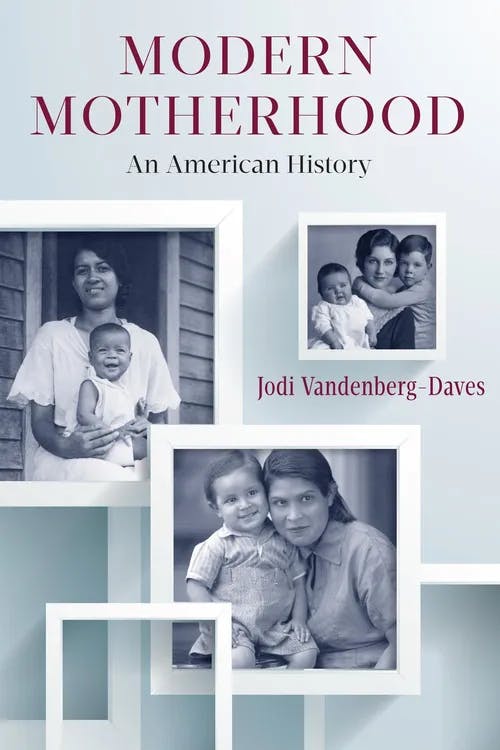
In the absence of employer incentives to encourage men’s time away from work for caregiving, the continuing and exacerbated gender wage gap, and in some states laws that do not prevent discrimination in employment against parents, heterosexual families often continued to structure their lives around male breadwinning and female caregiving. Especially among young people, large majorities agree that the best marriages are those in which both partners participate equally in child care, but workplace circumstances, wage structures, and the costs of child care often prevent them from putting these values into practice. (Jodi Vandenberg-Daves, Modern Motherhood, 2014)
Jodi Vandenberg-Daves
In the absence of employer incentives to encourage men’s time away from work for caregiving, the continuing and exacerbated gender wage gap, and in some states laws that do not prevent discrimination in employment against parents, heterosexual families often continued to structure their lives around male breadwinning and female caregiving. Especially among young people, large majorities agree that the best marriages are those in which both partners participate equally in child care, but workplace circumstances, wage structures, and the costs of child care often prevent them from putting these values into practice. (Jodi Vandenberg-Daves, Modern Motherhood, 2014)
For non-white women, the motherhood penalty is even more pronounced, with the dual discrimination of sexism and racism. A report from the Fawcett Society looked at the data from the Labour Force Survey across 8 ethnicity groups and found that,
The [hourly pay] gaps ranged from just over 1% for mothers of Indian and White heritage to 10% for mothers of Black African heritage and 13% for mothers of Pakistani and Bangladeshi heritage. [...] Whilst mothers of all ethnicities move into part-time work at similar rates, there are stark differences by ethnicity in the number of mothers who leave the work force. The employment rate of white mothers is 5 percentage points lower than that of white women without children, whilst women of Indian, Black African, and Chinese heritage see penalties of up to 11 percentage points. (Julie Rose, Yaojun Li and Lizzie Ville, “The Ethnicity Motherhood Pay Penalty,” The Fawcett Society, 2023)
(To learn more about how gender and race can compound experiences of discrimination, see our guide “What is Intersectional Feminism?”)
Gender bias
Despite legislation against gender discrimination in the workplace, numerous studies and anecdotal evidence indicate that gender bias is prevalent in this area, from skewed performance metrics and gender-based feedback to misogynistic and exclusionary work cultures.
Much of this discrimination is based on stereotypes about gender roles and the negative interpretation of characteristics in women that are often seen as desirable in men. As Kerri Lynn Stone puts it,
[...] women are not only more likely to be seen in certain ways that men are not or held to different standards than are men when they are displaying essentially the same traits; they are more likely than their male colleagues are to be viewed through the lens of their personalities or how they make those around them feel. This is evidence of an unspoken belief that women are seen differently on many levels and are, in many ways, held accountable for the way in which those around them feel, in a way that men are simply not. (Panes of the Glass Ceiling, 2022)
Kerri Lynn Stone
[...] women are not only more likely to be seen in certain ways that men are not or held to different standards than are men when they are displaying essentially the same traits; they are more likely than their male colleagues are to be viewed through the lens of their personalities or how they make those around them feel. This is evidence of an unspoken belief that women are seen differently on many levels and are, in many ways, held accountable for the way in which those around them feel, in a way that men are simply not. (Panes of the Glass Ceiling, 2022)
Stone references a report from Fortune magazine that found that 73.53% of the feedback women received in the workplace as being based upon their personality, in comparison to 2% of men; women, for example, were told they were “abrasive,” “judgmental,” and “strident” (Keiran Snyder, “The Abrasiveness Trap,” 2014).
In Breaking Through Bias (2020) Andrea S. Kramer and Alton B. Harris expand on this, drawing attention to studies which reveal that, in the workplace, many surveyed associated roles such as “boss” or “CEO” with men and roles like “assistant” and “secretary” to women. They summarize that men are associated with “traits of action, competence, and independence” (agentic qualities) and women are associated with “traits of sensitivity, warmth, and caregiving” (communal qualities) (Kramer and Harris, 2020). This, of course, has a detrimental impact on women in the workplace:
This means that women are more likely to be tracked into personnel or assistant roles seen to require warmth and a sensitivity to the needs of others, while men are more likely to be tracked into leadership roles seen to require forceful, competent, and competitive behavior. (Kramer and Harris, 2020)
Andrea S. Kramer and Alton B. Harris
This means that women are more likely to be tracked into personnel or assistant roles seen to require warmth and a sensitivity to the needs of others, while men are more likely to be tracked into leadership roles seen to require forceful, competent, and competitive behavior. (Kramer and Harris, 2020)
In addition to being guided into specific roles, women who occupy “masculine” jobs or display more agentic qualities, are seen as arrogant whereas their male counterparts would be seen as confident. This is particularly evident when it comes to self-promotion:
Women experience backlash when they are perceived as self-promotional, so the self-nomination process can hold pitfalls that don’t impact their male peers. Like negotiating for a salary offer, advocating for increased compensation can trigger this backlash, and consequently, qualified women may be reluctant to put themselves forward for promotion. (Colleen Ammerman and Boris Groysberg, Glass Half-Broken, 2021)
Colleen Ammerman and Boris Groysberg
Women experience backlash when they are perceived as self-promotional, so the self-nomination process can hold pitfalls that don’t impact their male peers. Like negotiating for a salary offer, advocating for increased compensation can trigger this backlash, and consequently, qualified women may be reluctant to put themselves forward for promotion. (Colleen Ammerman and Boris Groysberg, Glass Half-Broken, 2021)
Gender bias is also evident in the way many businesses underestimate the capabilities of female employees, seemingly without justification. A study conducted by Alan Benson, Danielle Li, and Kelly Shue used data from 29,809 management-track employees from a large North American retail chain and found that women received substantially lower ratings in terms of their potential than their male counterparts, despite receiving higher performance ratings:
Differences in potential ratings account for approximately half of the gender promotion gap. Women’s lower potential ratings do not appear to be based on accurate forecasts of future performance or attrition: women subsequently outperform male colleagues with the same potential ratings, both on average and on the margin of promotion, and women are less likely to exit the firm. Despite this, women’s subsequent potential ratings remain low, suggesting that firms persistently underestimate the potential of their female employees. (“'Potential' and the Gender Promotion Gap," 2022)
To learn more about gender bias and gender norms, see our guide on Judith Butler’s Theory of Gender Performativity.
The gender pay gap and ethnicity
The pay gap between white men and non-white women is even more pronounced than that between white women and white men. In “The Enduring Grip of the Gender Pay Gap” Rakesh Kochhar highlights the pay gap based on ethnicity and race in the US:
In 2022, Black women earned 70% as much as White men and Hispanic women earned only 65% as much. The ratio for White women stood at 83%, about the same as the earnings gap overall, while Asian women were closer to parity with White men, making 93% as much. (2023)
In the UK, as reported by the Fawcett Society, we also see an “Ethnicity Gender Pay Gap”:
Black and minoritised women see the compound effects of both the gender and ethnicity pay gaps, which we refer to here as the Ethnicity Gender Pay Gap. Women of Bangladeshi, Pakistani, and Mixed White and Black Caribbean heritage see the largest ethnicity pay gaps of 14.7%, 11.8% and 10.6% respectively, compared to White British women. However, our own analyses of ONS data highlight that compared to White British men, these pay gaps rise even further to 28.4%, 25.9%, and 25.0%, respectively. (Lizzie Ville, “Double Trouble,” 2024)
The gender pay gap in the US
In the US, on average, women were paid 16% less than men in 2024 - that’s 83 cents for every dollar a man makes. This marks a widening of the gender pay gap in the US as women, on average, earn 1 cent less per dollar than they did in 2022 (Amina Khalique, “What You Should Know About the 2023 Gender Wage Gap,” Center for American Progress, 2024). Even when comparing wages based upon a controlled (or adjusted) pay gap, women still earn less, on average taking home 99 cents for every dollar their male counterparts made. (For US regional data, see “The Wage Gap, State by State,” NWLC, 2024.) These statistics are even more pronounced for minority women. In comparison to white, non-Hispanic men, Black women made 64 cents to the dollar, Latina women made 55 cents to the dollar, and Native American women made 59 cents to the dollar.
For more on where other countries rank in terms of the gender pay gap, see the “Economic Participation and Opportunity” data in the Global Gender Gap Report 2024. Please note that the report also provides data on the broader “gender gap,” which also incorporates other equality criteria such as health, political participation, and education. This broader perspective is helpful when studying the wage gap as figures for the gender wage gap, when reviewed in isolation, can be misleading:
A low gender pay gap does not necessarily indicate more gender equality. Rather, a lower gap can be a consequence of lower labour market participation of women. (“What lies behind the gender pay gap?” European Institute for Gender Equality, 2019)
Efforts to close the gap
There have been major strides towards closing the gender pay gap on an international level, whether it be the introduction of new legislation and policies or changes within education to address the issue at an early age. This section will explore some of the attempts that have been made to close the gap.
Pay transparency and audits
Policies around pay transparency have been introduced in many countries to help close the pay gap. Disclosing salary ranges in job postings and preventing retaliation from employers for discussing pay allows female employees to see if they are being paid less than their male counterparts and enables them to negotiate from a better position:
[T]ransparency in pay is one of the key aspects in the fight against the GPG. On the one hand, there should be transparency in the communication of payments schemes, compensation strategies and practices so that there is a common understanding. More controversially, transparency should enable employees to be able to compare their salaries and to understand where the possible differences may come from. Only the awareness of the existence of pay differences between men and women can result in actions undertaken by the employees and by the social partners themselves. (Hazel Conley et al, “Conclusions,” The Gender Pay Gap and Social Partnership in Europe, 2018)
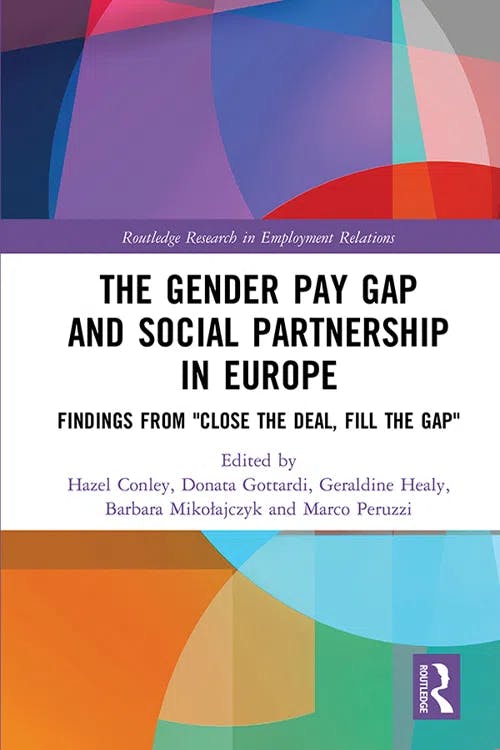
Edited by Hazel Conley, Donata Gottardi, Geraldine Healy, Barbara Mikołajczyk, and Marco Peruzzi
[T]ransparency in pay is one of the key aspects in the fight against the GPG. On the one hand, there should be transparency in the communication of payments schemes, compensation strategies and practices so that there is a common understanding. More controversially, transparency should enable employees to be able to compare their salaries and to understand where the possible differences may come from. Only the awareness of the existence of pay differences between men and women can result in actions undertaken by the employees and by the social partners themselves. (Hazel Conley et al, “Conclusions,” The Gender Pay Gap and Social Partnership in Europe, 2018)
The introduction of the Pay Transparency Directive (in effect from June 2026) will require EU member states to establish pay gap reporting for employers. In addition to requiring employers to disclose any pay gaps, the directive also will make it mandatory for employers to be transparent about salary ranges and prevent employers from asking about salary history in the interview process.
In the US, nonsupervisory workers who are covered under the National Labor Relations Act are protected from employer retaliation as a result of discussing their wages. However, as Kaitlin Holmes and Danielle Corley point out, many workers are unaware of this protection and employers consistently violate this (“International Approaches to Closing the Gender Wage Gap,” 2017).
Government initiatives
Initiatives focusing on parental leave and childcare have proven successful in narrowing the pay gap, as indicated by the progress made in Iceland. Iceland heavily subsidizes childcare, enabling more women to return to work and providing both parents with six months’ parental leave. Iceland has retained its position as Number 1 in the WEF gender parity rankings since 2014. This is arguably in large part due to the country’s parental leave system which entitles fathers to three months of the quota and 80% of their salary. According to the “National Report on the Icelandic Experience of Parental Leave Provision,” by 2004, 90% of fathers took parental leave (an 82% increase since 2001) (Svala Jonsdottir, European Commission, 2008).
The US Department of Labor has introduced initiatives to combat gender and racial pay disparities through the Good Jobs Initiative, providing tools and strategies to increase equal employment opportunities within infrastructure projects. (For more on initiatives under the Biden-Harris administration, see Jennifer Klein’s “The Biden-Harris Administration Advances Equal Pay and Promotes Gender Equity Through President Biden’s Invest in America Agenda,” The White House, 2023.)
Efforts towards gender and racial income inequality can also be seen in New Zealand with the introduction of Kia Toipoto — Public Service Pay Gaps Action Plan in November 2021, aimed at closing pay gaps for wāhine Māori, Pacific women, and women with disabilities.
Closing thoughts
To progress towards gender wage equality, a holistic approach must be taken that accounts for the social, political, and cultural factors contributing to income disparity. As seen in the case of Iceland, flexible work arrangements and supportive family policies (with a focus on extended paternity leave) can help to decrease the gender wage gap, allowing for an equitable division of caregiving responsibilities. Government policies ideally should go beyond the maternity period and consider affordable childcare options to mitigate this financial barrier to women’s career development.
Since women are typically underrepresented at a leadership level, organizations can invest in programs that promote women into these roles and introduce training and development opportunities for women. Programs encouraging women to go into STEM and other high-growth sectors can help to balance gender representation in these areas.
Closing the gender pay gap requires a sustained commitment to dismantling systemic barriers. Achieving gender wage parity means overhauling gender stereotypes, particularly surrounding responsibilities for childcare and domestic labor, reassessing the language used to describe women in the workplace, and ultimately, addressing gender bias that halts women’s progress in their careers.
Further reading on Perlego
Gender Pay Differentials (2006) edited by Benoit Mahy, RobertPlasman, François Rycx.
Gender, Education and Work (2017) by Christine Eden
Women, Employment and Organizations (2006) by Judith Glover, Gill Kirton
Gender pay gap FAQs
What is the gender pay gap in simple terms?
What is the gender pay gap in simple terms?
What is the motherhood penalty?
What is the motherhood penalty?
What are the causes of the gender pay gap?
What are the causes of the gender pay gap?
Bibliography
Abdel-Raouf, F. and Buhler, P. M. (2020) The Gender Pay Gap: Understanding the Gap. Routledge. Available at:
https://www.perlego.com/book/1683942/the-gender-pay-gap-understanding-the-numbers
Ammerman, C. and Groysberg, B. (2021) Glass Half-Broken: Shattering the Barriers That Still Hold Women Back at Work. Harvard Business Review Press. Available at:
Benson, A., Li, D., and Shue, K. (2022) “Potential” and the Gender Promotion Gap,’ Social Science Research Network. Available at:
Bisom-Rapp, S. and Sargeant, M. (2016) Lifetime Disadvantage, Discrimination and the Gendered Workforce. Cambridge University Press. Available at:
https://www.perlego.com/book/4227585/lifetime-disadvantage-discrimination-and-the-gendered-workforce
Bureau of Labor Statistics (2016) “85 percent of women, 67 percent of men, spent time doing household activities on average day in 2015,” The Economics Daily. Available at:
Close the Gap (2016) Closing the Pay Gap. Available at:
https://www.closethegap.org.uk/content/gap-closing/
Figart, D. M., Mutari, E., and Power, M. (2005) “Introduction” in Figart, D. M., Mutari, E., and Power, M. (eds) Living Wages, Equal Wages: Gender and Labour Market Policies in the United States. Routledge. Available at:
Hamilton, F. (2023) “Introduction,” in Hamilton, F. and Griffiths, E. (eds) The Evolution of the Gender Pay Gap: A Comparative Perspective. Routledge. Available at:
Holmes, K. and Corley, D. (2017) “International Approaches to Closing the Gender Wage Gap,” The Center for American Progress. Available at:
https://www.americanprogress.org/article/international-approaches-closing-gender-wage-gap
Iverson, K. (2023)“‘Glass Ceilings and Sticky Floors’ Antecedents of gender pay equity in the hospitality industry,” in Manoharan, A., Madera, J. M., and Singal, M. (eds.)The Routledge Handbook of Diversity, Equity, and Inclusion Management in the Hospitality Industry. Routledge. Available at: https://www.perlego.com/book/4214633/the-routledge-handbook-of-diversity-equity-and-inclusion-management-in-the-hospitality-industry 2023
Jonsdottir, S. (2008) “National Report on the Icelandic Experience of Parental Leave Provision,” European Commission. Available at:
https://ec.europa.eu/social/BlobServlet?docId=2265&langId=en
Kali Pal, K., Piaget, K., and Zahidi. S. (2024) “Global Gender Gap Report 2024,” World Economic Forum. Available at:
https://www.weforum.org/publications/global-gender-gap-report-2024/
Kochhar, R. (2023) ”The Enduring Grip of the Gender Pay Gap,” Pew Research Center. Available at:
https://www.pewresearch.org/social-trends/2023/03/01/the-enduring-grip-of-the-gender-pay-gap/
Kramer, A. S. and Harris, A. B. (2020) Breaking Through Bias: Communication Techniques for Women to Succeed at Work. 2nd edition. Nicholas Brealey Publishing. Available at:
Rose, J., Li, Y., and Ville, L. (2023) “The Ethnicity Motherhood Pay Penalty,” The Fawcett Society. Available at:
https://www.fawcettsociety.org.uk/Handlers/Download.ashx?IDMF=2700108d-d095-4ba6-8830-48f4abcb9785
Schieder, J. and Gould, E. (2016) “‘Women’s work’ and the gender pay gap,” Economic Policy Institute. Available at:
Snyder, K. (2014) “The Abrasiveness Trap: High-achieving men and women are described differently in reviews,” Fortune Magazine. Available at:
https://fortune.com/2014/08/26/performance-review-gender-bias/
Stone, K. L. (2022) Panes of the Glass Ceiling: The Unspoken Beliefs Behind the Law's Failure to Help Women Achieve Professional Parity. Cambridge University Press. Available at:
Williams, J. C. (2004) “The Maternal Wall,” Harvard Business Review. Available at:
https://hbr.org/2004/10/the-maternal-wall
World Bank Group (2022) "Nearly 2.4 Billion Women Globally Don’t Have Same Economic Rights as Men." Available at:
Vandenberg-Daves, J. (2014) Modern Motherhood: An American History. Rutgers University Press. Available at:
https://www.perlego.com/book/400767/modern-motherhood
Ville, L. (2024) “Double Trouble: The Ethnicity Gender Pay Gap,” The Fawcett Society. Available at:
PhD, English Literature (Lancaster University)
Sophie Raine has a PhD from Lancaster University. Her work focuses on penny dreadfuls and urban spaces. Her previous publications have been featured in VPFA (2019; 2022) and the Palgrave Handbook for Steam Age Gothic (2021) and her co-edited collection Penny Dreadfuls and the Gothic was released in 2023 with University of Wales Press.