Who were the New Romantics?

PhD, English Literature (Lancaster University)
Date Published: 28.10.2024,
Last Updated: 28.10.2024
Share this article
Defining the movement
July 1 1980: Clubgoers arrive at the Blitz nightclub, decked out in flamboyant garments with theatrical hair and makeup; Steve Strange is on the door, turning away anyone who doesn’t meet the style criteria; Boy George is working the cloakroom (stealing money out of people’s coats), and Rusty Egan is playing records of David Bowie and Roxy Music. Then in walks Bowie himself, looking for a cast of non-conforming extras to feature in his latest music video. If any night captured the New Romantic scene, it was this one. What had begun as a small, inclusive gathering would come to represent one of the most iconic youth subcultures in British history.
New Romanticism, sometimes referred to as the “Blitz Kids” due to their association with the club, was a youth subculture that was born out of the club scene in the late 1970s and early 80s Britain (specifically in London and Birmingham). The New Romantics were known for their innovative and sometimes provocative style, oscillating between dandyism and Regency-era garments and futuristic styles. They defied gender norms regarding dress, looking to Bowie's androgynous and often eccentric style as inspiration (see Figure 1).
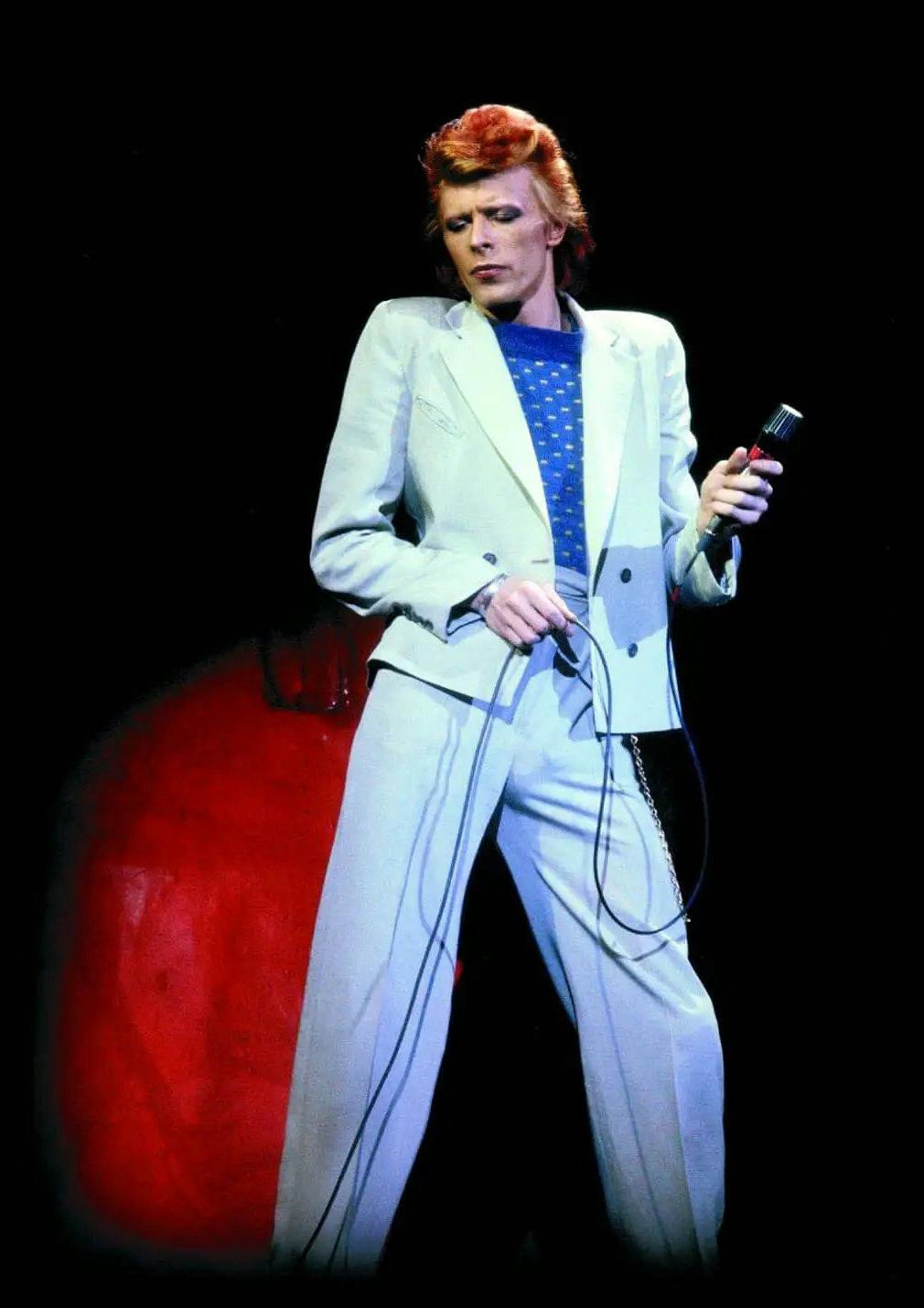
Fig.1. "David Bowie Live 1974," Wikimedia Commons
This form of self-expression offered a way of escaping the bleak social and political climate in Britain at the time. As Richard T. Rodríguez writes in A Kiss Across the Ocean
the New Romantics [...] were youths bonded together in their desire for nocturnal escape from routinized day jobs, hitting the streets of London and Birmingham adorned in “extravagant costumes” and congregating at spots such as the Blitz in Covent Garden and Billy’s in Soho. According to a 1981 BBC television news report, “If punk was all about rebellion, the New Romantics are all about style.” While style for the New Romantics was indeed fueled by rebellion, the report insisted that their claim to style alternatively served, in added contrast to the media-perceived punk promotion of anarchy, as a “positive reaction to a difficult world.” (2022)
Richard T. Rodríguez
the New Romantics [...] were youths bonded together in their desire for nocturnal escape from routinized day jobs, hitting the streets of London and Birmingham adorned in “extravagant costumes” and congregating at spots such as the Blitz in Covent Garden and Billy’s in Soho. According to a 1981 BBC television news report, “If punk was all about rebellion, the New Romantics are all about style.” While style for the New Romantics was indeed fueled by rebellion, the report insisted that their claim to style alternatively served, in added contrast to the media-perceived punk promotion of anarchy, as a “positive reaction to a difficult world.” (2022)
The BBC report Rodríguez refers to, a Newsnight broadcast from 1981, can be seen below:
"1981: Who are the NEW ROMANTICS?," Newsnight, BBC Archives
Steering away from the live music appeal of punk, New Romantics gravitated instead towards DJ sets in clubs. As Rodríguez explains, New Romanticism was a type of reaction to, and in some ways a progression of, punk which was now viewed by many as catering to the very establishment it once rallied against:
Unlike the expensive off-the-rack punk uniform easily obtained at Sex/Seditionaries, the “ruffles,” along with other New Romantic garments, were often repurposed secondhand clothes, many times unearthed at and purchased from charity shops. (2022)
Under Thatcher’s Britain, there didn’t seem much cause for extravagance and celebration for the young people: unemployment rates increased and industries collapsed in major cities (see Richard Vinen, Thatcher's Britain, 2013). As the lead singer of Visage, Steven Strange put it, the New Romantics were
people who worked nine to five and then go out and live their fantasies. They’re glad to be dressing up and escaping work and all the greyness and depression. (Quoted in Simon Reynolds, Rip it Up and Start Again, 2006).
Origins: The club scene
Billy’s, Soho
The New Romantics originated in the club scene in London and Birmingham, with many citing Billy’s nightclub in Soho as the starting point of the movement:
The people who organised and frequented Billy’s (along with graduates of similar clubs of the era – including the Rum Runner in Birmingham, and Blitz, Strange and Egan’s next venture) went on to define and disseminate a sound and a flamboyant look that became known as ‘New Romantic’. The scene had its genesis in two or three small, left-field clubs. (David Haslam, Life After Dark, 2015)
David Haslam
The people who organised and frequented Billy’s (along with graduates of similar clubs of the era – including the Rum Runner in Birmingham, and Blitz, Strange and Egan’s next venture) went on to define and disseminate a sound and a flamboyant look that became known as ‘New Romantic’. The scene had its genesis in two or three small, left-field clubs. (David Haslam, Life After Dark, 2015)
Billy’s was one of the first gay clubs in Soho and its famous Bowie Nights (called “A Club for Heroes”), were hosted by Strange alongside DJ Rusty Egan. At the time, people hired clubs for one night to play records to cater to a specific audience or subculture. The club night was formed with the intention of creating a more inclusive space for those who no longer felt punk was safe or matched their values and style. As Egan once stated,
The punk venues got invaded by football hooligans wearing Le Coq Sportif clothes. They'd call us "poofs" because we weren't dressed in a normal way. Hence why we formed the club. It was for those ex-punks who liked Lou Reed, Bowie and Iggy. (Quoted in Priya Elan “It's Blitz,” The Guardian, 2010)
Bowie Nights were held every Tuesday at Billy’s with Strange on the door, turning away anyone who didn’t fit the aesthetic. Famously, Mick Jagger was once turned away for wearing jeans and trainers.
In his book Rebel Rebel, Chris Sullivan (a club promoter and DJ who ran the club Hell alongside Strange and was deeply enmeshed in the scene) describes the impact of singer David Bowie on the Billy’s crowd:
In the summer of 1978 Bowie played Earls Court and attracted the full retinue of Bowie freaks, many of whom had switched to full Westwood kit a few years before but now reverted back to Bowie circa 1975-77. After the show we went to Billy’s, a seedy basement club run by a Jamaican pimp. (2019)

Chris Sullivan
In the summer of 1978 Bowie played Earls Court and attracted the full retinue of Bowie freaks, many of whom had switched to full Westwood kit a few years before but now reverted back to Bowie circa 1975-77. After the show we went to Billy’s, a seedy basement club run by a Jamaican pimp. (2019)
The nights were DJ’d by either Egan or a (usually female) house DJ. Then art student Nicola Tyson, now an acclaimed painter, described the music at Billy’s:
The DJ at Billy’s would either be Rusty Egan or a girl who was the house DJ. When it was Rusty the music would be Kraftwek, the Normal, Bowie, Roxy Music, Giorgio Moroder soundtracks, all sorts. Bowie was a strong influence - even during punk. (Quoted in Tim Lewis,“'The birth of the London club scene,'” The Guardian, 2013)
(The above article further showcases Tyson’s photography of the evenings at Bowie Nights.)
Blitz, Covent Garden
Billy’s, however, closed after a few months of Bowie Nights as the manager of the club wanted to increase the door price. Strange and Egan packed up and moved to Blitz, a WW2-themed club, in Covent Garden in 1978. (For photographs from the Blitz Club by Andrew Holligan, see the British Culture Archive.)
As Sullivan explains,
And it was all pretty much the same apart from the press that the club attracted and the hordes of rubber-neckers who came to see the freaks but couldn’t get past the stringent door policy of Strange and his security. (2019)
However exclusive the club was, it offered inclusive spaces for the queer community as Philip Clarke highlights in The Rise of the Stylist,
Despite being highly elitist, there was tolerance and acceptance of a broader range of sexualities and genders in Billy’s and Blitz, and in the later clubs in London that attracted similar crowds. The campness and extreme costumes worn by the clubbers meant that they would also not have been admitted to the more conservative gay clubs in London. In many gay venues, men still wore identical, hyper-masculine ‘clone’ looks. Stylists like Simon Foxton, Iain R. Webb, Judy Blame and Ray Petri were attracted to clubs like Blitz, Billy’s or Cha Cha’s for several reasons, partly because they welcomed gay men, but also because they tolerated, even celebrated, forms of dress that would have been ridiculed or aggressed in other social spaces. (2024)
Philip Clarke
Despite being highly elitist, there was tolerance and acceptance of a broader range of sexualities and genders in Billy’s and Blitz, and in the later clubs in London that attracted similar crowds. The campness and extreme costumes worn by the clubbers meant that they would also not have been admitted to the more conservative gay clubs in London. In many gay venues, men still wore identical, hyper-masculine ‘clone’ looks. Stylists like Simon Foxton, Iain R. Webb, Judy Blame and Ray Petri were attracted to clubs like Blitz, Billy’s or Cha Cha’s for several reasons, partly because they welcomed gay men, but also because they tolerated, even celebrated, forms of dress that would have been ridiculed or aggressed in other social spaces. (2024)
The legacy of the club was cemented when Bowie scouted the place looking for people to appear in his “Ashes to Ashes” music video in 1980, seen in the clip below:
"David Bowie - Ashes To Ashes (Official Video)," David Bowie [2019]
Bowie’s music video was one of the major factors that took New Romanticism into the mainstream, excavating it somewhat from its underground exclusivity.
However, as Tom Bromley notes in Wired for Sound,
Looking back on the New Romantic scene now, it’s worth noting how its mythological status became so much bigger than the scene itself. Club for Heroes, for example, had a capacity of only 350 people – not exactly an enormous crowd. Rather than being the supposed melting point of intellectualism, according to Tony Hadley, ‘the idea that everyone was discussing Nietzsche and Jean Paul Sartre was laughable. The Blitz was more about dressing up, drinking Schlitz beer, taking speed and meeting girls.’ Equally, the amount of bands to break out from this particular scene was not huge. Putting Culture Club to one side, as they didn’t really come together until a couple of years later, the acts who went directly from the Blitz to Top of the Pops could be counted on a couple of digits: essentially Spandau Ballet and Visage. (2012)
Tim Bromley
Looking back on the New Romantic scene now, it’s worth noting how its mythological status became so much bigger than the scene itself. Club for Heroes, for example, had a capacity of only 350 people – not exactly an enormous crowd. Rather than being the supposed melting point of intellectualism, according to Tony Hadley, ‘the idea that everyone was discussing Nietzsche and Jean Paul Sartre was laughable. The Blitz was more about dressing up, drinking Schlitz beer, taking speed and meeting girls.’ Equally, the amount of bands to break out from this particular scene was not huge. Putting Culture Club to one side, as they didn’t really come together until a couple of years later, the acts who went directly from the Blitz to Top of the Pops could be counted on a couple of digits: essentially Spandau Ballet and Visage. (2012)
Though it is overstated how many musicians were rooted in Blitz’s history, many major fashion and costume designers, fashion editors, and performance artists emerged from this scene, including Ray Petri, Leigh Bowery, Kim Bowen, and Judith Frankland. The fashion icon of the Blitz, “Princess Julia” (Julia Fodor) is an acclaimed DJ (who has collaborated with numerous artists), co-edited her own music zine the PiX, and has been featured on (and contributed to) KCTV which covers underground arts and culture. To learn more, see Tim Blanks’ piece “Princess Julia” (The Gentlewoman, 2010).
The Blitz was incredibly significant for the people who found identity and community there. Stephen Jones, milliner to stars such as John Galliano and Boy George, began his career and the Blitz; he writes,
The Blitz ruled people’s lives. Exactly that. [...] A nightclub inspired absolute devotion of the kind previously reserved for a pop idol. I’d find people at the Blitz who were possible only in my imagination. But they were real. (Quoted in David Johnson, “Spandau Ballet, the Blitz kids and the birth of the New Romantics,” The Guardian, 2009)
The New Romantic style
Club fashion
Looking upon the early New Romantic crowd, you may be hard-pressed to identify a specific aesthetic – after all, everyone wanted to stand out. While there was no “uniform” the New Romantics wore, the style is typically noted for its flamboyant and theatrical nature, as well as its defiance of gender norms. Many Blitz regulars (and their icons) adopted an androgynous look. While some looked to the future, à la Ziggy Stardust, others adopted Regency-era white shirts, pirate-chic, or were decked in luxurious brocade prints:
The Blitz look was inspired by the dazzle of such Glam Rock [...] greats as David Bowie, Marc Bolan and Roxy Music, as well as the foppish Romantic style [...] of the late eighteenth and early nineteenth century, along with the French subculture of the Incroyables [...], 1930s cabaret and a general sense of theatricality. [...] The trend was for heavily powdered faces, beauty spots, quiffs and pompadour hairstyles inspired by such artists as Boy George of Culture Club, who was known for his high-fashion make-up looks. (Hannah Kane, Style Thesaurus, 2023)
Hannah Kane
The Blitz look was inspired by the dazzle of such Glam Rock [...] greats as David Bowie, Marc Bolan and Roxy Music, as well as the foppish Romantic style [...] of the late eighteenth and early nineteenth century, along with the French subculture of the Incroyables [...], 1930s cabaret and a general sense of theatricality. [...] The trend was for heavily powdered faces, beauty spots, quiffs and pompadour hairstyles inspired by such artists as Boy George of Culture Club, who was known for his high-fashion make-up looks. (Hannah Kane, Style Thesaurus, 2023)
Part of the style involved borrowing from other periods and customization:
A willingness to pillage the history of dress and to reappropriate and customize second-hand clothing was very evident amongst clubbers. Versions of these looks were being seen in the fashion images being created by young stylists, many of whom were regulars at the clubs. A sale of redundant stock at a London costume house was a contributing factor to some of the flamboyant looks being displayed at the more exclusive clubs. (Clarke, 2024)
One of the most popular boutiques in Birmingham for this type of clothing was Kahn & Bell, founded by designers Jane Kahn and Patti Bell in 1976 (see Trevor Pitt, “Kahn and Bell,” 2018).
Though seen by many as empty narcissism, New Romantic fashion was a form of performance art. In her essay “‘Bliss was it in that shirt to be alive’,” Emily A. Bernhard-Jackson explains that
Many of the New Romantics were art students, and even those who weren’t were familiar with the currents of post-modernism and the notion of the body as an art object from the performances of David Bowie—it is no accident that Gary Kemp calls the New Romantics “Bowie’s children.” The reason New Romanticism took place on the surfaces, the bodies, of its members was that surface—and specifically their own surfaces—had become an acceptable artistic medium. Post-theoretical as well as post-modern, they grasped the notion of self as symbol, and they used it as such. If one seeks a neat summary, one might say that New Romanticism was not a surface movement but rather a movement inscribed on surfaces. (Rock and Romanticism, 2018)
Edited by James Rovira
Many of the New Romantics were art students, and even those who weren’t were familiar with the currents of post-modernism and the notion of the body as an art object from the performances of David Bowie—it is no accident that Gary Kemp calls the New Romantics “Bowie’s children.” The reason New Romanticism took place on the surfaces, the bodies, of its members was that surface—and specifically their own surfaces—had become an acceptable artistic medium. Post-theoretical as well as post-modern, they grasped the notion of self as symbol, and they used it as such. If one seeks a neat summary, one might say that New Romanticism was not a surface movement but rather a movement inscribed on surfaces. (Rock and Romanticism, 2018)
Catwalk and high-street fashion
High fashion soon took inspiration from these clubgoers. The V&A’s 2013/14 exhibition “Club to Catwalk” highlighted the influence of underground club culture on the fashion of the 1980s and designers such as Vivienne Westwood. (To learn more, see this BBC interview, where Brenda Emmanus meets Claire Wilcox and designer Wendy Dagworthy.)
Westwood is often cited as one of the most influential designers within the New Romantic era. As John Galliano once said,
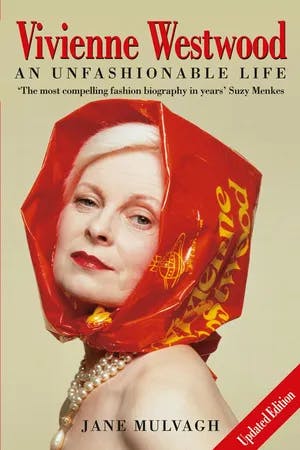
“Vivienne is constantly innovating, but her work during the punk and new romantic periods defined the era. It’s impossible to think of the bands, the music and the spirit of both punk and the new romantics without Vivienne’s work” (Quoted in Jane Mulvagh, Vivienne Westwood, 2003).
Jane Mulvagh
“Vivienne is constantly innovating, but her work during the punk and new romantic periods defined the era. It’s impossible to think of the bands, the music and the spirit of both punk and the new romantics without Vivienne’s work” (Quoted in Jane Mulvagh, Vivienne Westwood, 2003).
The collection Pirate (Autumn/Winter 1981) by Westwood and McLaren truly captured the New Romantic style which was inspired by the iconography of highwaymen, dandies, and buccaneers. The collection was named as such due to its “plundering of ideas and colours from other places and periods” (V&A) and featured buccaneer trousers, oversized shirts and draped sashes (Mulvagh, 2003). The pirate look was made famous by Adam Ant (of the band Adam and the Ants) who combined the white billowing shirt with a military jacket, cummerbunds and silk scarves, all complete with a streak of white paint across his cheek. Ant’s costumes can be seen here in Sabrina Offrod’s article on the V&A collection and in the music video for “Prince Charming” (1981) shown below:
"Adam & The Ants - Prince Charming [Official Music Video]," Enhanced Music Videos, [2022]
Many musicians like Ant were at the forefront of bringing New Romanticism to the masses. For example, Spandau Ballet’s first performance on Top of the Pops in 1980, which saw band members dressed in kilts, resulted in the fashion being brought to the high street. As Gary Kemp stated in the documentary of the band Soul Boys of the Western World (Hencken, 2014),
“Suddenly the high street was full of the New Romantic look - even Topshop was selling ruffles, piecrust collars and knickerbockers.”
(For more on this, Helen Seamons’ Guardian article “True gold: 40 years of Spandau Ballet style” (2020) provides an in-depth breakdown of Spandau’s iconic style.)
Electronic music
The sound of New Romanticism was unquestionably synthpop (music played with synthesizers and other electronic instruments):
Grounded in glam-rock, New Wave, Krautrock and punk, the New Romantic movement was soundtracked by synth-based electro-pop. In addition to Kraftwerk, Can and the Japanese band Yellow Magic Orchestra, the British bands Landscape and Ultravox introduced electronic, computer-based synthesizer styles into the pop scene. (Stan Hawkins, The British Pop Dandy, 2017)
Stan Hawkins
Grounded in glam-rock, New Wave, Krautrock and punk, the New Romantic movement was soundtracked by synth-based electro-pop. In addition to Kraftwerk, Can and the Japanese band Yellow Magic Orchestra, the British bands Landscape and Ultravox introduced electronic, computer-based synthesizer styles into the pop scene. (Stan Hawkins, The British Pop Dandy, 2017)
Synthpop was in direct opposition to punk which is characterized by live music and a raw sound in a bid for authenticity:
In many ways, synthpop’s immediate predecessor punk rock was a major influence on the genre, but only in the sense that synthpop was a reaction to, rather than a continuation of, punk rock. Punk’s DIY ideology did not encompass the use of synthesising technology (a reaction against its dominance in progressive rock), preferring to believe that the roughly played and untuned guitar was the most authentic ‘voice’ of musical alienation. (Stuart Borthwick and Ron Moy, Popular Music Genres, 2020)
Stuart Borthwick and Ron Moy
In many ways, synthpop’s immediate predecessor punk rock was a major influence on the genre, but only in the sense that synthpop was a reaction to, rather than a continuation of, punk rock. Punk’s DIY ideology did not encompass the use of synthesising technology (a reaction against its dominance in progressive rock), preferring to believe that the roughly played and untuned guitar was the most authentic ‘voice’ of musical alienation. (Stuart Borthwick and Ron Moy, Popular Music Genres, 2020)
While punk venues were focused on showcasing live music, the New Romantic scene typically played records as they wanted the attendees to socialize rather than directing all their attention to the band. In other words, as indicated by the Newsnight interviews in 1981, the idea of having a live band, for organizers Strange and Egan, was another form of consumption. At the New Romantic club nights, the patrons were the main attraction.
Though the club nights typically played records, there were live gigs at the venue, performed and attended by those within the New Romantic scene. For example, Spandau Ballet’s first gig was at the Blitz on December 5 1979, soon leading to a record deal. The band released their debut song “To Cut a Long Story Short” in November 1980, which reached Number 5 in the UK following their aforementioned performance on Top of the Pops:
"To Cut A Long Story Short (Top of the Pops 13/11/80)," Spandau Ballet Official, [2020]
Hot on the heels of Spandau Ballet was Duran Duran, who rose to fame following their performance at the Birmingham Rum Runner Club. The band was formed in 1978 and, after numerous tweaks to the line-up, comprised Simon le Bon, Nick Rhodes, John Taylor, Andy Taylor, and Roger Taylor (none of whom were related). The band members are pictured in Figure 2 below.
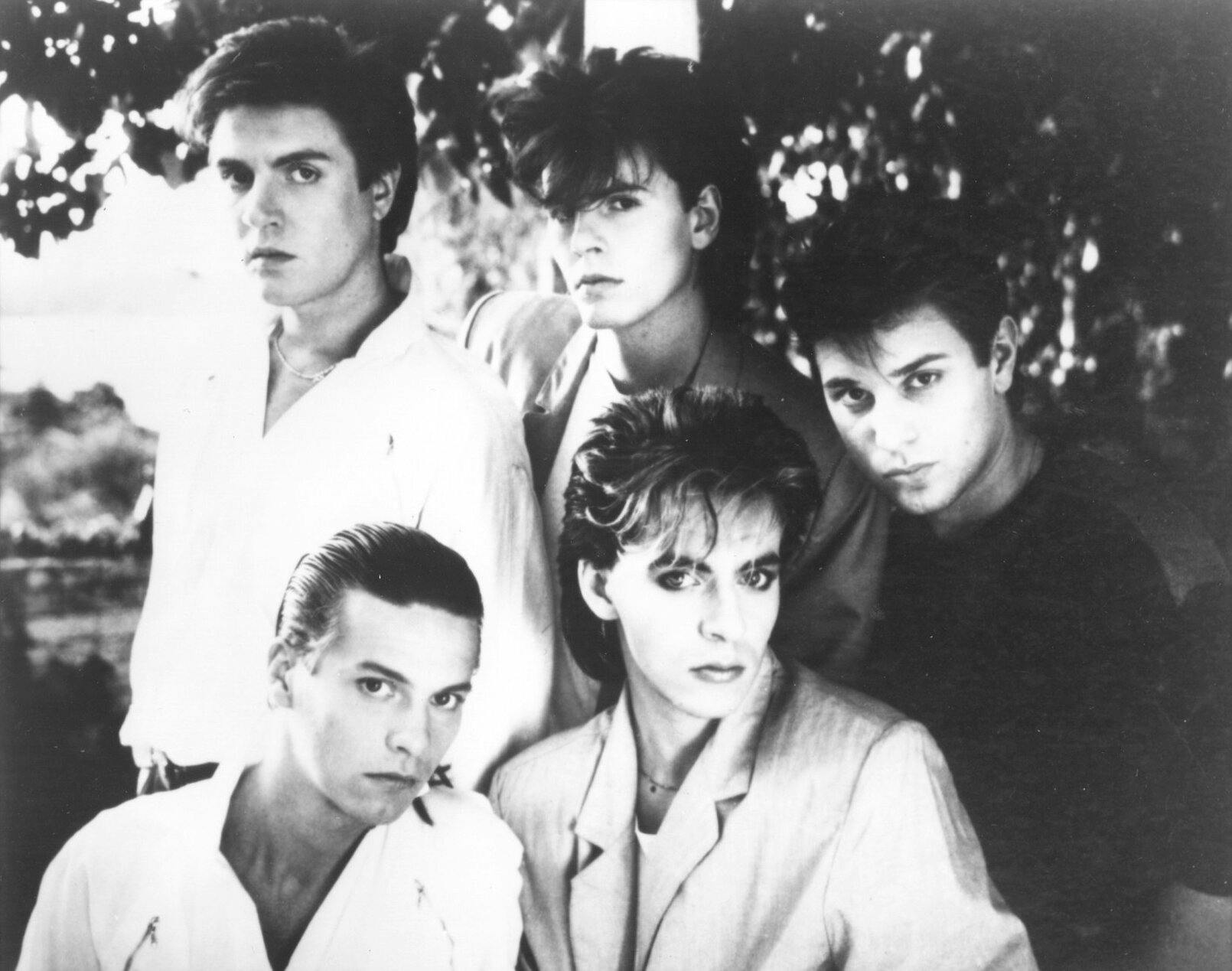
"Duran Duran Seven and the Ragged Tiger (1983 Capitol publicity photo)," Wikimedia Commons
Duran Duran was aiming for a new sound and was not keen on the continued comparison between themselves and Spandau Ballet:
Although lumped into the UK’s New Romantic movement and compared with Spandau Ballet, who became their frenemies/press adversaries, Duran Duran despised labels. After all, in the 1980s, imitation wasn’t flattery; it was frowned upon.
(Annie Zaleski, Duran Duran's Rio, 2021)
Annie Zaleski
Although lumped into the UK’s New Romantic movement and compared with Spandau Ballet, who became their frenemies/press adversaries, Duran Duran despised labels. After all, in the 1980s, imitation wasn’t flattery; it was frowned upon.
(Annie Zaleski, Duran Duran's Rio, 2021)
Duran Duran’s single “Is there something I should know?” shown in the clip below, went to Number 1 in the UK in 1983:
"Duran Duran - Is There Something I Should Know? (Official Music Video)," Duran Duran, [2009]
Spandau and Duran Duran had a friendly rivalry throughout the decade: Spandau’s debut album Journeys to Glory (1981) reached No. 5, compared Duran Duran’s self-titled debut which reached No. 3; Spandau’s debut single reached No.5 and Duran Duran’s “Planet Earth” only reached No. 12; both had a 1983 Number 1 album (Spandau’s True and Duran Duran’s Seven and the Ragged Tiger) (see Molly Potter’s “Clash of the New Romantics,” The Edge, 2023.)
Less successful commercially was Visage, formed by Midge Ure and Rusty Egan (of the band Rich Kids) in 1978 as part of a studio project. The two later recruited Strange on vocals alongside musician Billie Currie (part of the band Ultravox). (This lineup fluctuated with other members later added; for more on this, see the “Visage Timeline,” Visage).
Visage’s most successful, and only top-10 hit, was “Fade to Grey” in 1980. The music video featured Strange in silver body paint alongside Julia Fodor (shown in the clip below):
"Visage - Fade To Grey," VisageVEVO, [2010]
Strange's "Pierrot-look" shown here was heavily inspired by David Bowie's Pierrot costume, designed by Natasha Korniloff in 1980 for his Scary Monsters (& Super Creeps) album. Visage's music video was incredibly popular and, according to Neil O'Connor, "would become the New Romantics’ anthem" (Dark Waves, 2023). Strange would later go on to release an orchestrated version of the song in 2014.
Many bands that fit the New Romantic genre (in terms of sound) include Japan and Soft Cell, though they shunned this title. Others, such as Culture Club and Adam and the Ants, have been categorized as New Romantic (due to their aesthetic), but are viewed by many as being a better fit within the “new wave” genre. The nebulous nature of the New Romantic movement creates difficulty for those trying to define and categorize the music of the era.
The decline of New Romanticism
Duran Duran’s split in 1985 and Spandau Ballet’s in 1990, in many ways, signaled the decline of New Romanticism. In reality, though, enthusiasm for New Romanticism had been waning since the early 1980s, only a couple of years after it had begun. Bands who hadn’t split or been dropped by their labels, such as Ultravox, were bringing their music to the US. In addition, many felt synthpop was now too detached from its club scene roots, becoming commercialized.
Many key figures who hadn’t gone on to more commercial success gradually withdrew from the public eye, sometimes due to battles with drug and alcohol abuse:
There was an appalling aftermath for many of those who were intrinsic to the Blitz scene, not least Steve Strange, who had a terribly volatile career after his heyday, involving dependency and insolvency. Even by 1985, Strange had started to lose his grip on London clubland. After the Playground, his Saturday-night extravaganza at the Lyceum ballroom on the Strand, his excursions became rather hit and miss. You would occasionally bump into him late at night, always the worse for wear and overly keen to tell you how well he was doing. (Dylan Jones, Sweet Dreams, 2020)
Though the New Romantic period was short-lived, it indelibly left its mark on music, fashion, and culture in Britain.
What this period did was encourage people to do things on their own terms, in their own way. The decade from ’75 to ’85 was all about doing things for ourselves. It also removed a lot of sexual prejudices, somewhat subliminally. There was so much diverse sexual orientation going on, and it became legitimised. It was fluid and it became accepted. A lot of people experimented. And why not? No one ever judged them. [...] We all looked out for each other, and we looked after our own. [...] It was an opportunity, and we made the most of it. We ran through the hole in the wall. (Graham Bell, quoted in Jones, 2020)
The continued interest in the New Romantics is evident in Kevin Hegge’s documentary Tramps (2022), which provides a fascinating look at the subculture and a touching tribute to iconic figures on the scene who died from AIDs-related illness, something which filmmaker John Maybury notes in the documentary, is often omitted from discussions of the period. In addition to this, London’s Design Museum recently advertised its upcoming exhibition “Blitz: The Club That Shaped The 80s,” created in collaboration with the Blitz regulars. The exhibition will feature photographs, videos, garments, drawings, and other memorabilia that will allow attendees to learn the story of the legendary New Romantic scene.
Further reading on Perlego
Rock and Romanticism: Post-Punk, Goth, and Metal as Dark Romanticisms (2018) by James Rovira
Listen to New Wave Rock!: Exploring a Musical Genre (2018) by James E. Perone
Counter Culture UK – a celebration (2015) edited by Rebecca Gillieron and Cheryl Robson
New Romanticism FAQs
Who were the New Romantics in simple terms?
Who were the New Romantics in simple terms?
Who were some key figures associated with New Romanticism?
Who were some key figures associated with New Romanticism?
What are some examples of New Romantic bands?
What are some examples of New Romantic bands?
What was the New Romantic fashion?
What was the New Romantic fashion?
Bibliography
Bernhard-Jackson, E. A. “‘Bliss was it in that shirt to be alive’: Connecting Romanticism and New Romanticism through Dress,” in Rovira, J. (ed.) Rock and Romanticism: Post-Punk, Goth, and Metal as Dark Romanticisms. Palgrave Macmillan. Available at:
Borthwick, S. and Moy, R. (2020) Popular Music Genres: An Introduction. Routledge. Available at:
https://www.perlego.com/book/2689182/popular-music-genres-an-introduction
Bromley, T. (2012) Wired for Sound: Now That's What I Call An Eighties Music Childhood. Simon & Schuster UK. Available at:
Clarke, P. (2024) The Rise of the Stylist: Subculture, Style and the Fashion Image in London 1980–1990. Blooms Visual Arts. Available at:
Elan, P. (2010) “It's Blitz: Birth of the New Romantics” The Guardian. Available at: https://www.theguardian.com/music/2010/may/15/blitz-boy-george-steve-strange-visage#:~:text=RUSTY%20EGAN%2C%20BLITZ%20DJ%2C%20VISAGE,Lou%20Reed%2C%20Bowie%20and%20Iggy.
Haslam, D. (2015) Life After Dark: A History of British Nightclubs & Music Venues. Simon & Schuster UK. Available at:
Hawkins, S. (2017) The British Pop Dandy: Masculinity, Popular Music and Culture. Routledge. Available at:
https://www.perlego.com/book/1488224/the-british-pop-dandy-masculinity-popular-music-and-culture
Jones, D. (2020) Sweet Dreams: The Story of the New Romantics. Faber. Available at:
https://www.faber.co.uk/product/9780571353439-sweet-dreams/
Lewis, T. (2013) “'The birth of the London club scene,'” The Guardian. Available at:
https://www.theguardian.com/music/gallery/2013/jan/25/bowie-nights-billys-club-pictures
Mulvagh, J. (2013) Vivienne Westwood: An Unfashionable Life. HarperCollins. Available at:
https://www.perlego.com/book/688523/vivienne-westwood-an-unfashionable-life
O'Connor, N. (2023) The Synthesizer and the Dystopian Sound of Britain (1977-80). Rowman and Littlefield. Available at:
Offord, S. (2017) “Battlefield to Boudoir: The Costumes of Adam Ant” V&A. Available at:
Pitt, T. (2018) “Kahn and Bell: Fashion for all Sexes,” In the Pink. Available at:
https://shop.grand-union.org.uk/product/in-the-pink-magazine/
Rodríguez, R. T. (2022) A Kiss Across the Ocean: Transatlantic Intimacies of British Post-Punk and US Latinidad. Duke University Press Books. Available at:
https://www.perlego.com/book/3605796/a-kiss-across-the-ocean-transatlantic-intimacies-of-british-postpunk-and-us-latinidad
Sullivan, C. (2019) Rebel Rebel: How Mavericks Made Our Modern World. Unbound Digital. Available at:
https://www.perlego.com/book/1437821/rebel-rebel-how-mavericks-made-our-modern-world
Thornton, S. (2017) “Exploring the Meaning of the Mainstream (or why Sharon and Tracy Dance around their Handbags,” in Butler, M. J. (ed.) Electronica, Dance and Club Music. Routledge. Available at:
https://www.perlego.com/book/1488543/electronica-dance-and-club-music
Reynolds, S. (2006) Rip it Up and Start Again. Faber. Available at:
https://www.faber.co.uk/product/9780571215706-rip-it-up-and-start-again/
Vinen, R. (2013) Thatcher's Britain: The Politics and Social Upheaval of the Thatcher Era. Simon & Schuster UK. Available at:
Filmography
Tramps! (2022) Directed by Kevin Hegge. Bohemian Media.
PhD, English Literature (Lancaster University)
Sophie Raine has a PhD from Lancaster University. Her work focuses on penny dreadfuls and urban spaces. Her previous publications have been featured in VPFA (2019; 2022) and the Palgrave Handbook for Steam Age Gothic (2021) and her co-edited collection Penny Dreadfuls and the Gothic was released in 2023 with University of Wales Press.