What is Aestheticism?

PhD, Media Arts (Royal Holloway, University of London)
Date Published: 09.12.2024,
Last Updated: 09.12.2024
Share this article
Definition
The mid to late 19th century saw a massive upheaval of the role of art and culture in the West, responding to the significant technological and social changes of the time. Aestheticism marks one of these shifts. Aestheticism was an artistic and cultural movement that emerged during this period, particularly present in France and Britain, emphasizing the pursuit of beauty and sensory pleasure as the primary purpose of art. The term “art for art’s sake” has become definitive in aestheticism, most attributed to French philosopher Victor Cousin (1792–1867). It proposes that art is a means to its own end and does not have to serve a purpose beyond aesthetic experience. R V Johnson explains the significance of aestheticism, noting
[… ] it denoted something new: not merely a devotion to beauty, but a new conviction of the importance of beauty as compared with – and even in opposition to – other values. ‘Aestheticism’ came to stand for certain ideas about life and art – ideas which then assumed a distinct form, and presented a new and serious challenge to more traditional and conventional ideas. (Aestheticism, 2017)
R. V. Johnson
[… ] it denoted something new: not merely a devotion to beauty, but a new conviction of the importance of beauty as compared with – and even in opposition to – other values. ‘Aestheticism’ came to stand for certain ideas about life and art – ideas which then assumed a distinct form, and presented a new and serious challenge to more traditional and conventional ideas. (Aestheticism, 2017)
Throughout the 1800s, the prevailing view was that art should serve a moral or utilitarian function. Britain during the Victorian era was characterized by a strict sense of propriety, with an emphasis on tradition, morality, and virtue. The purpose of art at this time was largely seen as a mode of enforcing these codes of conduct, with painting depicting narrative allegories championing domesticity and religion and imbued with themes of punishment and redemption. This rendered art a tool for moral education and social reform rather than an aesthetic experience. Aestheticism was a response to the moralistic and utilitarian values of art at the time and Victorian society at large.
This emphasis on utility was similarly a byproduct of the Industrial Revolution. As new technologies, urbanization, and factories reshaped people’s lives, unique expressions of creativity and imagination were replaced by cheaply mass-produced goods, and efficiency was championed over human acts of creation. This gave rise to countless forms of cultural resistance – Romanticism, impressionism, and fauvism, for example. Another example would be the Arts and Crafts Movement, which explicitly rejected the soulless and dehumanizing effect of factory-made goods, and instead championed handcraft, quality materials, and the integration of art with everyday life.
Aestheticism was another such form of resistance. Present in painting, music and literature, aestheticism was characterized by rich, vibrant colors, intricate details, and luxurious textures, often inspired by nature and mythology. During this time, decorative arts were elevated to the same status as fine arts (see our “What Is Art Nouveau?” guide), so aestheticism was also expressed in design. Led by figures like Dante Gabriel Rossetti, Algernon Charles Swinburne, James McNeill Whistler, and Oscar Wilde, aestheticism sought to express elegance, refinement, and a sensual appreciation of composition, crucially emphasizing form over function.
Despite the fact that aestheticism was not a formally organized movement – without a centralized vanguard or manifesto – its impact was significant, touching many facets of arts and culture. This study guide will explore some of the key themes and figures, tracing the philosophical ideas that support and guide aestheticism to its contemporary implications.
Intellectual foundations of aestheticism
Unsurprisingly, aestheticism was profoundly influenced by the philosophical field of aesthetics. Aesthetics deals with questions pertaining to beauty, unpacking notions of taste and judgement when it comes to art and nature. As far back as ancient Greece, these questions have been considered, with thinkers like Plato and Aristotle paving the way for aesthetic discussions to come.
One of the most significant influences on aestheticism came from the philosophy of Immanuel Kant (1724–1804), especially his ideas in The Critique of Judgment (1790). Kant emphasized the subjectivity of aesthetic experiences, splitting these experiences into categories like the beautiful – which elicits pleasure and admiration – and the sublime, eliciting an overwhelming sense of greatness often associated with fear and disorientation. Of aesthetic judgements, Kant asserts,
Every purpose, if it be regarded as a ground of satisfaction, always carries with it an interest — as the determining ground of the judgement — about the object of pleasure. Therefore no subjective purpose can lie at the basis of the judgement of taste. (1790, [2020])
Immanuel Kant
Every purpose, if it be regarded as a ground of satisfaction, always carries with it an interest — as the determining ground of the judgement — about the object of pleasure. Therefore no subjective purpose can lie at the basis of the judgement of taste. (1790, [2020])
Here, Kant proposes that judgments about beauty must be made “disinterestedly”, without any reference to personal utility, desire, or practical benefit (1790, [2020]). In other words, we do not necessarily find beauty in that which we deem useful, but rather in objects that have an intrinsically pleasing quality. Aestheticism embraced this notion, believing art to be an experience that exists for its own sake, independent from utility.
The philosophy of art put forth by Arthur Schopenhauer (1788–1860) also had a profound effect on aestheticism. In his book series The World as Will and Representation (1818), Schopenhauer proposes that the essence of the world – that which lies beyond the appearance of the empirical world – is ‘will’. We are guided by will: by our needs, desires, and impulses. Schopenhauer believed this to be at the heart of human suffering. What art offered was an escape from these trappings, providing access to a transcendental realm, outside of material conditions. This allowed individuals to experience beauty in a way that is free from practical concerns.
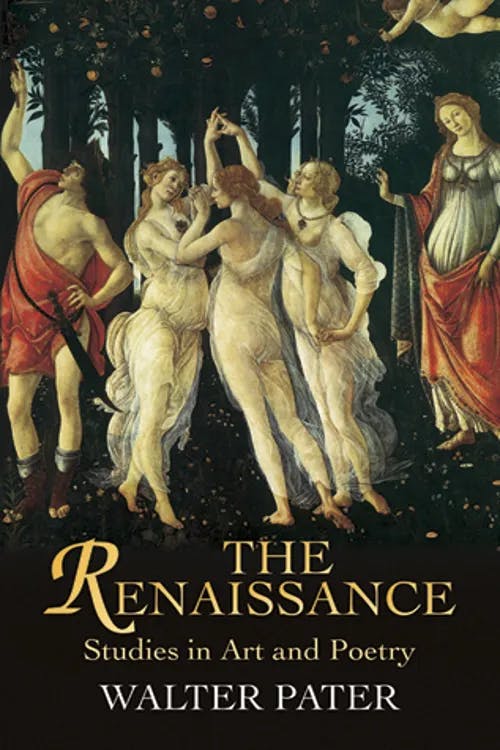
Later, thinkers like Walter Pater (1839–1894) would use Schopenhauer’s philosophy, alongside Kantian aesthetics, as a basis for aestheticist theory. Pater’s work, The Renaissance (1873), became particularly renowned in the context of aestheticism, proposing that the purpose of art and life more generally was the pursuit of beauty and sensory pleasure. In it, Pater famously asserts “All art constantly aspires towards the condition of music” (1873, [2013]). Pater explains what he means by this, continuing,
For while in all other kinds of art it is possible to distinguish the matter from the form, and the understanding can always make this distinction, yet it is the constant effort of art to obliterate it. That the mere matter of a poem, for instance, its subject, namely, its given incidents or situation—that the mere matter of a picture, the actual circumstances of an event, the actual topography of a landscape—should be nothing without the form, the spirit, of the handling, that this form, this mode of handling, should become an end in itself, should penetrate every part of the matter: this is what all art constantly strives after, and achieves in different degrees. (1873, [2013])
Walter Pater
For while in all other kinds of art it is possible to distinguish the matter from the form, and the understanding can always make this distinction, yet it is the constant effort of art to obliterate it. That the mere matter of a poem, for instance, its subject, namely, its given incidents or situation—that the mere matter of a picture, the actual circumstances of an event, the actual topography of a landscape—should be nothing without the form, the spirit, of the handling, that this form, this mode of handling, should become an end in itself, should penetrate every part of the matter: this is what all art constantly strives after, and achieves in different degrees. (1873, [2013])
So, according to Pater, music is an artistic medium that intrinsically unifies the subject and form. This led to a more pure form of aesthetic experience, the aspiration of aestheticism. Painting and poetry, as Pater explains, tend to have more narrative and concrete subject matter, and should strive to purge this interpretive content. Art for Pater was a hedonistic pursuit that transcended the suffering of humankind; it was self-sufficient and self-contained. This stark rejection of any utilitarian, moral, or didactic readings of art was precisely the position of aestheticism.
These thinkers and their aesthetic philosophies provided a theoretical framework for viewing art as an autonomous realm of beauty and experience.
Aestheticism and painting
Despite Pater’s suggestion that the plastic arts faced challenges in their attempts to be a purely aesthetic experience, painting was an essential medium in the development of aestheticism. Aestheticist painting was foremostly concerned with form, color, and sensory experience. This focus on visual pleasure and the exploration of pure beauty led to lush, decorative works that often featured exotic, sensual, or dreamlike subjects.
Two significant players in aestheticism were the painters Dante Gabriel Rossetti (1828–1882) and Edward Burne-Jones (1833–1898). Both figures were strong associates of the Pre-Raphaelite Brotherhood, with Rossetti forming the group in 1848. (For more on this, see Esther Wood’s Dante Rossetti and the Pre-Raphaelite movement, 1894, [2016].) They rejected the academic art traditions of their time, which they felt were overbearingly formulaic and disconnected from the vitality of nature and emotion. They sought to return to the detail, vibrant colors, and spiritual connection of art before the time of Renaissance painter Raphael. This movement would contribute to the groundwork laid for aestheticism, and Rossetti and Burne-Jones would go on to be important figures in the movement.
Rossetti’s position that art should provoke pleasure was a later core tenant of aestheticism, with his paintings depicting beauty and sensuality as ends in themselves. His use of mythological symbolism to evoke not a sense of right or wrong but rather deep emotional resonances set his work apart from the didactic seriousness of academic painting. His paintings of women with long red hair (see Figure 1) became particularly emblematic of aestheticism for their sensual beauty and rich textures, almost as if you can feel the luxurious materials and surfaces depicted.
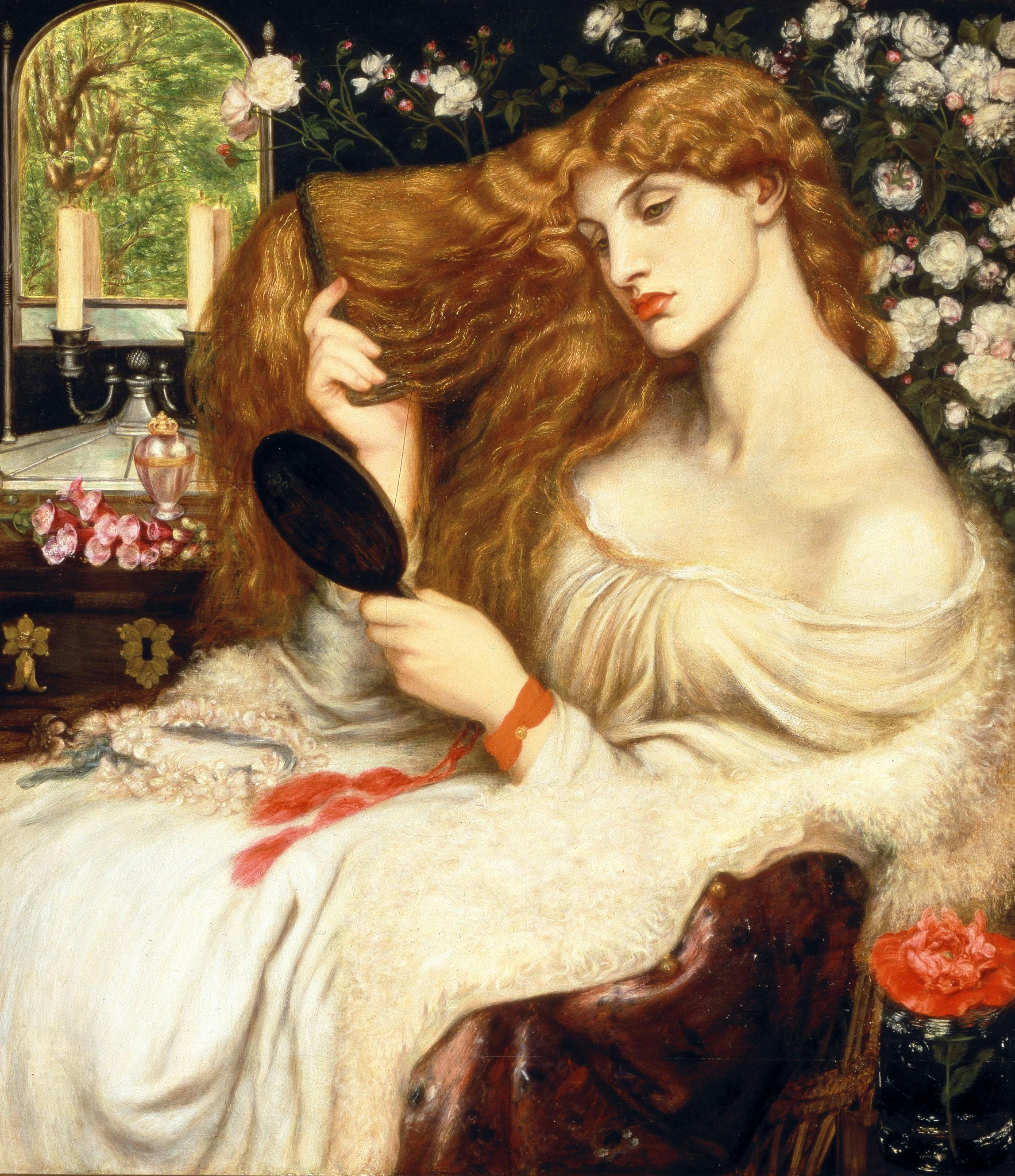
Fig. 1. Dante Gabriel Rossetti (1866) Lady Lilith, Wikimedia Commons
Meanwhile, Burne-Jones, with his priority of artistic beauty above all else, focused on visual harmony. His works, such as the Perseus Series (1875-1880), exemplified the Aesthetic Movement's desire for art as an exploration of pure form and beauty, without the constraint of moral storytelling or social critique. For a close look at the Perseus series, please see the video below:
"Burne Jones’ Perseus Series," Jane Burden Morris, 2022
Another key figure in aestheticist painting was James McNeill Whistler (1834–1903). Whistler’s recognizable style used muted, monochromatic tones to create a soft, almost blurred effect. His Nocturne painting series exemplified this. These depictions of nighttime scenes were revolutionary for their use of diffused light and abstract forms.
In The Thames at Battersea (1878), from the Nocturne series, we see a hazy water scene as if shrouded in mist, with the outline of Battersea’s industrial skyscape in the background (see Figure 2).
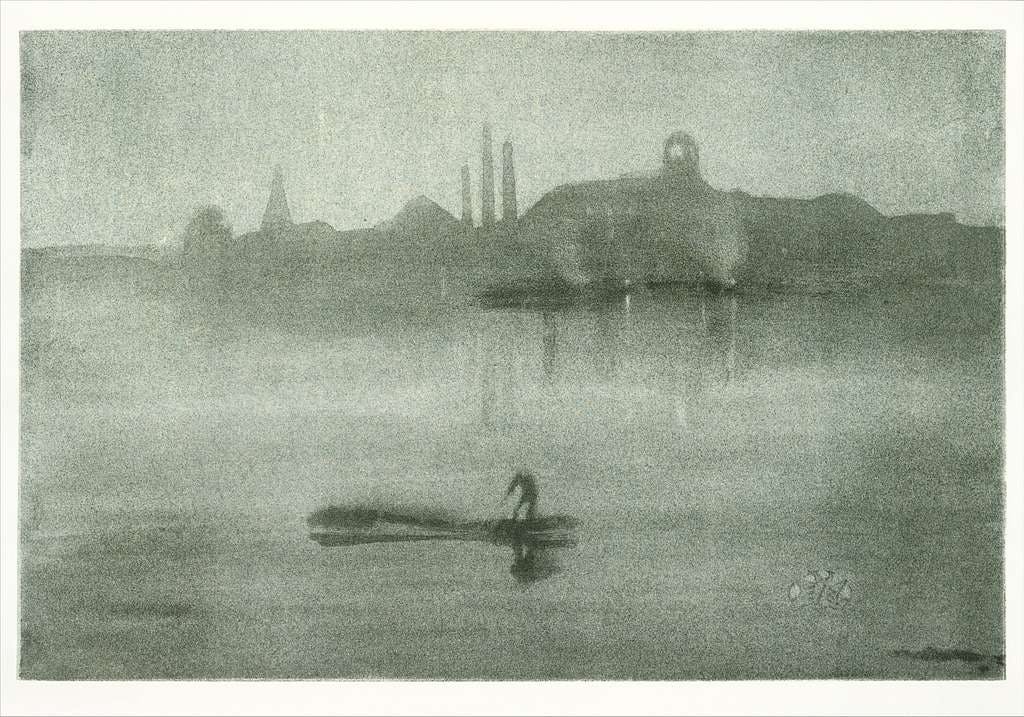
Fig. 2. James McNeill Whistler (1878)Nocturne: The Thames at Battersea, Getarchive
The Metropolitan Museum of Art notes the ethereal nature of this painting, commenting on the “subtle tonal variations that alluded dreamily to a triumph of water and air over substance.” Whistler emphasized the importance of form and color over narrative or moral content. There isn’t much literal meaning to decipher, rather it evokes a mood or feeling. Instead of focusing on specific, identifiable objects or figures, The Thames at Battersea, like the Nocturne paintings in general, concentrates on the overall harmony of the scene—shapes, lines, and tonal values come together to create a unified visual atmosphere. This rejection of narrative was emblematic of the aestheticist movement.
These painters, with different backgrounds and unique styles, were unified under the concept of aestheticism: the belief and practice that art should exist solely for the purpose of aesthetic experience.
Aestheticism and literature
Aestheticist writers often sought to engage the senses of the reader through rich, evocative language. Where Victorian novelists often engaged with issues like class, morality, and social reform, aestheticist writers created beautiful, engaging works that provided pleasure through their form and language.
Algernon Swinburne
Algernon Swinburne (1837–1909) was a writer central to the aestheticist movement. His works rejected conventional morality and social norms, in favour of individual autonomy and celebration of the beauty of nature. In his poem ‘A Forsaken Garden’ (1878), Swinburne expresses his appreciation for nature and its inextricability from beauty and life:
All are at one now, roses and lovers,
Not known of the cliffs and the fields and the sea.
Not a breath of the time that has been hovers
In the air now soft with a summer to be. (Selected Poems, [2017])
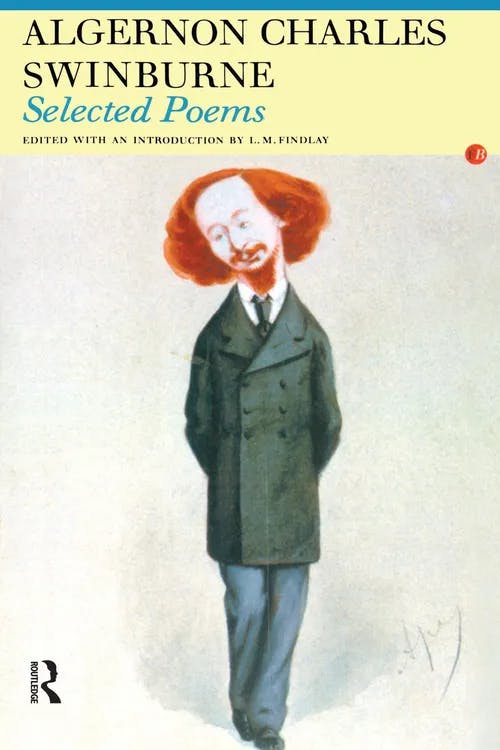
Algernon Charles Swinburne
All are at one now, roses and lovers,
Not known of the cliffs and the fields and the sea.
Not a breath of the time that has been hovers
In the air now soft with a summer to be. (Selected Poems, [2017])
With a pleasing formal structure, loaded with evocative imagery, this stanza describes a transcendental moment; the ever-present potential for beauty and pleasure, without the burden of history or time. The poem offers nature, and as an extension, itself, as an escape from the moralistic and industrial world. Through vivid, emotional, and sensory-rich imagery, Swinburne creates a world in which beauty and love are the highest ideals, confronting the rigid and mechanical forces of modern life.
Oscar Wilde
One of the most famous figures of aestheticism was poet, playwright, and novelist, Oscar Wilde (1854–1900). Wilde was heavily influenced by Pater’s ideas, taking the escapism of art to a more overt and provocative level. He championed the self-sufficiency of art and literature, with John Stokes explaining,
In other words, the value of art lies not in any declared purpose but in the very fact of its existence – a basic lesson in aestheticism that Wilde had already learned from the French. (“Wilde and Paris,” Oscar Wilde in Context, 2013)
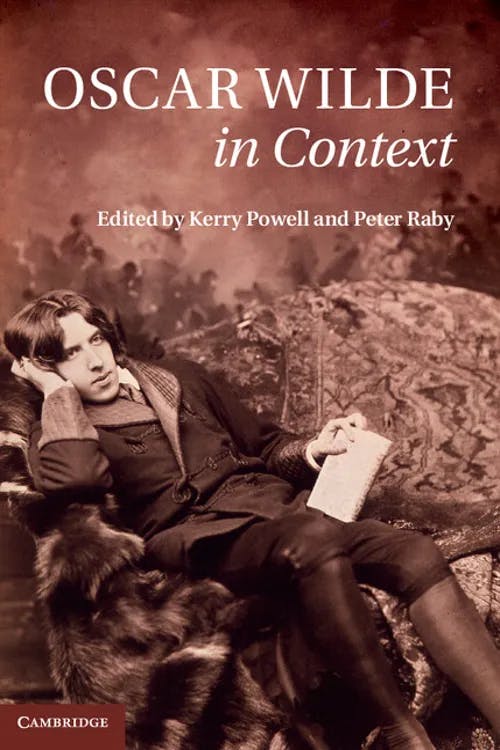
Edited by Kerry Powell and Peter Raby
In other words, the value of art lies not in any declared purpose but in the very fact of its existence – a basic lesson in aestheticism that Wilde had already learned from the French. (“Wilde and Paris,” Oscar Wilde in Context, 2013)
One of Wilde’s most well-known novels, The Picture of Dorian Gray (1890), explores these ideas of beauty, hedonism, and art. The titular character, Dorian Gray, is a young man whose beauty is his defining feature. Realizing that this beauty will fade, Dorian sells his soul and, in exchange, his portrait will age in his place. He then embarks on a life devoted to the pursuit of beauty and sensual pleasure, without concern for morality, consequence, or social expectations, all while his portrait bears the physical marks of these hedonistic decisions.
The novel challenges the reader to consider the tension between beauty and morality, art and life, suggesting that beauty and pleasure should be pursued above all else. Earlier in the novel, Lord Henry asserts:
“Pleasure is the only thing worth having a theory about,” he answered, in his slow, melodious voice. “But I am afraid I cannot claim my theory as my own. It belongs to Nature, not to me. Pleasure is Nature’s test, her sign of approval. When we are happy we are always good, but when we are good we are not always happy.” (Wilde, 1890, [2012])
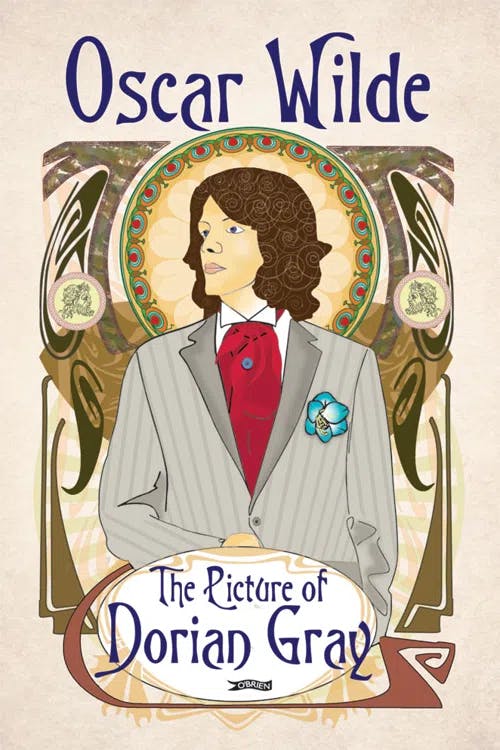
Oscar Wilde
“Pleasure is the only thing worth having a theory about,” he answered, in his slow, melodious voice. “But I am afraid I cannot claim my theory as my own. It belongs to Nature, not to me. Pleasure is Nature’s test, her sign of approval. When we are happy we are always good, but when we are good we are not always happy.” (Wilde, 1890, [2012])
This quote introduces a central idea of the novel: that perhaps pleasure, as a natural and intrinsic experience, is the ultimate standard of value or truth. Lord Henry proposes that the experience of pleasure is a sort of confirmation of living in harmony with the world. When we experience pleasure, we are in tune with the natural order and acting in accordance with our true selves. This idea implies that pleasure is a kind of moral or existential sign that we are doing things correctly, in the way nature intended.
Aestheticism presents and promotes sensory pleasure over stark moralism, and art in and of itself rather than as a didactic tool. Due to the popularity of works like The Picture of Dorian Gray, Wilde rendered aestheticism a more public and cultural force.
To learn more about Wilde’s text, see our guide “What was the Fin de Siècle?” and “What is Urban Gothic?”
Legacy
Aestheticism, with its emphasis on “art for art’s sake” and the celebration of beauty as the highest form of human experience, was a powerful cultural movement. Its rejection of moral didacticism and its focus on sensual pleasure and individual expression made it both revolutionary and controversial. Perhaps because it was not a formal or organized movement, aestheticism was expressed in a myriad of ways and evolved in many directions. As the world entered the 20th century, aestheticism’s ideals began to lose their prominence, as new movements like modernism came into focus, with its emphasis on social issues and intellectual engagement.
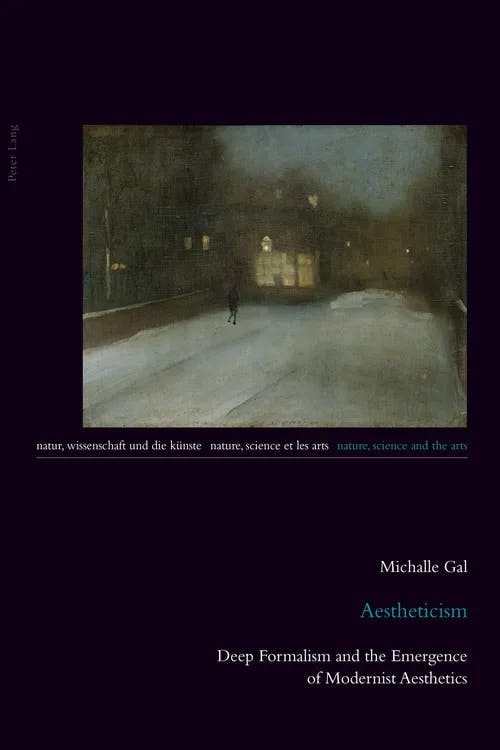
The aesthetic movement laid important groundwork for modernism, however, by questioning traditional forms and values in art. As Michalle Gal notes,
The British aestheticist philosophy of art in the second half of the 19thcentury, argued for by Walter Pater, Oscar Wilde, and James Whistler, was the source and inspiration for both modernist types of Formalism. (Aestheticism, 2015)
Michaelle Gal
The British aestheticist philosophy of art in the second half of the 19thcentury, argued for by Walter Pater, Oscar Wilde, and James Whistler, was the source and inspiration for both modernist types of Formalism. (Aestheticism, 2015)
Movements like formalism, imagism, art nouveau, and modernism were the progression of ideas presented by aestheticism. Modernist writers like James Joyce, Virginia Woolf, and T.S. Eliot, for example, would continue the exploration of art's autonomy and focus on sensory and emotional experience, even as they moved toward more fragmented, experimental forms. This shows how the concerns of aestheticism resonated long after the movement’s activity. Aestheticism’s rejection of utilitarianism and its celebration of aesthetic experience remains a valuable artistic theory to this day.
Further reading on Perlego
Art and Life in Aestheticism: De-Humanizing and Re-Humanizing Art, the Artist and the Artistic Receptor (2008) by Kelly Comfort
Life Writing and Victorian Culture (2017) by David Amigoni
Marius the Epicurean (2011) by Walter Pater
Women Poets and Urban Aestheticism: Passengers of Modernity (2005) by Ana Parejo Vadillo
Aestheticism FAQs
What is aestheticism in simple terms?
What is aestheticism in simple terms?
Who were some key figures of aestheticism?
Who were some key figures of aestheticism?
What were some key characteristics of aestheticism?
What were some key characteristics of aestheticism?
Bibliography
Gal, M. (2015) Aestheticism: Deep Formalism and the Emergence of Modernist Aesthetics. Peter Lang AG, Internationaler Verlag der Wissenschaften. Available at: https://www.perlego.com/book/2941784
Johnson, R. (2017) Aestheticism. Routledge. Available at: https://www.perlego.com/book/1472094
Kant, I. (2020) The Critique of Judgement. Spartacus Books. Available at:
https://www.perlego.com/book/2918461
The Metropolitan Museum of Art, “Nocturne (Nocturne: The Thames at Battersea),” available at: https://www.metmuseum.org/art/collection/search/337702, (accessed December 1st, 2024)
Pater, W. (2013) The Renaissance: Studies in Art and Poetry. Dover Publications. Available at: https://www.perlego.com/book/111336
Stokes, J. (2013) “Wilde and Paris,” in Powell, K. and Raby, P. (eds.) Oscar Wilde in Context. Cambridge University Press. Available at: https://www.perlego.com/book/4220183
Swinburne, A. C. (2017) Selected Poems. Routledge. Available at: https://www.perlego.com/book/1580104
Wilde, O. (2012) The Picture of Dorian Gray. The O’Brien Press. Available at: https://www.perlego.com/book/2669454
Artwork
McNeill Whistler, J. (1878) The Thames at Battersea [Lithograph]. Metropolitan Museum of Art, New York.
Rossetti, D. G. (c.1867) Lady Lilith [Oil on canvas]. Delaware Art Museum, Delaware.
PhD, Media Arts (Royal Holloway, University of London)
Aoiffe Walsh has a PhD in Media Arts from Royal Holloway, University of London. With a background in film studies and philosophy, her current research explores British literary modernism, with a particular focus on surrealism between the wars. She has lectured and published pieces on documentary and film theory, film history, genre studies and the avant-garde.