History

Jim Crow Era
The Jim Crow Era refers to the period of legalized racial segregation and discrimination in the United States, particularly in the Southern states, from the late 19th century to the mid-20th century. Named after a minstrel show character, Jim Crow laws enforced racial segregation in public facilities, schools, and transportation, and perpetuated systemic racism and inequality.
Written by Perlego with AI-assistance
Related key terms
1 of 5
10 Key excerpts on "Jim Crow Era"
 eBook - PDF
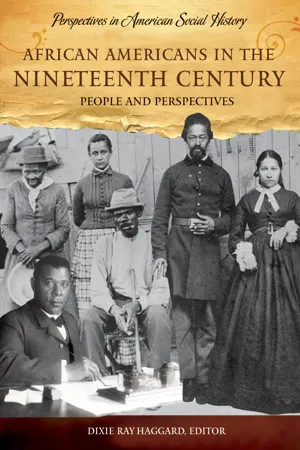
African Americans in the Nineteenth Century
People and Perspectives
- Dixie Ray Haggard(Author)
- 2010(Publication Date)
- ABC-CLIO(Publisher)
Jim Crow arose in the North and spread to the West and affected all parts in between, but nowhere was it so pervasive and so brutal as in the American South. Following the Civil War, much of the rest of the nation was moving away from a Jim Crow system of segregation. Illinois repealed its ban on black migration into the state and allowed blacks to sit on juries and testify in courts. New York City, San Francisco, Cleveland, Cincinnati, and Philadelphia abandoned the practice of Jim Crow streetcars. Even as northern states repealed some of their most egregious Jim Crow legisla- tion, social separation remained, as did segregation in most public accom- modations, such as public schools, restaurants, hotels, parks, and beaches. Whites in all regions continued to think of themselves as a superior race and that belief fueled the rationale for racial prejudice, although in many places outside the South, the discrimination was more rooted in custom than in law. As punitive and degrading as Jim Crow was in the North and the West, however, it was never as bad as it was in the South. Jim Crow laws and customs were never so oppressive or as sadistically and savagely enforced as they were in the former Confederate States. Emancipation for southern blacks occurred in stages, but slavery for- mally ended on January 31, 1865, with the ratification of the Thirteenth Amendment to the U.S. Constitution, which abolished the institution throughout the nation. The United States entered a period of its history known as the Reconstruction era that lasted from 1863 to 1877. Four mil- lion bondsmen and women celebrated and proclaimed that their ‘‘Day of Jubilee’’ had arrived. Immediately, the former slaves began creating their own institutions and communities. The freedmen and women forged their own understanding of emancipation, which included participation in the democratic process.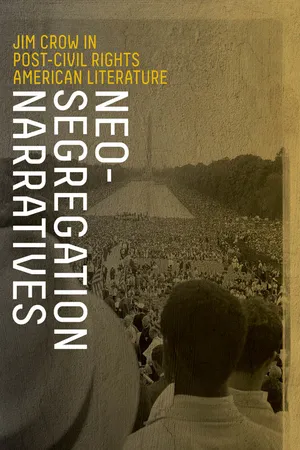 eBook - PDF
Neo-Segregation Narratives
Jim Crow in Post-Civil Rights American Literature
- Brian Norman(Author)
- 2010(Publication Date)
- University of Georgia Press(Publisher)
Segregation comprises a diverse set of cultural practices, ethnic experiences, historical conditions, political ideologies, municipal planning schemes, and de facto social systems, though it is primarily associated with the Jim Crow South and bookended by the court cases Plessy v. Ferguson (1896) and Brown v. Board of Education of Topeka (1954). The origin of the term “Jim Crow” is tricky because Jim Crow himself made his historical debut in Tim Rice’s minstrel shows in the urban north in the 1830s and 1840s, which built on earlier lore cycles. 8 But in contemporary parlance, “Jim Crow” typically describes a loose series of post-Reconstruction phenomena that codified the bright line between black and white in intricate legal and cultural codes in the South. Such lines were later dismantled in sundry desegregation efforts leading to, embodying, and continuing what we call the U.S. civil rights movement. W. E. B. Du Bois famously announced that the twentieth century’s defining problem was the color line in The Souls of Black Folk (1903). The term “Jim Crow” captures many of the core experiences, attitudes, and practices associated with that color line. In this same vein, I use the term “civil rights” as useful and slip-pery shorthand for the time between that first major national desegregation victory in 1954 and passage of the 1964 Civil Rights Act. It was then widely possible to conceive of de jure segregation as a relic. The major task shifted to ferreting out segregation’s de facto guises, or reconsidering the merits of self-segregation. Still, Jacqueline Dowd Hall warns against overly relying on these signposts in what she dubs the short civil rights movement to argue for a long civil rights movement . 9 The chapters in this book discuss pairs of exemplary texts to illuminate key aspects of neo – segregation narratives as well as to sketch the emergence and development of that tradition.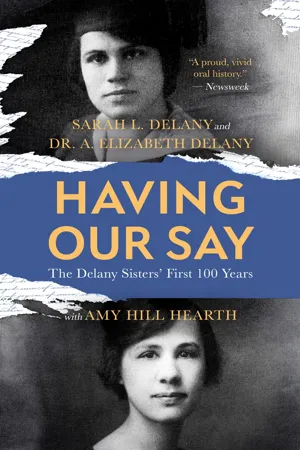 eBook - ePub
Having Our Say
The Delany Sisters’ First 100 Years
- Sarah L. Delany, A. Elizabeth Delany, Amy Hill Hearth, Dr. A. Elizabeth Delany(Authors)
- 2023(Publication Date)
- Blackstone Publishing(Publisher)
PART IVJIM CROW DAYSA GENERATION after the end of slavery, freedom for black Americans was still elusive. Strategies were being devised, such as poll taxes, to block black Americans from voting, and a flurry of racial restrictions was coming to be codified as "Jim Crow" laws. The Delany sisters recall the beginning of Jim Crow in North Carolina as "the day that everything changed."Jim Crow became entrenched in Southern society in 1896, with the Supreme Court ruling in the Plessy v. Ferguson case. The case stemmed from an incident in which a Louisiana citizen named Homer Plessy was arrested for refusing to sit in a "colored" railroad car. Mr. Plessy lost on his appeal to the Supreme Court, which sanctioned the establishment of "separate but equal" facilities for blacks and whites.There had long been segregation by custom, but the Jim Crow laws, named for a minstrel show character, made it legal and official. Under the new laws, black Americans faced separate — and inferior — facilities in every part of society, including schools, public transportation, and hospitals. Even public restrooms and drinking fountains in the South were labeled "Colored" and "Whites Only."By 1914 every state in the South had passed laws that, in effect, relegated Negroes to a lower status than whites. "We knew we were already second-class citizens," recalls Sadie Delany, "but those Jim Crow laws set it in stone."It would be decades before Jim Crow would begin to finally unravel. In 1954 the Supreme Court ruled in Brown v. Board of Education of Topeka, Kansas,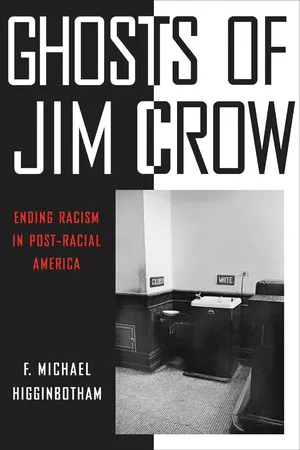 eBook - ePub
Ghosts of Jim Crow
Ending Racism in Post-Racial America
- F. Michael Higginbotham(Author)
- 2013(Publication Date)
- NYU Press(Publisher)
28 The “harmless” humor on the minstrel stage created an atmosphere that accepted and justified segregationist laws. Those laws maintained and exacerbated physical and psychological distance between the races. Segregation spread and got ever stronger during the latter half of the 19th century, fueled by the notions of black inferiority celebrated in Jim Crow minstrel shows.Jim Crow laws provided a combination of government hindrance of economic opportunities for blacks and empowerment for whites. The notion of white superiority/black inferiority was strengthened in many forms—eliminating blacks from sporting competition with whites; preventing educational opportunities for blacks; generating housing segregation such as all-white towns or designated black areas; excluding blacks from certain jobs; creating government programs, like farm assistance, of which poor and middle-class whites were the primary beneficiaries; and refusing to acknowledge or recognize black inventions and technological advancements.29The Supreme Court Embraces Jim Crow: Plessy v. Ferguson
While black separation practices existed prior to Reconstruction, constitutional sanction of race separation, allowing for widespread and comprehensive coverage, would not occur until the end of the 19th century.30 In 1896, the Supreme Court, in Plessy v. Ferguson ,31 upheld a Louisiana statute that prohibited black passengers from riding alongside whites in railway cars. In doing so, the Court placed its imprimatur on discrimination—even the justice who disavowed race separation embraced notions of white superiority.32 eBook - ePub
In Their Voices
Black Americans on Transracial Adoption
- Rhonda M. Roorda(Author)
- 2015(Publication Date)
- Columbia University Press(Publisher)
The Army was in the South to enforce the Fourteenth and Fifteen Amendments [civil rights and voting rights, respectively], and it became increasingly clear that without its presence, the white South would regionally nullify those amendments through terrorism. But the use of federal troops to confront the white militias was deeply unpopular, including in the North. . . . The country had never been entirely for full rights for African Americans in the first place, and it wanted to put the Civil War and its legacy behind it.The Ku Klux Klan, which began in the immediate aftermath of the war and was suppressed by federal troops, soon morphed into an archipelago of secret organizations all over the South that were more explicitly devoted to political terror. . . . In the aggregate, many more black Americans died from white terrorist activities during Reconstruction than from many decades of lynchings. Their effect was to nullify, through violence, the Fifteenth Amendment, by turning black political activity and voting into something that required taking one’s life into one’s hands.Isabel Wilkerson picks up the story: “Around the turn of the twentieth century . . . southern state legislatures began devising with inventiveness and precision laws that would regulate every aspect of black people’s lives, solidify the southern caste system, and prohibit even the most casual and incidental contact between the races. They would come to be called Jim Crow laws” (2010, p. 40). The Jim Crow Era lasted almost one hundred years.1 By 1915 all southern states had some form of Jim Crow laws. For example, blacks were prohibited from eating in the same restaurants, drinking out of the same drinking fountains, entering the same restrooms, going to the same schools, or watching movies in the same theaters as whites. Common signage at the time warned: “Whites Only”; “Restrooms for Colored”; “No Dogs, Negroes or Mexicans”; “Colored Waiting Room”; and “Staff and Negroes Use Back Entrance” (Householder, 2012).Punishment for blacks who defied Jim Crow laws (and even for sympathetic whites) was severe. For infractions like attempting to register to vote, stealing a cow, talking back to a white person, or fighting for justice, blacks could be lynched by white mobs that didn’t even bother to hold a sham trial (NAACP, 2000). And in the case of serious felonies, many innocent people were hanged. eBook - PDF
The Jim Crow Encyclopedia
Greenwood Milestones in African American History [2 volumes]
- Nikki Brown, Barry M. Stentiford, Nikki Brown, Barry M. Stentiford(Authors)
- 2008(Publication Date)
- Greenwood(Publisher)
Overall, regardless of their position on Jim Crow laws, pastors had wide-reaching effects on the battle over Jim Crow. See also Catholicism. Further Readings: Chappell, David. A Stone of Hope: Prophetic Religion and the Death of Jim Crow. Chapel Hill: University of North Carolina Press, 2004; Fairclough, Adam. To Redeem the Soul of America: The Southern Christian Leadership Conference & Martin Luther King, Jr. Athens: University of Georgia Press, 1987; Packard, Jerome M. American Nightmare: The History of Jim Crow. New York: St. Martin’s Press, 2002; Sernett, Milton C. Bound for the Promised Land: African American Religion and the Great Migration. C. Eric Lincoln Series on the Black Experience. Durham, NC: Duke University Press, 1997. Shawntel Ensminger Prisons Southern prisons during the Jim Crow Era earned the ‘‘dubious distinction’’ of ‘‘America’s worst prisons.’’ Jim Crow prisons in the South took various, yet equally brutal forms—a traditional penitentiary, a penal farm, a former slave plantation, brickyards, or temporary road camps. The prisons were erected PRISONS 635 in forests, swamps, mines, brickyards, or levees, and the convicts were housed in tents, log forts, and rolling cages. Jim Crow punishment existed in two phases, during the leasing era, which ran from 1890 to the 1920s, and then in the state control system, from the 1920s to 1965. Distinctive in the penal history of this era, the use of state prisons to control black population are deeply rooted in the South. Immediately after the Civil War, Southern states turned to the criminal justice system in order to control the newly freed slave population. They also needed a labor force to repair Civil War damages. Although Southern states had built penitentiaries before the Civil War, most of them were so badly dam- aged during the war that they were unusable. eBook - ePub
Sweet Land of Liberty?
The African-American Struggle for Civil Rights in the Twentieth Century
- Robert Cook(Author)
- 2013(Publication Date)
- Routledge(Publisher)
20 . Although segregation did not always make economic sense to southern capitalists whose main concerns were productivity and cheap labour, businessmen usually shared the racial mores of the community in which they lived and did little, beyond the sporadic employment of black strike-breakers, to undermine Jim Crow.At the heart of the southern caste system, a hierarchically organised society based on inequalities of race as well as class, lay a bewildering array of state and local laws, passed between 1881 and 1915, mandating racial segregation in all walks of life. Such statutes banned blacks and whites from travelling in the same railway carriages, tram-cars and steamboats; provided for the separation of races in most other public places including theatres, cinemas, parks, churches, schools and even cemeteries; and zoned off urban blacks from their white counterparts. Although the majority of southern blacks doubtless preferred the company of their own people, the more wealthy among them resented the loss of power and dignity occasioned by the hardening of Jim Crow practices. Their efforts to stem the tide of legal segregation continued throughout the period in the form of legal challenges and boycotts, but the prospects of success were dimmed by the decision of the US Supreme Court in the seminal case of Plessy v. Ferguson in 1896. Homer Plessy, a well-to-do Louisiana mulatto, had brought suit in state court claiming that a local law mandating segregated railway cars was void under the Constitution. The nation’s highest court rejected his claims on the grounds that ‘separate but equal’ railway accommodation was constitutionally permissible and chided Plessy for being overly sensitive to the stigma he attached to segregation.21 eBook - ePub
Recognizing Race and Ethnicity, Student Economy Edition
Power, Privilege, and Inequality
- Kathleen Fitzgerald(Author)
- 2019(Publication Date)
- Routledge(Publisher)
Identify three reasons African Americans would desire to leave the South during the Jim Crow Era. To this day, most African Americans still live in the South. Can you identify two reasons that many blacks might have stayed in the South during the Jim Crow Era, rather than participating in the rural to urban migration?Nativism and the Era of Exclusion
The immediate post-Civil War period witnessed gains made by African Americans, only to have these reversed as Jim Crow set in. The late 1800s also witnessed progress and backlash for other racial/ethnic groups. The mid-to-late 1800s was one of the most significant eras of immigration in United States history. Defining who qualified as an "American" became a major focus of the era and African Americans and Native Americans were not yet included in that identity. Initially, tens of thousands of immigrants, mostly European Catholics, Eastern European Jews, Asians, and Middle Easterners, also found themselves defined out of this elusive category "American." A spread of nativism , a surge in anti-immigrant beliefs and policies, occurred. Nativists saw themselves as the true Americans because they were native born and expressed anti-Catholic hostilities and xenophobia , the fear and contempt of strangers. Thus, while this historical era is one of terror and oppression for recently emancipated African Americans, it was also an extremely repressive era for many immigrant groups. Nativism resulted in the first immigration restrictions in the United States, such as the Chinese Exclusion Act.White racial supremacy is a global phenomenon linked to global capitalism, thus one can see similar immigration legislation throughout the world. For instance, similar immigration restrictions were enacted in Australia during the same period and were, tellingly, referred to as the "white Australia policies" (see Box 5.3 Global Perspectives). Global white supremacy eBook - ePub
Social Identity and the Law
Race, Sexuality and Intersectionality
- Barbara L. Graham(Author)
- 2018(Publication Date)
- Routledge(Publisher)
Civil Rights Cases is that Congress did not enact another major civil rights law until 89 years later, the Civil Rights Act of 1964, under its power to regulate interstate commerce. After the death of Chief Justice Waite, there was considerable personnel change on the Supreme Court. From the beginning of the Fuller Court in 1888 until the end of the Taft Court (1930), nine presidents appointed twenty-five Justices to the Supreme Court, including three Chief Justices. Despite the remarkable turnover during this forty-two year period, the Supreme Court’s jurisprudence in the area of racial equality was steadfastly entrenched in a conservative direction. By the 1890s, ideas of black intellectual, biological and cultural inferiority dominated popular, scientific and jurisprudential thought. The Court’s decisions during this era espoused a jurisprudence grounded in state prerogatives and laissez-faire ideology.American-Style Apartheid
The racial caste system that operated primarily but not exclusively in Southern and border states during the Reconstruction period until the mid-1950s is commonly referred to as the era of Jim Crow segregation. Southern states began passing Jim Crow laws around 1890 and passed a second wave of laws a decade later. Laws requiring separation of the races were comparable to the Black Codes adopted in 1865 after the ratification of the Thirteenth Amendment. In both contexts, the intent of the segregation laws was to force people of color into a continued state of subjugation and quasi-slavery status.AMERICAN-STYLE APARTHEID BOX 2.2Jim Crow in the American South“The extremes to which caste penalties and separation were carried in parts of the South could hardly find a counterpart short of the latitudes of India and South Africa. In 1909 Mobile passed a curfew law applying exclusively to Negroes and requiring them to be off the streets by 10 p.m. The Oklahoma legislature in 1915 authorized its Corporation Commission to require telephone companies “to maintain separate booths for white and colored patrons.” North Carolina and Florida required that textbooks used by the public-school children of one race be kept separate from those used by the other, and the Florida law specified separation even while the books were in storage. South Carolina for a time segregated a third caste by establishing separate schools for mulatto as well as for white and Negro children. A New Orleans ordinance segregated white and Negro prostitutes in separate districts. Ray Stannard Baker found Jim Crow Bibles for Negro witnesses in Atlanta courts and Jim Crow elevators for Negro passengers in Atlanta buildings.” eBook - ePub
The Color of Compromise
The Truth about the American Church’s Complicity in Racism
- Jemar Tisby(Author)
- 2019(Publication Date)
- Zondervan(Publisher)
CHAPTER 6RECONSTRUCTING WHITE SUPREMACY IN THE Jim Crow EraAfter thelong night of enslavement and the chaos of the Civil War, African Americans turned their faces toward the warm dawn of freedom. For a brief, breathless moment it seemed as if the nation might finally live up to its guarantees of life, liberty, and the pursuit of happiness. But no sooner had the Confederates signaled surrender than the systematic machinations of white supremacists began to dismantle the hard-won opportunities of black Americans.From 1865 to 1877, black citizens embraced their new roles as emancipated citizens. They ran for political office, opened businesses, started schools, and grasped at the American dream for the first time. This period witnessed one of the most vigorous seasons of opportunity for black people in the nation’s history. But the end of the Civil War did not bring an end to the battle for black equality. White people in the North and the South sought to limit the civic and social equality of black people across the country. They devised political and economic schemes to push black people out of mainstream American life. To keep power, white Americans used terror as a tool through lynchings and rape, violently solidifying the place of people of color as second-class citizens.Although the demise of legalized slavery could have led to full citizenship privileges for black people, white supremacists devised new and frighteningly effective ways to enforce the racial hierarchy. They romanticized the antebellum South as an age of earnest religion, honorable gentlemen, delicate southern belles, and happy blacks content in their bondage. They also constructed a new social order, what we refer to as Jim Crow—a system of formal laws and informal customs designed to reinforce the inferiority of black people in America.
Index pages curate the most relevant extracts from our library of academic textbooks. They’ve been created using an in-house natural language model (NLM), each adding context and meaning to key research topics.

