What are Penny Dreadfuls?

PhD, English Literature (Lancaster University)
Date Published: 23.09.2024,
Last Updated: 23.09.2024
Share this article
Penny dreadfuls (sometimes referred to as “penny bloods”) were cheap serializations printed in weekly installations (sold at a penny) during the 1840s to the 1860s. Taking their cues from Gothic fiction and stories of criminals found in The Newgate Calendar (beginning 1774), penny dreadfuls were melodramatic, exciting, sensational, and often provocative, predominantly telling stories of violent criminals, detectives, and supernatural beings. These tales were primarily targeted at working-class readers. They were, as Anna Gasperini writes,
[...] the definition of cheap: churned out by underpaid hack-writers, they were either issued in penny miscellanies or printed separately on cheap paper at the low cost that characterized the serialized publications market. They were read aloud, and passed around until the paper fell to pieces, which explains the scantiness of original material available to scholars. Penny bloods were, quite literally, read to destruction, thus fulfilling their only function, that is: satiating the craving for fiction of as many readers as possible. Their plots suited the modest requests of working-class readers: they were exciting, easy to read, and graphic, and they soon crystallized in a formula involving murder, betrayal, gender-shifting, and the occasional supernatural event (not to mention scantily clad damsels in distress). (Nineteenth Century Popular Fiction, Medicine and Anatomy, 2019)
Anna Gasperini
[...] the definition of cheap: churned out by underpaid hack-writers, they were either issued in penny miscellanies or printed separately on cheap paper at the low cost that characterized the serialized publications market. They were read aloud, and passed around until the paper fell to pieces, which explains the scantiness of original material available to scholars. Penny bloods were, quite literally, read to destruction, thus fulfilling their only function, that is: satiating the craving for fiction of as many readers as possible. Their plots suited the modest requests of working-class readers: they were exciting, easy to read, and graphic, and they soon crystallized in a formula involving murder, betrayal, gender-shifting, and the occasional supernatural event (not to mention scantily clad damsels in distress). (Nineteenth Century Popular Fiction, Medicine and Anatomy, 2019)
The first use of the term penny dreadful was in the 1873 edition of The Slang Dictionary by John Camden Hotten and is described as
an expressive term for those penny publications which depend more upon sensationalism than upon merit, artistic or literary, for success. ([2013])
John Camden Hotten
an expressive term for those penny publications which depend more upon sensationalism than upon merit, artistic or literary, for success. ([2013])
There has been much discussion over the term “penny dreadful” and its relationship to the “penny blood”. Some scholars have adopted John Springhall’s approach, which is to use the term “penny bloods” to refer to the early Gothic serializations in the 1830s and 40s, and “penny dreadful” to describe the detective serials from the 1860s onwards aimed at juvenile audiences (Youth, Popular Culture and Moral Panics, 1999). However, other scholars have opted to use “penny dreadful” as an umbrella term to describe serialized fiction penny from the 1840s-60s with similar publication and printing methods, target working-class audiences, and penchant for melodrama and sensation. This guide will be taking this latter approach.
In this guide, we will briefly cover the publishing history of penny dreadfuls and their reception, before discussing their key themes and tropes. We will then explore how many penny dreadfuls endorsed radical politics.
The emergence of penny fiction
The increase in literacy amongst the poor in the nineteenth century created new demand for cheap reading material. As Andrew King highlights, in 1800 60% of men and 45% of women could read, “by 1871 the figure had risen to 81 percent and 73 percent respectively” (“‘Literature of the Kitchen'," A Companion to Sensation Fiction, 2011). The increased use of technology in the 1830s and 40s meant a reduction in printing costs, resulting in the publication of penny weeklies.
In this new literary landscape, publishing mogul Edward Lloyd would begin his penny dreadful empire. In his seminal work, Fiction for the Working Man (1963, [2017]), Louis James identifies Lloyd as a “central figure” in the penny fiction market. Sarah Louise Lill also highlights that
These pennies are the defining feature of Lloyd’s career: he carved out a position in the market precisely by appealing to readers who could afford (if only by living beyond their means) a penny per week in disposable income, he utilised the advantages of cheap production and distribution methods, he challenged the contentious ‘taxes on knowledge’ and those pennies soon proved to be as lucrative as pounds. (Edward Lloyd and His World, 2019)
Edited by Sarah Louise Lill and Rohan McWilliam
These pennies are the defining feature of Lloyd’s career: he carved out a position in the market precisely by appealing to readers who could afford (if only by living beyond their means) a penny per week in disposable income, he utilised the advantages of cheap production and distribution methods, he challenged the contentious ‘taxes on knowledge’ and those pennies soon proved to be as lucrative as pounds. (Edward Lloyd and His World, 2019)
Lloyd began by publishing plagiarisms of authors like Charles Dickens with works such as The Life and Adventures of Oliver Twiss (1838-39), Nickelas Nickelbery (1838), and Barnaby Budge (c.1841). However, these were not exact copies; instead, penny fiction often took advantage of popular names, themes, and storylines and in many cases extended the originals.
Lloyd launched numerous weekly periodicals including Lloyd’s Penny Weekly Miscellany (1843–46), Lloyd’s Penny Atlas (1843–45), and Lloyd’s Entertaining Journal (1844–47). Perhaps his most famous contribution to the penny fiction market was in introducing two of the most prolific penny writers: Thomas Peckett Prest and James Malcolm Rymer with the publication of Prest’s Ela the Outcast (1840-41) and Rymer’s Ada the Betrayed (1843).
Penny fiction was proving to be incredibly popular as King explains,
By the mid-1850s, while Dickens’s twopenny Household Words (1850–9) was enjoying a steady sale of 38,000 a week, these four cumulatively were selling almost 2 million copies. Based on calculations usual at the time of four to six readers per issue, that meant that their audience consisted of over 50 percent of the British population. (2011)
Edited by Pamela K. Gilbert
By the mid-1850s, while Dickens’s twopenny Household Words (1850–9) was enjoying a steady sale of 38,000 a week, these four cumulatively were selling almost 2 million copies. Based on calculations usual at the time of four to six readers per issue, that meant that their audience consisted of over 50 percent of the British population. (2011)
To learn more about the publishers and the titles they published, Marie Léger-St-Jean’s database Price One Penny is a great place to start.
Formulaic and corruptive tales
Penny dreadfuls were not only criticized for being formulaic and “inferior” works, but they were also condemned for their violent content which Victorian moralists saw as corrupting the minds of their younger readership. In “Disreputable Adolescent Reading” Springhall states,
much of the ‘moral panic’ that cheap fiction intended for adolescents aroused in middle-class people seems to have derived from anxiety that their own sons and daughters were as much at risk from contamination by ‘pernicious’ reading as the children of the urban poor were. (Disreputable Pleasures, 2004)
Edited by Mike Huggins and J. A. Mangan
much of the ‘moral panic’ that cheap fiction intended for adolescents aroused in middle-class people seems to have derived from anxiety that their own sons and daughters were as much at risk from contamination by ‘pernicious’ reading as the children of the urban poor were. (Disreputable Pleasures, 2004)
One of the most well-known indictments against penny dreadfuls came from journalist James Greenwood in his essay “A Short Way to Newgate” he argued penny fiction was having a pernicious effect on its young readership:
There is a plague that is striking its upas roots deeper and deeper into English soil - chiefly metropolitan - week by week, and flourishing broader and higher, and yielding great crops of fruit that quickly fall, rotten-ripe, strewing highway and by-way, tempting the ignorant and unwary, and breeding death and misery unspeakable.[...] It is, however, a plague not included in the ordinary category that is the subject of this paper - the plague of poisonous literature. (The Wilds of London, 1874)
In her essay “‘Embalmed pestilence’, ‘intoxicating poisons’,” Manon Burz-Labrande further explores the contamination metaphor:
The rhetoric of contamination and contagion on which this discourse draws echoes historical, social and scientific contexts, and thereby plays on contemporary fears of social order’s potential disintegration to legitimise the penny dreadfuls’ marginalisation. (Penny Dreadfuls and the Gothic, 2023)
Edited by Nicole C. Dittmer and Sophie Raine
The rhetoric of contamination and contagion on which this discourse draws echoes historical, social and scientific contexts, and thereby plays on contemporary fears of social order’s potential disintegration to legitimise the penny dreadfuls’ marginalisation. (Penny Dreadfuls and the Gothic, 2023)
In fact, penny dreadfuls were often cited in court cases as motivation for murders and other violent crimes. Of course, there was no proven connection between violence and reading penny fiction. For more on the moral panic caused by these texts, see Hephzibah Anderson’s 2016 article “The Shocking Tale of the Penny Dreadful.”
Key ingredients of penny dreadfuls
Melodrama
Melodrama, with its unrealistic plots, stock characters, and exaggerated emotions, was a core element of penny dreadfuls. In his chapter in A Companion to Sensation Fiction, Rohan McWilliam highlights some conventions of melodramatic performance in theatre including “blood and thunder, heightened emotions, moustache-twirling villains, swashbuckling heroes, comic rural yokels, romantic brigands, and victimized heroines” (“Melodrama,” 2011). Though referring to melodrama in the theatrical sense, we can clearly see these in the tropes present in many penny dreadfuls.
Some of the stock characters in penny dreadfuls include tireless aristocratic villains, impoverished, virtuous, and beautiful young heroines who are victims of extreme misfortune, an amateur detective or spy, a blundering (often wealthy) gentleman who serves as comic relief, and a crib-breaker or two. Often these archetypal characters were thrown into outrageously implausible scenarios.
For example, in the anonymously authored The Work Girls of London (1865) a woman is kidnapped by a “hunchback” named “Hungry Mat,” who scales buildings in order to transport her to his attic. In an equally farcical storyline featured in Edward Ellis’s Ruth the Betrayer (1862-63), due to a series of cartoonish events, a wealthy gentleman finds himself mistaken for an asylum patient called “The Cadbury Kid” and is committed in his place.
The supernatural
Many penny narratives had supernatural elements and told stories of vampires, werewolves, and witches, often emulating earlier gothic tales. Perhaps the most well-known example of this is Rymer’s Varney the Vampire, or the Feast of Blood, the first full-length vampire novel. Despite its popularity, as Wendy Fell explains, “Studies of vampire fiction in the nineteenth century often overlook the importance of Varney to the creation of the vampire in the popular imagination” (“Vampires,” The Palgrave Handbook to Horror Literature, 2018).
Printed in weekly parts from 1845-47, James Malcolm Rymer’s serial tells the tale of the wealthy Bannerworth family, who have struggled since the passing of their father, and their encounters with the eponymous vampire Sir Francis Varney. Their first encounter with Varney is when he preys upon the young Flora Bannerworth, attempting to drink her blood when she sleeps (see Figure 1).
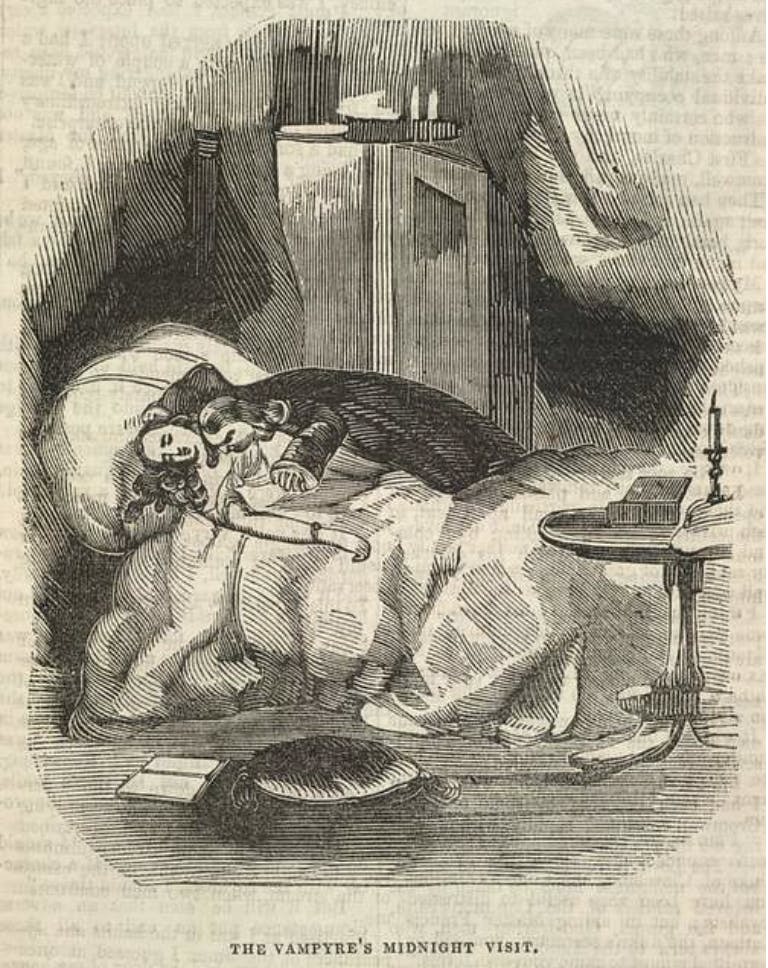
Fig. 1. “The Vampyre’s Midnight Visit,” (1850) in James Malcolm Rymer, Varney the Vampire
From then on, the story (mostly) focuses on the schemes of Varney and the Bannerworth’s desperate attempts to keep him at bay. However, due to the long run time of this serial, it is largely unfocused and there are numerous diversions and subplots which can make it difficult to follow:
Over the course of the loose narrative, Varney dies and is reborn several times over, so the writers could give him multiple origin stories. At one point he is a figure who has been around since the court of Tudor monarch Henry VIII; another time Varney is alleged to be a contemporary criminal brought back from the dead after being executed by hanging. Then there is the version that traces back to the English Civil War, when Varney was cursed to be one of the undead after betraying a royalist to parliamentarian leader Oliver Cromwell. (Adrian Mackinder, Death and the Victorians, 2024)
Adrian Mackinder
Over the course of the loose narrative, Varney dies and is reborn several times over, so the writers could give him multiple origin stories. At one point he is a figure who has been around since the court of Tudor monarch Henry VIII; another time Varney is alleged to be a contemporary criminal brought back from the dead after being executed by hanging. Then there is the version that traces back to the English Civil War, when Varney was cursed to be one of the undead after betraying a royalist to parliamentarian leader Oliver Cromwell. (Adrian Mackinder, Death and the Victorians, 2024)
Varney, for all his evil traits, is seen as morally ambiguous, often filled with remorse for his crimes and loathing at his condition. He ultimately dies by throwing himself into Mount Vesuvius.
The supernatural can also be seen in Reynolds’s serial Wagner the Wehr-Wolf (1846-47) in which the protagonist Fernand Wagner makes a deal with the devil for youth and wealth in exchange for turning into a werewolf once a month. Readers of penny fiction could read about other supernatural beings like witches in The Wild Witch of the Heath; or the Demon of the Glen: A Tale of the Most Powerful Interest (1841) by “Wizard” (For more on this, see Nicole Dittmer’s “Mistresses of the Broomstick,” Penny Dreadfuls and the Gothic, 2023). Ghosts also featured heavily in penny fiction with examples such as Reynolds’s Christmas tale The Pixy, or, the Unbaptised Child (1850) and James Malcolm Rymer’s Newgate (1846-47). (If you’re interested in learning more about Newgate, my chapter “Muddling about Among the Dead” in Penny Dreadfuls and the Gothic [2023] discusses this further).
Though we can see supernatural elements continue throughout penny fiction, as Karl Bell points out, this feature becomes overshadowed by sensationalism in the latter half of the century:
[T]he ‘penny dreadful’ of the 1860s onwards mirrored the shifting cultural concerns of the period. This meant an increasing tendency towards sensationalism over the explicitly supernatural. A fascination with urban criminality, the urban Gothic, and, later in the century, highwaymen, soldiers, and imperial adventurers, suggests the desire for literary fantasy was not flagging, only that phantoms and witches no longer possessed the centrality in the popular imagination that they once had. (The Magical Imagination, 2011)
Karl Bell
[T]he ‘penny dreadful’ of the 1860s onwards mirrored the shifting cultural concerns of the period. This meant an increasing tendency towards sensationalism over the explicitly supernatural. A fascination with urban criminality, the urban Gothic, and, later in the century, highwaymen, soldiers, and imperial adventurers, suggests the desire for literary fantasy was not flagging, only that phantoms and witches no longer possessed the centrality in the popular imagination that they once had. (The Magical Imagination, 2011)
Crime
Some penny dreadfuls fall into the category of “urban mysteries,” a subgenre of Gothic that focuses on the horrors of the post-industrial metropolis. The most popular penny dreadful of this kind is George W. M Reynolds’s mammoth work The Mysteries of London (1844-46). In his introduction to the Valancourt edition of The Mysteries of London, Louis James writes that Reynolds’s dreadful was “almost certainly the most widely read single work of fiction in mid-nineteenth century Britain, and attracted more readers than did the novels of Dickens, Bulwer-Lytton or Trollope” (2012).
Reynolds’s sprawling serial explores the wealth gap between the rich and the poor, guiding the reader through London’s slums to the hedonistic world of the upper classes. Reynolds is particularly interested in highlighting how poverty is a cause of crime among the poor and contrasting this with the avaricious motives of upper-world criminality.
The serial has numerous plotlines and characters; some of the most prominent storylines revolve around Richard Markham and Eliza Sydney who become involved with rogues and fraudsters; Ellen Monroe, an impoverished young woman takes work as a seamstress, dancer, sculptor’s model, nude model, and, eventually, a sex worker in order to help her ailing father; and the “Resurrection Man” (Anthony Tidkins) a bodysnatcher and murderer.
(For more on The Mysteries of London and its place within Gothic, see our guide on urban Gothic.)
Not all crime in penny fiction, however, was concentrated around the modern metropolis. Fictionalized historical crime was also an incredibly popular subject matter as evidenced by the prevalence of highwaymen narratives:
The most successful dreadfuls were those which recorded the exploits of highwaymen and housebreakers and which were based, more or less accurately, on real–life incidents and characters. Their price made them accessible to large numbers of young readers, and competition was stimulated when some publishers were able to bring out dreadfuls at a halfpenny. (Patrick Howarth, Play Up and Play the Game, 2023)
Patrick Howarth
The most successful dreadfuls were those which recorded the exploits of highwaymen and housebreakers and which were based, more or less accurately, on real–life incidents and characters. Their price made them accessible to large numbers of young readers, and competition was stimulated when some publishers were able to bring out dreadfuls at a halfpenny. (Patrick Howarth, Play Up and Play the Game, 2023)
This was a form of escapism as E.S. Turner explains in Boys Will Be Boys,
Wage slaves had no intention of spending their scanty leisure reading about wage slaves. Their spirit craved a more powerful stimulus. They wanted to read about fiery individualists, men of spirit who defied harsh laws and oppressive officialdom, even though they finished at the end of a hempen rope. (1948, [2012])
Examples of these tales include Black Bess, or, The Knight of the Road by Edward Viles (dealing fictionalized exploits of Dick Turpin) and numerous penny imitations of Harrison Ainsworth’s novel Jack Sheppard (1839-40) such as The Life and Adventures of Jack Sheppard (anonymous, 1840).
Many of these narratives were criticized for romanticizing notorious real-life criminals:
The notorious eighteenth-century highwayman Dick Turpin had already been romanticised in popular ballads and theatrical productions ever since his execution in 1739. A century later, he turned up in the pages of the penny bloods, further immortalised as a dashing, romantic hero, rather than the cold blooded, treacherous thief and murderer he really was. (Judith Flanders, The Invention of Murder, 2011)
Judith Flanders
The notorious eighteenth-century highwayman Dick Turpin had already been romanticised in popular ballads and theatrical productions ever since his execution in 1739. A century later, he turned up in the pages of the penny bloods, further immortalised as a dashing, romantic hero, rather than the cold blooded, treacherous thief and murderer he really was. (Judith Flanders, The Invention of Murder, 2011)
However, not all depictions of the highwaymen advocated or glamorized a life of crime. As Rebecca Nesvet explains, Rymer’s Edith, the Captive, or, the Robbers of Epping Forest (1860) and its sequel Edith Heron, or, the Earl and the Countess (c. 1862) produced a “puzzling wholesome” image of the highwayman who tries to deter would-be thieves from a life of crime (James Malcolm Rymer, Penny Fiction, and the Family, 2024).
Violence and gore
Though not every penny dreadful depicted excessive violence, a great deal of them relied upon violence and bloodshed to draw in their readers. Famously, Lloyd is quoted as saying to George Augustus Sala in relation to Sala’s illustration for the penny title The Heads of the Headless (1847) “There must be blood … much more blood!” (Quoted in Peter Blake, George Augustus Sala and the Nineteenth-Century Periodical Press, 2016). Figure 2 below shows the illustration Lloyd refers to.
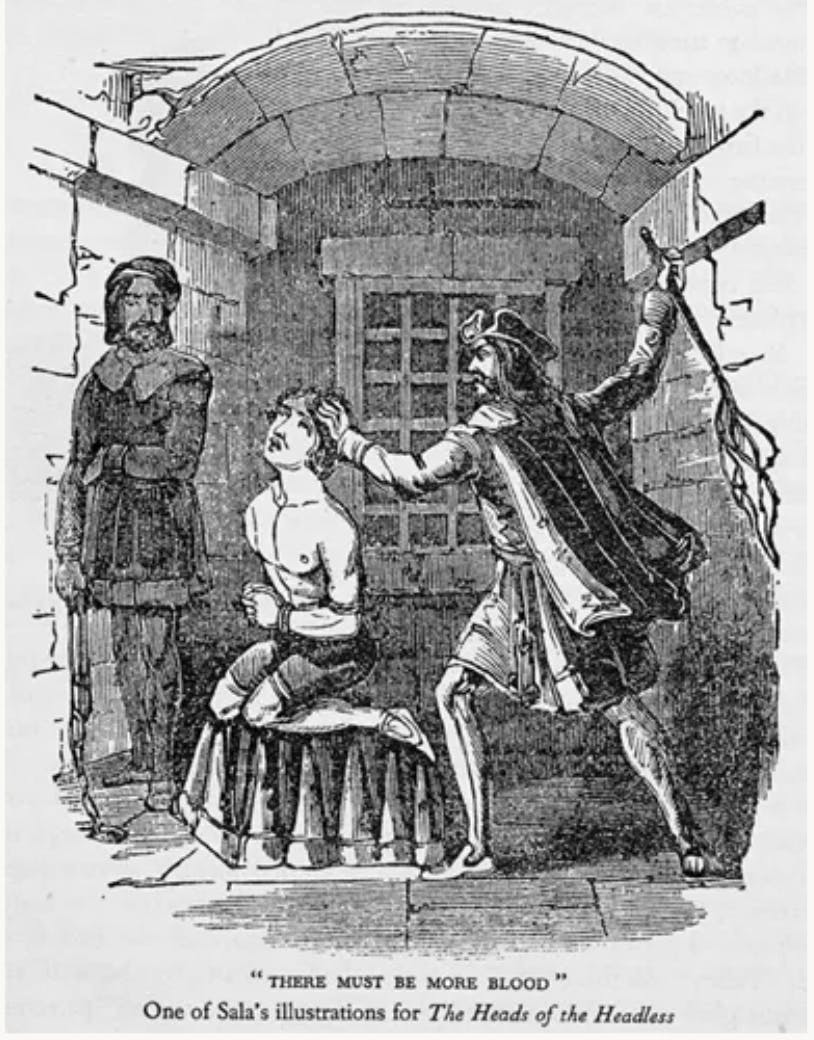
Fig. 2. Sala’s illustration from Heads of the Headless (1847)British Library, The British Library Board (Cited in Blake, 2016)
Indeed, as Sally Powell states in “Black Markets and Cadaverous Pies,”
Few low-life penny narratives are without at least one episode of bodysnatching and many revel in the brutality and callousness of the crime. Experience in the field of cadaverous trading appears to be an essential qualification for the hardened penny-blood villain. (Victorian Crime, Madness and Sensation, 2017)
Edited by Andrew Maunder and Grace Moore
Few low-life penny narratives are without at least one episode of bodysnatching and many revel in the brutality and callousness of the crime. Experience in the field of cadaverous trading appears to be an essential qualification for the hardened penny-blood villain. (Victorian Crime, Madness and Sensation, 2017)
We can see this excessive violence in Reynolds’s Wagner the Wehr-Wolf. In one particularly gruesome scene, Reynolds explains in detail the torture of the character Giulia by the Inquisition at the behest of her husband the Count of Arestino, as a punishment for her unfaithfulness. The Count watches gleefully as she is placed on a rack:
The white and polished arms were stretched out in a position fearfully painful beyond the victim’s head, and the wrists were fastened to a steel bar by means of a thin cord, which cut through flesh, muscle and nerve to the very bone! The ankles were attached in a similar manner to a bar at the lower end of the rack, and thus from the female’s hands and feet thick clots of gore fell on the stone pavement. (Reynolds, 1846-47, [2008])

George W. M. Reynolds
The white and polished arms were stretched out in a position fearfully painful beyond the victim’s head, and the wrists were fastened to a steel bar by means of a thin cord, which cut through flesh, muscle and nerve to the very bone! The ankles were attached in a similar manner to a bar at the lower end of the rack, and thus from the female’s hands and feet thick clots of gore fell on the stone pavement. (Reynolds, 1846-47, [2008])
The lingering on these visceral and violent episodes enables the reader to engage in a type of disturbing voyeurism, not unlike the Count of Arestino himself. However, as Hannah Priest explains,
Reynolds’s exuberantly visceral narrative is dismissed by some as bad taste, but this horridness is actually the means through which the author is able to engage with more fundamental questions about humanity and society. (“‘Your lot is wretched, old man’,” Penny Dreadfuls and the Gothic, 2023)
Another popular, and perhaps equally gruesome, penny dreadful is Rymer’s The String of Pearls (1846-47) (famed for creating the barber of Fleet Street, Sweeney Todd). In this serial, Sweeney Todd lures customers into his shop and murders them by slitting their throats before dispatching them down a hatch in the floor to be made into pies by his accomplice Mrs Lovett. Illustrations of this violence can be seen in Figure 3 below, included in the 1850 republication.
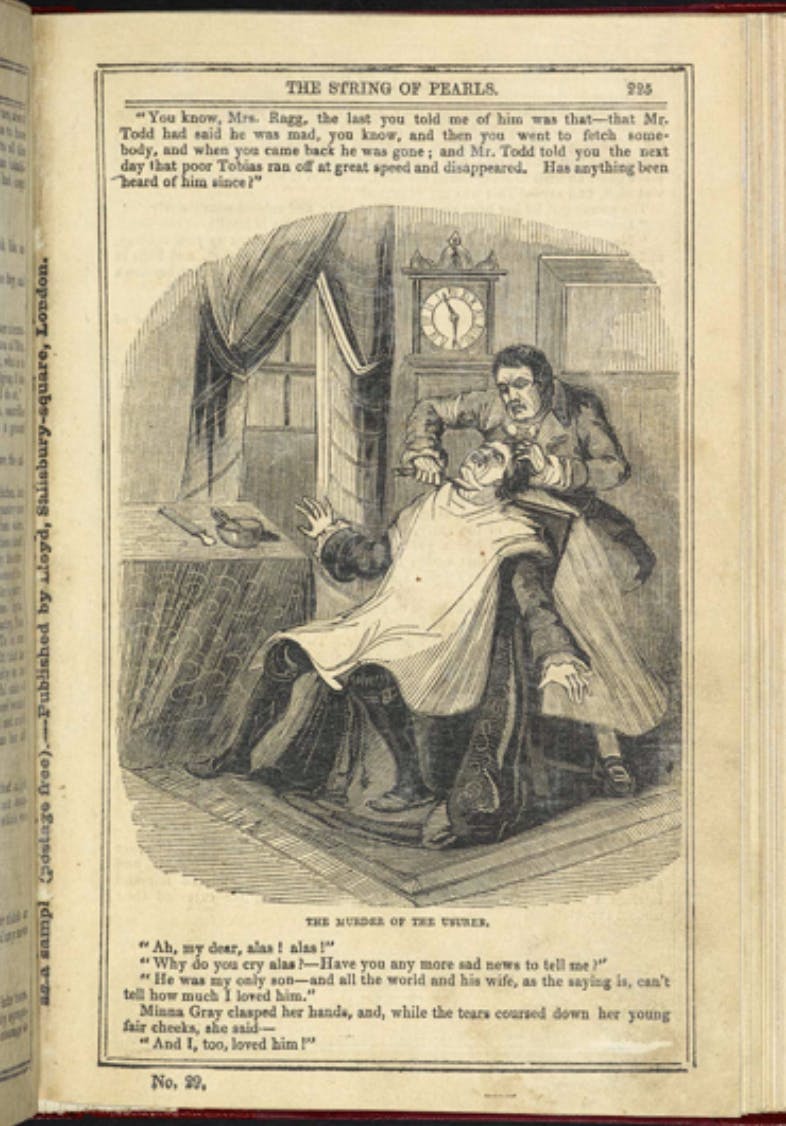
Fig. 3 “The Murder of the Usurer” (1850) in James Malcolm Rymer, The String of Pearls
The inclusion of the illustration of the barber’s chair, as Rosaline Crone explains, highlights how both the author and publisher were
sensitive to the desire of their barely literate audiences to see the murder machines in action, satisfying them with very graphic illustrations. [...] The String of Pearls readers were presented with a sequence of woodcuts representing different parts of the machine and production line, one of which was, of course, Todd’s lethal barber’s chair. (Violent Victorians, 2013)
Rosaline Crone
sensitive to the desire of their barely literate audiences to see the murder machines in action, satisfying them with very graphic illustrations. [...] The String of Pearls readers were presented with a sequence of woodcuts representing different parts of the machine and production line, one of which was, of course, Todd’s lethal barber’s chair. (Violent Victorians, 2013)
Much of the horror that comes from Rymer’s serial is the lavish descriptions of Lovett’s customers consuming meat pies, unwittingly engaging in cannibalism.
The consumers are, therefore, horrified when the cook (who has been kept against his will in the shop’s underground pie vault) informs them,
“Ladies and Gentlemen—I fear that what I am going to say will spoil your appetites; but the truth is beautiful at all times, and I have to state that Mrs. Lovett’s pies are made of human flesh!” (Rymer, 1846-47, [2015])
James Malcolm Rymer and Thomas Peckett Prest
“Ladies and Gentlemen—I fear that what I am going to say will spoil your appetites; but the truth is beautiful at all times, and I have to state that Mrs. Lovett’s pies are made of human flesh!” (Rymer, 1846-47, [2015])
(Please note, Rymer and Thomas Peckett Prest are often both credited as authors, as reflected in the edition cited here. However, it is now generally accepted that Rymer is the sole author).
As Rymer tells us, this bodily violation remains with the customers for the rest of their lives:
The youths who visited Lovett’s pie-shop, and there luxuriated upon those delicacies, are youths no longer. Indeed, the grave has closed over all but one, and he is very, very old, but even now, as he thinks of how he enjoyed the flavour of the “veal,” he shudders, and has to take a drop of brandy. (1846-47, [2015])
As Crone states,
The tale of Sweeney Todd, therefore, demonstrated the potential for gross, unrestrained violence, actual, visual and metaphorical, under the cloak of an expanding and unregulated metropolis. (2013)
Radical politics
Numerous penny writers appealed to their readership by promoting Chartism, a working-class social and political movement beginning in London in 1836 aimed at extending the franchise to the working classes and driven by a demand for political reform and working-class rights. Breton’s The Penny Politics of Victorian Popular Fiction explores how radical politics, specifically Chartism, influenced penny fiction:
Far from offering itself as an ‘escape’ from politicisation, popular periodicals and popular literature could not and did not isolate themselves from the zeitgeist. Competing with relatively cheap reformist literatures and radical or Chartist literatures for working-class attention, they took up and reframed the political debates that were all around them. (2021)
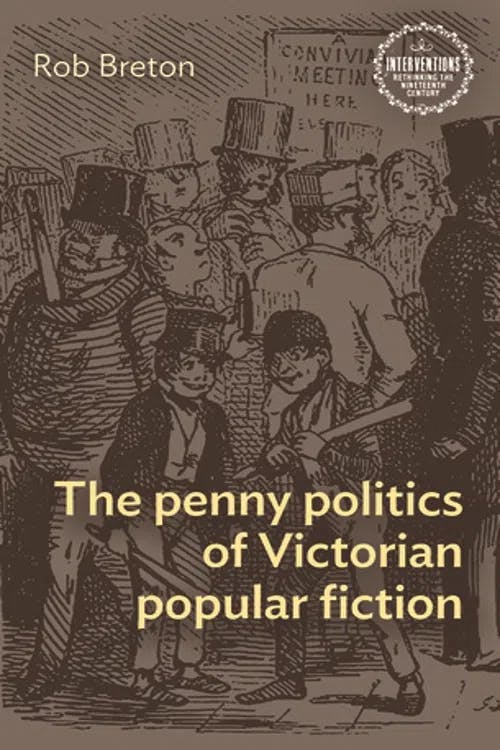
Rob Breton
Far from offering itself as an ‘escape’ from politicisation, popular periodicals and popular literature could not and did not isolate themselves from the zeitgeist. Competing with relatively cheap reformist literatures and radical or Chartist literatures for working-class attention, they took up and reframed the political debates that were all around them. (2021)
One of the most popular advocates for Chartism was Reynolds who often included such sentiments in his fiction writing, particularly The Mysteries of London, as well as in his speeches. (Mary L Shannon’s Dickens, Reynolds, and Mayhew on Wellington Street [2015] provides a detailed examination of the connection between Reynolds’s fictional works and speeches in relation to their radical, political content.)
Penny dreadfuls often advocated for improved conditions for the working classes where they worked and lived. Reynolds’s The Seamstress, or the White Slave of England (1853), for example, follows a seamstress as she uncovers how little she is paid for her labor in comparison to how much the garment she creates is sold for. Reynolds renders a suitably gothic image of the dressmaker’s establishment:
This palatial emporium is a colossal proof of the grinding tyranny which capital wields over labour, and the influence which it exercises over wages […] Its foundations are built with the bones of the white slaves of England, male and female: the skeletons of journeymen tailors and poor seamstresses, all starved to death, constitute the doorposts and the window frames; – the walls are made of skulls – the architectural devices are cross bones – and the whole is cemented firmly and solidly by the blood, pith and marrow of the miserable wretches who are forced to sell themselves in the Slave Market of the British Empire. (1853)
As we can see from Figure 3, the illustration accompanying the penny serial (often appearing one or two chapters after the scene described) a large pair of scissors divides the conditions of production, the sweatshop, with the ballroom in which the gown is exhibited, drawing attention to the realities of production under capitalism and the ignorance of the bourgeois consumer.
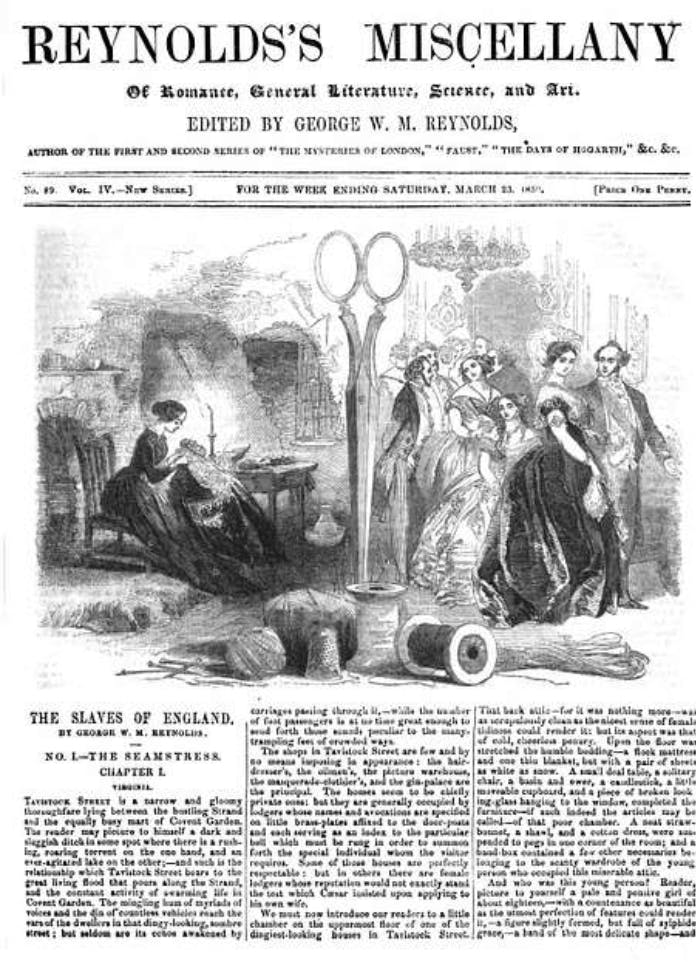
Fig. 4. “The Seamstress,” Cover page of Reynolds Miscellany (1850)
Reynolds was far from alone in expressing outrage over the horrors wrought by capitalism in industrialized London; The String of Pearls explores consumerism and alienation of working-class laborers, Herbert Thornley’s A Life in London (1846) depicts extreme poverty in the East End slums, and Thomas Frost’s The Mysteries of Old Father Thames (1848) explores issues of inequality and lack of sanitation in the city.
Reappraisal today
In academia, there have been several works in recent years focusing on penny fiction, their authors, and their impact on the literary marketplace and political landscape, including Rebecca Nesvet’s James Malcolm Rymer, Penny Fiction, and the Family (2024), Jennifer Conary and Mary L. Shannon’s G. W. M. Reynolds Reimagined (2023), and the edited collection Penny Dreadfuls and the Gothic (2023) by Nicole Dittmer and myself. In addition, the special volume of the Victorian Popular Fictions Journal “Reappraising Penny Fiction” (2022), edited by Nesvet and Stephen Basdeo, demonstrates the continued interest in re-evaluating these texts.
Researchers have also sought to collect and categorize these ephemeral works, with sites such as Price One Penny. The website Hic Dragones has been working to digitize serials such as Reynolds’s Faust (1847) and The Life and Adventures of Valentine Vaux, the Ventriloquist (1841, anonymous), making them more accessible to the public. Moreover, Valencourt publishers continue to publish penny fiction, such as Ruth the Betrayer (republished in 2018) and Rymer’s The Black Monk (1844, republished in 2014), with introductions that comment upon the significance of such works. The future of penny fiction scholarship is promising, with many researchers and critics acknowledging the importance of elevating these texts from relative obscurity and considering them worthy of serious, scholarly attention.
Further reading on Perlego
G.W.M. Reynolds: Nineteenth-Century Fiction, Politics, and the Press (2017) edited by Anne Humpherys and Louis James.
G. W. M. Reynolds and His Fiction: The Man Who Outsold Dickens (2018) by Stephen Knight
Victorian England's Bestselling Author: The Revolutionary Life of G. W. M. Reynolds (2022) by Stephen Basdeo and Mya Driver
Penny dreadfuls FAQs
What is a penny dreadful in simple terms?
What is a penny dreadful in simple terms?
What are some examples of penny dreadfuls?
What are some examples of penny dreadfuls?
Who are some of the most well-known penny dreadful authors?
Who are some of the most well-known penny dreadful authors?
What is the difference between a penny dreadful and a penny blood?
What is the difference between a penny dreadful and a penny blood?
Bibliography
Ainsworth, H. (2012) Jack Sheppard: A Romance. The Floating Press. Available at:
https://www.perlego.com/book/1303330/jack-sheppard-a-romance
Anderson, H. (2016) “The Shocking Tale of the Penny Dreadful.” BBC. Available at:
https://www.bbc.com/culture/article/20160502-the-shocking-tale-of-the-penny-dreadful
Basdeo, S. and Nesvet, R. (eds.) (2022) “Reappraising Penny Fiction”, Victorian Popular Fictions (Volume 4, Issue 2) Available at:
https://victorianpopularfiction.org/victorian-popular-fictions-volume-4-issue-2-autumn-2022/
Bell, K. (2011) The Magical Imagination: Magic and Modernity in Urban England, 1780–1914. Cambridge University Press.
Breton, R. (2021) The Penny Politics of Victorian Popular Fiction. Manchester University Press. Available at:
https://www.perlego.com/book/2663429/the-penny-politics-of-victorian-popular-fiction
Burz-Labrande, M. (2023) “‘Embalmed pestilence’, ‘intoxicating poisons’: Rhetoric of Contamination, Contagion, and the Gothic Marginalisation of Penny Dreadfuls by their Contemporary Critics” in Dittmer, N. C. and Raine, S. (eds.)Penny Dreadfuls and the Gothic: Investigations of Pernicious Tales of Terror. University of Wales Press. Available at:
Conary, J. and Shannon, M. L. (eds.)(2023) G. W. M. Reynolds Reimagined: Studies in Authorship, Radicalism, and Genre, 1830-1870. Routledge. Available at:
Crone, R. (2013) Violent Victorians: Popular entertainment in nineteenth-century London. Manchester University Press. Available at:
Dittmer, N. C. ‘Mistress of the Broomstick’: Biology, Ecosemiotics and Monstrous Women in Wizard’s The Wild Witch of the Heath; or The Demon of the Glen” in Dittmer, N. C. and Raine, S. (eds.) Penny Dreadfuls and the Gothic: Investigations of Pernicious Tales of Terror. University of Wales Press. Available at:
Ellis, E. (2018) Ruth the Betrayer. Valancourt Books. Available at:
https://www.valancourtbooks.com/ruth-the-betrayer-or-the-female-spy.html
Fell, W. (2018) “Vampires,” in Corstorphine, K. and Kremmel, L. R. (eds.) The Palgrave Handbook to Horror Literature. Palgrave Macmillan. Available at:
https://www.perlego.com/book/3485680/the-palgrave-handbook-to-horror-literature
Flanders, J. (2011) The Invention of Murder: How the Victorians Revelled in Death and Detection and Created Modern Crime. HarperPress. Available at:
Frost, T. (c. 1848) The Mysteries of Old Father Thames. W. Caffyn. Available at:
https://search.worldcat.org/title/830944532
Gasperini, A. (2019) Nineteenth Century Popular Fiction, Medicine and Anatomy. Palgrave Macmillan. Available at:
Greenwood, J. (1874) The Wilds of London. Chatto and Windus. Available at:
https://search.worldcat.org/title/375215
Hotten, J. C. (2013) The Slang Dictionary. Perlego. Available at: https://www.perlego.com/book/1845858/the-slang-dictionary-etymological-historical-and-andecdotal
Howarth, P. (2023) Play Up and Play the Game. Routledge. Available at:
https://www.perlego.com/book/3853645/play-up-and-play-the-game-the-heroes-of-popular-fiction
James, L. (2017) Fiction for the Working Man. 3rd edn. Edward Everett Root Publishers. Available at:
https://search.worldcat.org/title/990989381
James, L. (2012) “Foreward” in Reynolds, G. W. M. The Mysteries of London Volume 1. Valancourt Books. Available at:
King, A. (2011) “‘Literature of the Kitchen: Cheap Serial Fiction of the 1840s and 1850s” in Gilbert, P. K. (ed.) A Companion to Sensation Fiction. Wiley-Blackwell. Available at:
https://www.perlego.com/book/1013886/a-companion-to-sensation-fiction
Lill, S. L. (2019) “In for a Penny: The Business of Mass-Market Publishing 1832–90” in Lill, S. L. and McWilliam, R. (eds) Edward Lloyd and His World: Popular Fiction, Politics and the Press in Victorian Britain. Routledge. Available at:
Nesvet, R. (2024) James Malcolm Rymer, Penny Fiction, and the Family. Routledge. Available at:
https://www.perlego.com/book/4455635/james-malcolm-rymer-penny-fiction-and-the-family
Mackinder, A. (2024) Death and the Victorians: A Dark Fascination. Pen and Sword History. Available at:
https://www.perlego.com/book/4378812/death-and-the-victorians-a-dark-fascination
McWilliam, R. (2011) “Melodrama” in Gilbert, P. K. (ed.) A Companion to Sensation Fiction. Wiley-Blackwell. Available at:
https://www.perlego.com/book/1013886/a-companion-to-sensation-fiction
Powell, S. (2017) “Black Markets and Cadaverous Pies: The Corpse, Urban Trade and Industrial Consumption in the Penny Blood” in Maunder, A. and Moore, G. (eds.) Victorian Crime, Madness and Sensation. Routledge. Available at:
https://www.perlego.com/book/1486418/victorian-crime-madness-and-sensation
Prest, T. P. (1839) The Life and Adventures of Oliver Twiss, the workhouse boy. E. Lloyd. Available at:
https://search.worldcat.org/title/1230939788
Prest, T. P. (c. 1839) Nickelas Nickelbery. E. Lloyd. Available at:
https://search.worldcat.org/title/557938269
Prest, T. P. (1841) Barnaby Budge. E. Lloyd. Available at:
https://search.worldcat.org/title/54254711
Prest, T. P. (1850) Ela, the outcast; or, The Gipsy of Rosemary Dell. 19th edn. E. Lloyd. Available at:https://search.worldcat.org/title/1063079577
Priest, H. (2023) “‘Your lot is wretched, old man’: Anxieties of Industry, Empire, and England in George Reynolds’s Wagner, the Wehr-Wolf” in Dittmer, N. C. and Raine, S. (eds.) Penny Dreadfuls and the Gothic: Investigations of Pernicious Tales of Terror. University of Wales Press. Available at:
Raine, S. (2023) “‘Muddling about among the dead’: Found Manuscripts and Metafictional Storytelling in James Malcolm Rymer’s Newgate: A Romance,” in Dittmer, N. C. and Raine, S. (eds.) Penny Dreadfuls and the Gothic: Investigations of Pernicious Tales of Terror. University of Wales Press. Available at:
Reynolds, G. M. (1848) The Pixy; or, the Unbaptised Child. J. Dicks. Available at:
https://search.worldcat.org/title/503792094
Reynolds, G. W. M. (1853) The Seamstress, or, The White Slave of England. J. Dicks. Available at:
https://search.worldcat.org/title/1434078946
Reynolds, G. W. M. (2014) The Mysteries of London, v. 1 / 4. Perlego. Available at:
https://www.perlego.com/book/1848503/the-mysteries-of-london-v-14
Reynolds, G. W. M. (2008) Wagner, the Wehr-Wolf. Perlego. Available at:
https://www.perlego.com/book/1848497/wagner-the-wehrwolf
Rymer, J. M. (1861-62) Edith the Captive, or, The Robbers of Epping Forest. J. Dicks. Available at:
https://search.worldcat.org/title/934477605
Rymer, J. M. (1870) Edith Heron, or, The Earl of the Countess. New Edition. British Library. Available at:
https://search.worldcat.org/title/84780809
Rymer, J. M. (1846-47) Newgate. A Romance. E. Lloyd. Available at:
https://search.worldcat.org/title/557490970
Rymer, J. M. (2012) Varney the Vampire. The Floating Press. Available at:
https://www.perlego.com/book/1303457/varney-the-vampire-the-feast-of-blood
Rymer, J. M. (2014) The Black Monk. Valancourt Books. Available at:
https://www.valancourtbooks.com/the-black-monk-1844.html
Rymer, J. M. (2015) Ada, the Betrayed; Or, The Murder at the Old Smithy. Perlego. Available at:
[Rymer, J. M.] (2015) The String of Pearls. Dover Publications. Available at:
https://www.perlego.com/book/109880/sweeney-todd-the-string-of-pearls-the-original-victorian-classic
Shannon, M. L. (2016) Dickens, Reynolds, and Mayhew on Wellington Street: The Print Culture of a Victorian Street. Routledge. Available at: https://www.perlego.com/book/1630976/dickens-reynolds-and-mayhew-on-wellington-street-the-print-culture-of-a-victorian-street
Springhall, J. (1999) Youth, Popular Culture and Moral Panics. Red Globe Press. Available at:
Springhall, J. (2004) “Disreputable adolescent reading: low-life, women-in-peril and school sport ‘penny dreadfuls’ from the 1860s to the 1890s” in Huggins, M. and Mangan, J. A. (eds.) Disreputable Pleasures: Less Virtuous Victorians at Play. Routledge. Available at:
https://www.perlego.com/book/1612827/disreputable-pleasures-less-virtuous-victorians-at-play-pdf
Thornley, H. (1846) A Life in London. E. Dipple. Available at:
https://search.worldcat.org/title/1011996540
Turner, E. S. (2012) Boys Will Be Boys. Faber. Available at: https://www.faber.co.uk/product/9780571287871-boys-will-be-boys/
Viles, E. (1866-68) Black Bess, or, the knight of the road. E. Harrison. Available at:
https://search.worldcat.org/title/1041569931
Life and Adventures of Jack Sheppard (anonymous, 1840). TBA
Wizard (pseud.)(1841) The Wild Witch of the Heath; or, the Demon of the Glen. T. White. Available at:
https://search.worldcat.org/title/855515935
The Work Girls of London, their trials and temptations (1865) Newsagents’ Publishing Company. Available at:
PhD, English Literature (Lancaster University)
Sophie Raine has a PhD from Lancaster University. Her work focuses on penny dreadfuls and urban spaces. Her previous publications have been featured in VPFA (2019; 2022) and the Palgrave Handbook for Steam Age Gothic (2021) and her co-edited collection Penny Dreadfuls and the Gothic was released in 2023 with University of Wales Press.