What is the Triffin Dilemma?

MA, Management Science (University College London)
Date Published: 01.07.2024,
Last Updated: 16.07.2024
Share this article
Defining the Triffin dilemma
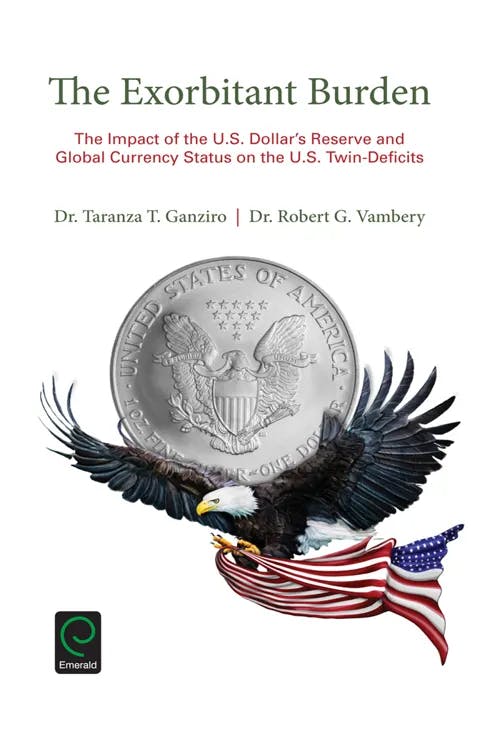
The Triffin dilemma is an economic theory describing a conflict of interest that arises when a country's currency, like the US dollar (USD), serves as the global reserve currency. Before delving into the intricacies of this conundrum, it's important to first understand what a reserve currency is and its significance, as it underpins the theory. A reserve currency is one which most countries keep in large amounts for international trade and to safeguard their economic stability. The most common example of a reserve currency is the USD, widely used for international trade. In The Exorbitant Burden (2016), Taranza T. Ganziro and Robert G. Vambery describe reserve currencies as the common financial language in global business:
The superiority of the U.S. dollar lies in the confidence the whole world places in it; which greatly contributes to its convertibility into almost all currencies at least officially in all Exchange Bureaus anywhere in the world. Just as English is spoken in many parts of the world and is recognized as a global business communication language, the reserve currency is equally important in the global financial discourse as a common denominator.
Taranza T. Ganziro and Robert G. Vambery
The superiority of the U.S. dollar lies in the confidence the whole world places in it; which greatly contributes to its convertibility into almost all currencies at least officially in all Exchange Bureaus anywhere in the world. Just as English is spoken in many parts of the world and is recognized as a global business communication language, the reserve currency is equally important in the global financial discourse as a common denominator.
Having your country's currency serve as a reserve currency carries significant responsibility. Think of it as a personal situation where you are giving so much to others that you risk your own wellbeing and stability. The country must ensure that nations worldwide have access to this currency, maintaining a steady and robust flow of international transactions that foster global economic growth. Unintended consequences may arise from this responsibility in relation to their own country's prosperity. It is here that Triffin's dilemma arises.
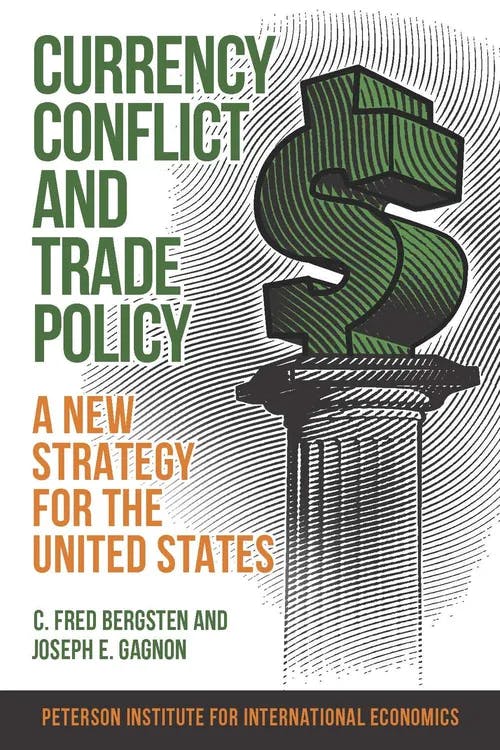
Let’s consider the US dollar as the example reserve currency for the remainder of this study guide. One of the main ways of distributing US dollars globally is through imports; this is done by conducting international transactions – such as purchasing goods or investing in foreign capital – and using US dollars to distribute the currency abroad. If imports are excessive, they impact the country’s trade balance which, in simple terms and as noted by C. Fred Bergsten and Joseph E. Gagnon in Currency Conflict and Trade Policy (2017), is the monetary difference between exports and imports (Trade balance = exports - imports). As Bergsten and Gagnon write,
The trade balance is defined as exports of goods and services minus imports of goods and services. Economic growth is typically measured as growth in the production of goods and services, also known as gross domestic product (GDP). In the economic accounts, GDP is measured as total domestic spending plus exports minus imports. Imports subtract from GDP because they are produced outside a country’s borders; an increase in “net exports of goods and services” adds to GDP growth and a decline in them reduces GDP growth. (2017)
C. Fred Bergsten and Joseph E. Gagnon
The trade balance is defined as exports of goods and services minus imports of goods and services. Economic growth is typically measured as growth in the production of goods and services, also known as gross domestic product (GDP). In the economic accounts, GDP is measured as total domestic spending plus exports minus imports. Imports subtract from GDP because they are produced outside a country’s borders; an increase in “net exports of goods and services” adds to GDP growth and a decline in them reduces GDP growth. (2017)
When imports consistently exceed exports – a likely scenario for countries supplying the reserve currency – there is a risk of a trade balance deficit (i.e., where imports exceed exports, and the trade balance equation is negative). This situation can result in domestic consequences such as currency depreciation or potential inflationary pressures.
The Triffin dilemma encapsulates this challenge: the reserve currency supplier aims to fulfill its international currency distribution obligations while maintaining domestic economic stability. This dynamic is summarized in American Divergences in the Great Recession:
Given the insufficiency of the precious metal [gold], the currency of the country with the strongest economy – the pound, and, more recently, the dollar – is historically assumed as a unit of account but also as an essential complement to reserves. It, therefore, responds to the domestic needs of the issuing country, but also provides the actors in international trade with means of payment. The paradox is that the seigniorage in the issue corresponds to a non-financial current account deficit, which, in the long run, may undermine the confidence placed in the currency used as a reserve. But it is no less important that the country that issues the currency of reference ends up importing capital from countries whose economies require resources. (Daniele Pompejano, 2021).
Daniele Pompejano
Given the insufficiency of the precious metal [gold], the currency of the country with the strongest economy – the pound, and, more recently, the dollar – is historically assumed as a unit of account but also as an essential complement to reserves. It, therefore, responds to the domestic needs of the issuing country, but also provides the actors in international trade with means of payment. The paradox is that the seigniorage in the issue corresponds to a non-financial current account deficit, which, in the long run, may undermine the confidence placed in the currency used as a reserve. But it is no less important that the country that issues the currency of reference ends up importing capital from countries whose economies require resources. (Daniele Pompejano, 2021).
The Triffin dilemma suggests that the country providing the reserve currency might eventually end up in a situation where it has to choose between domestic economic stability and maintaining the dollar's role as a global reserve currency.
The context behind the Triffin dilemma
So where does the Triffin dilemma originate from? To understand this, it is important to first introduce the Bretton Woods agreement, where the metal gold played a crucial role.
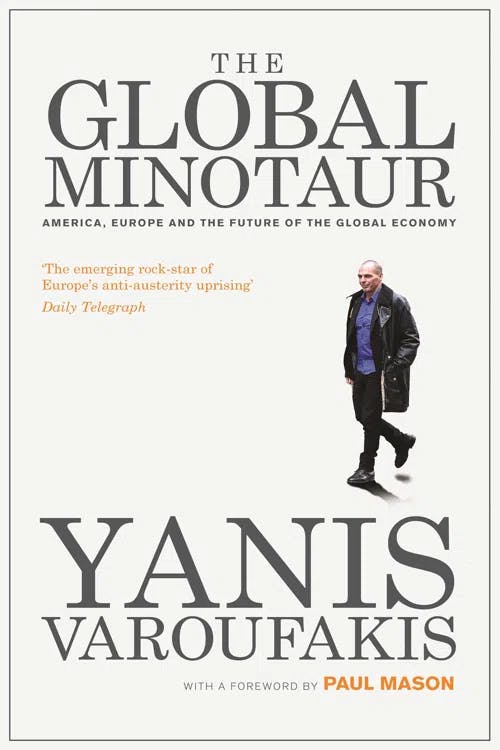
In 1944, the Bretton Woods system was created by delegates from 44 nations in the US to bring back economic stability after the devastation of World War II. This new monetary framework proposed pegging the US dollar to the metal gold so that individuals could exchange their US dollar reserves for gold at any time. As Yanis Varoufakis explains in The Global Minotaur,
As for the United States, to create the requisite confidence in the international system, it committed itself to pegging the dollar to gold at the fixed exchange rate of $35 per ounce of gold and to guarantee full gold convertibility for anyone, American or non-American, who wanted to swap their dollars for gold. (2015)
Yanis Varoufakis
As for the United States, to create the requisite confidence in the international system, it committed itself to pegging the dollar to gold at the fixed exchange rate of $35 per ounce of gold and to guarantee full gold convertibility for anyone, American or non-American, who wanted to swap their dollars for gold. (2015)
Gold has historically been a standard and reliable medium of trade due to its durability and scarcity, which has ensured it maintains its value over the years. Therefore, by guaranteeing that all dollars could be converted to gold, this system ensured economic stability in the long run. Equally, as part of the system, foreign currencies were fixed against the USD such that each participating country agreed to maintain its currency's value within a narrow margin against the dollar (through the manipulation of monetary policy). By knowing exactly how much one currency was worth in relation to another, businesses and governments could engage in international transactions with less risk from fluctuating exchange rates, providing stability in international trade and finance.
While this all sounds good in theory, the practice of it translated differently. As global trade grew, the demand for the US dollar increased because it was the primary reserve currency. As explained earlier, this meant that the US had to run large balance of payments deficits to supply dollars to the world economy. Over time, the amount of dollars held overseas exceeded the US gold reserves that backed those dollars, leading to concerns over the US’s ability to maintain its promise of converting gold at $35 per ounce. As this promise became increasingly untenable, France led the motion of converting its reserve dollars to gold given the uncertainty, and most countries followed suit.
It was at this point, in the 1960s when Belgian economist Robert Triffin brought the conundrum to Congress and proposed a solution (covered in the next section). Sukumar Nandi summarizes this as follows:
In the 1960s, a debate arose about the imperative of increasing international liquidity, and that was the concern at the global level. Since USD had been the international currency through the Bretton Woods agreement, the Federal Reserve of the US agreed to bear the burden of providing necessary liquidity to world trade and commerce. At that time, Professor Triffin [...] raised the interesting question of the ability of the world monetary system to maintain sufficient liquidity for the smooth functioning of international trade and commerce. (Economics of the International Financial System, 2017)
Sukumar Nandi
In the 1960s, a debate arose about the imperative of increasing international liquidity, and that was the concern at the global level. Since USD had been the international currency through the Bretton Woods agreement, the Federal Reserve of the US agreed to bear the burden of providing necessary liquidity to world trade and commerce. At that time, Professor Triffin [...] raised the interesting question of the ability of the world monetary system to maintain sufficient liquidity for the smooth functioning of international trade and commerce. (Economics of the International Financial System, 2017)
In 1971, President Nixon decided to freeze dollar-to-gold conversions temporarily until a solution was found for the shortage of gold reserves. Nixon’s decision – often referred to as the “Nixon Shock” – effectively ended the Bretton Woods agreement. With that, and as explained in the book How Global Currencies Work, most global currencies evolved into a floating system whereby currencies were allowed to fluctuate freely against each other, with flexible exchange rates:
With the collapse of the Bretton Woods System in the 1970s, a growing list of countries moved from pegged to flexible exchange rates, something that was widely expected to affect their reliance on dollar reserves. (Barry Eichengreen, Arnaud Mehl, and Livia Chitu, 2017)

Barry Eichengreen, Arnaud Mehl, and Livia Chitu
With the collapse of the Bretton Woods System in the 1970s, a growing list of countries moved from pegged to flexible exchange rates, something that was widely expected to affect their reliance on dollar reserves. (Barry Eichengreen, Arnaud Mehl, and Livia Chitu, 2017)
Solutions to the Triffin dilemma
What was Triffin’s proposed solution to this puzzle in the US Congress? Essentially, Triffin argued that new reserve currencies should emerge that were not tied exclusively to gold or any single national currency. By introducing these new reserve units, it would be possible for the US to reduce its balance of payments deficits without hindering the overall growth of the global economy ("Money Matters: An IMF Exhibit - System in Crisis (1959-1971),” International Monetary Fund).
While Triffin's specific proposal for a new reserve currency was not directly implemented, his influence helped pave the way for significant reforms, such as the aforementioned shift to floating exchange rates in the global monetary system. These changes were influenced by the discussion initiated by Triffin around the need to reform international monetary relations.
Special Drawing Rights (SDRs)
Special Drawing Rights (SDRs) are a good example of one of Triffin’s suggested reforms, which arose after Triffin’s critique of the Bretton Woods system in 1960. Created by the International Monetary Fund (IMF) in 1969, SDRs are like owning a credit note that can be redeemed for currencies of IMF member countries such as the US dollar, Euro, Chinese Yuan, Japanese Yen, and British Pound. This means countries that are members of the IMF can exchange their SDRs for these currencies, providing them with immediate liquidity to meet the balance of payments needs without depleting their own reserves. Essentially, SDRs are a way for countries to access a pool of major currencies that can support their financial stability.
Inevitably, this innovative system sparks an immediate question about the process behind allocating these SDRs among countries. As mentioned in International Monetary Reform the answer to this question was not obvious when SDRs first emerged:
An attempt was made to forestall the Triffin dilemma by the creation of a new reserve asset, called Special Drawing Rights (SDRs), intended to supplement gold. Initially negotiations were confined to the industrial countries and the notion was to create a reserve asset called a Composite Reserve Unit (CRU) that would be backed by, and distributed only to, them. However, then the IMF made the case that there was no reason to exclude some of its members just because they happened to be labelled ‘developing’, and this was accepted. (John Williamson, 2015)
John Williamson
An attempt was made to forestall the Triffin dilemma by the creation of a new reserve asset, called Special Drawing Rights (SDRs), intended to supplement gold. Initially negotiations were confined to the industrial countries and the notion was to create a reserve asset called a Composite Reserve Unit (CRU) that would be backed by, and distributed only to, them. However, then the IMF made the case that there was no reason to exclude some of its members just because they happened to be labelled ‘developing’, and this was accepted. (John Williamson, 2015)
As of today, 190 countries are part of the IMF, and allocations of SDRs are made based on each member's quota (i.e., a “subscription fee” every country contributes to the Fund for being part of it) based on the wealth and economic performance of the member country. Initial and subsequent SDR distributions are aimed at supplementing member countries' reserves, helping them manage their balance of payments and reduce reliance on external debt.
Blockchain technology
Apart from SDRs, there is an alternative solution to Triffin's dilemma which is growing in popularity in the monetary landscape. Blockchain technology – a system that securely stores continuous records of transactions – is being explored for its potential to support the creation and management of digital currencies (also known as cryptocurrencies). These are thought to have the potential of complementing or even substituting traditional reserve currencies without being tied to the economic policies and institutions of any single country. Raymond Yeung’s China’s Trump Card (2020) explains how the rise of blockchain technology can revolutionize the way we think about international monetary supply:
Blockchain technology represents an idiosyncratic shock that can shake the global reserve system. It represents a new way to define money supply. Well-designed cryptocurrencies can potentially enable peer-to-peer (P2P) transactions without the presence of a trusted intermediary. Currently, the global payment system relies on our trust in the central banks. Sovereignty defines their capacity to supply medium for exchanges but the US Fed is the ultimate supplier of reserve currency. The trade war exposes the weakness of this system. China is expected to move away from the dollar-centric regime. Cryptocurrency provides a politically neutral medium to handle the transition.
Raymond Yeung
Blockchain technology represents an idiosyncratic shock that can shake the global reserve system. It represents a new way to define money supply. Well-designed cryptocurrencies can potentially enable peer-to-peer (P2P) transactions without the presence of a trusted intermediary. Currently, the global payment system relies on our trust in the central banks. Sovereignty defines their capacity to supply medium for exchanges but the US Fed is the ultimate supplier of reserve currency. The trade war exposes the weakness of this system. China is expected to move away from the dollar-centric regime. Cryptocurrency provides a politically neutral medium to handle the transition.
The Triffin dilemma today
What is the current state of Triffin’s dilemma? Is this still a prevalent issue in international economics? While the dynamics of the Triffin dilemma have evolved thanks to changes in monetary systems (e.g., through the emergence of free-floating currencies, SDRs, and even cryptocurrencies), the bottom line remains. Indeed, the fundamental issues raised by the Triffin dilemma regarding the challenges of managing a global reserve currency continue to be relevant nowadays and influence economic policy decisions. As highlighted in the book Applied International Economics (2020), while solutions like SDRs have eased the pressures on reserve currencies and questioned the notion of a single currency carrying the weight of global trade, some things have not changed (W. Charles Sawyer and Richard L. Sprinkle). Indeed, the USD continues to be the primary currency for international transactions:
It has been estimated that 87 percent of foreign exchange trades involve the dollar. The point is that the dollar, and to a lesser extent the euro and the Japanese yen, assumes a larger role in world trade than just the imports and exports of these countries. These currencies are truly international in the sense that they are freely acceptable as payment in many cases between unrelated countries. However, the euro has not gained on the dollar. (Sawyer and Sprinkle, 2020)
W. Charles Sawyer and Richard L. Sprinkle
It has been estimated that 87 percent of foreign exchange trades involve the dollar. The point is that the dollar, and to a lesser extent the euro and the Japanese yen, assumes a larger role in world trade than just the imports and exports of these countries. These currencies are truly international in the sense that they are freely acceptable as payment in many cases between unrelated countries. However, the euro has not gained on the dollar. (Sawyer and Sprinkle, 2020)
This prompts one to a broader reflection on the nature and future of economic systems. Changes within economics and monetary frameworks are inherently slow due to their complexity and the need for extensive coordination across global stakeholders. Equally, one cannot help but consider how these emerging technologies, like blockchain and cryptocurrencies, will shape the landscape and at what pace. As new technologies continue to evolve and refine, they have the potential to significantly alter global finance, introducing new mechanisms for currency stability and exchange, and possibly even redefining what constitutes a reserve currency in the digital age.
Closing thoughts
Overall, Triffin's dilemma highlights the conflict faced by a country that supplies a global reserve currency, which is essential for international trade and global economic stability. The core question is: How can a country provide enough of its currency to sustain healthy international trade levels without harming its economic stability? Inflation and currency devaluation are some risks of taking on this role. Belgian economist Robert Triffin identified the fundamental flaws in the Bretton Woods system as the source of this dilemma. His critique opened up broader discussions about the workings of the global monetary system, spurring ideas for solutions such as floating currencies, the IMF's Special Drawing Rights (SDRs), and innovative technologies like blockchain and cryptocurrencies to ease the burden on countries holding the reserve currency. As these solutions continue to evolve, one wonders if a perfect balance can ever truly be achieved, or if the search for stability will remain an ongoing challenge.
Further reading on Perlego
Jam Tomorrow? Why time really matters in economics (2023) by Charles Crowson
Problems of International Money (1996) by the International Monetary Fund
Lecture Notes on International Trade Theory and Policy (2008) by Richard Pomfret
The Triffin dilemma FAQs
What is the Triffin dilemma in simple terms?
What is the Triffin dilemma in simple terms?
What is a reserve currency?
What is a reserve currency?
What are Special Drawing Rights (SDRs)?
What are Special Drawing Rights (SDRs)?
Bibliography
Bergsten, C. F. and Gagnon, J. E. (2017) Currency Conflict and Trade Policy: A New Strategy for the United States. Peterson Institute for International Economics. Available at: https://www.perlego.com/book/773455
Eichengreen, B., Mehl, A. and Chitu, L. (2017). How Global Currencies Work: Past, Present, and Future. Princeton University Press. Available at: https://www.perlego.com/book/740071.
Ganziro, T. T. and Vambery, R. G. (2016). The Exorbitant Burden: The Impact of the U.S. Dollar's Reserve and Global Currency Status on the U.S. Twin-Deficits. Emerald Group Publishing Limited. Available at: https://www.perlego.com/book/387296
International Monetary Fund. (2024) “Special Drawing Right (SDR).”
International Monetary Fund. (2024)“Money Matters: An IMF Exhibit - System in Crisis (1959-1971)."
Nandi, S. (2017). Economics of the International Financial System. Routledge India. Available at: https://www.perlego.com/book/1562187
Pompejano, D. (2021). American Divergences in the Great Recession. Routledge. Available at: https://www.perlego.com/book/2567450
Sawyer, W. C. and Sprinkle, R. L. (2020). “Applied International Economics.” 5th edn. Routledge. Available at: https://www.perlego.com/book/1516102
Varoufakis, Y. (2015). The Global Minotaur: America, Europe and the Future of the Global Economy. 3rd edn. Zed Books. Available at: https://www.perlego.com/book/2014453
Williamson, J. (2015). International Monetary Reform: A Specific Set of Proposals. Routledge. Available at: https://www.perlego.com/book/1472696
Yeung, R. (2020). China’s Trump Card: Cryptocurrency and its Game-Changing Role in Sino-US Trade. Wiley. Available at: https://www.perlego.com/book/1646070
MA, Management Science (University College London)
Inés Luque has a Masters degree in Management Science from University College London. During high school, she developed a strong interest in Economics, leading her to win the national Economics prize in her country of nationality, Spain. Her expertise is in the areas of microeconomics, game theory and design of incentives. Inés is passionate about the publishing industry and is currently working in the consulting department of the Financial Times in London.